


Currency: Singaporean Dollar (SGD)
Hire, manage, and pay employees in Singapore
Hiring in Singapore? Rippling handles local complexity and compliance so you can focus on growing your business.
Capital: Singapore (GMT+8)
Payroll cycle: Monthly
Official language: English, Mandarin Chinese, Malay and Tamil
By clicking “Get started,” you agree to the use of your data in accordance with Rippling's Privacy Notice, including for marketing purposes.
![[Hero - Image] Singapore](http://images.ctfassets.net/k0itp0ir7ty4/sezrK3AEQsXa1kGemyzTm/07ab362bdd1ef0801173aab48c77b5b8/singapore-eor-hero-image-min_6-min.png)
Trusted by 25,000+ companies
Rippling EOR makes it easy to hire in Singapore
Onboard Singaporean employees in 90 seconds
Set up new hires in Singapore with everything they need, from country-specific trainings to apps like Slack.
Pay your Singaporean team in SGD — in minutes
Pay all of your employees in Singapore without waiting on transfers or conversion.
Automate your HR compliance work
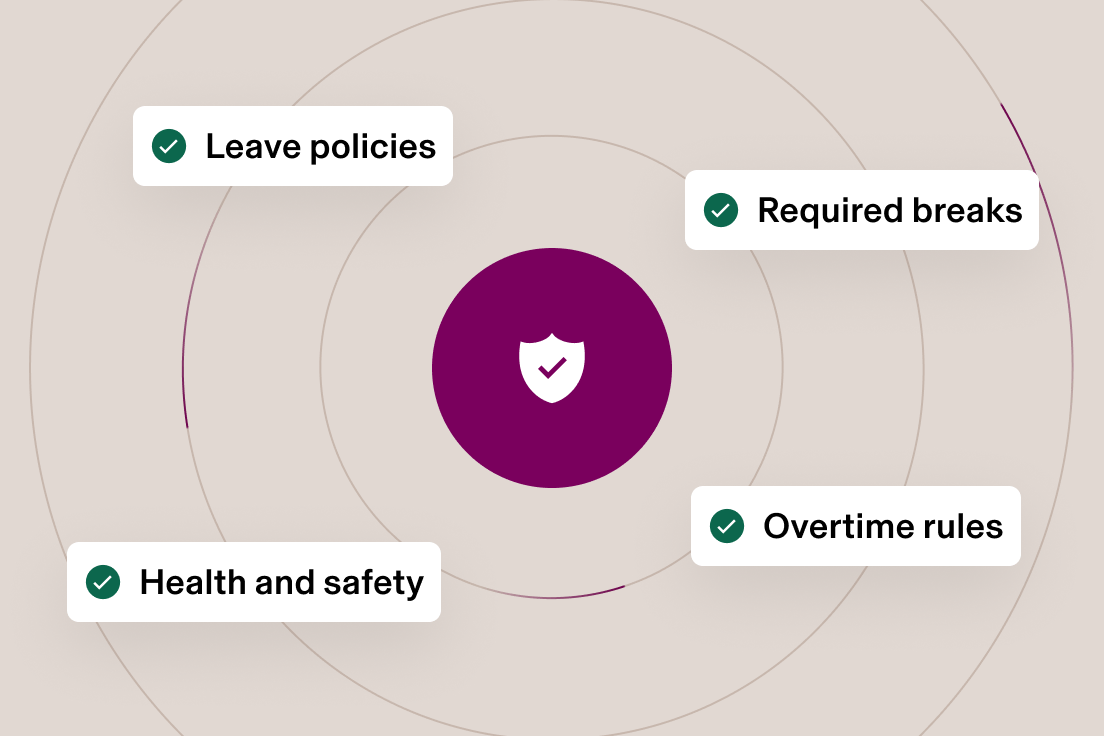
Understanding and complying with Singaporean laws is hard work. Rippling does it for you.
Manage HR, IT, and Finance in one system
Juggling multiple systems for your team? That creates silos and busy work. Rippling does it all — in a single system.
Employer of Record (EOR) pricing
Everything you need to run and pay a global team
Rippling can help you address every step of your international growth while allowing you to transition easily between stages.
“Our CEO describes Rippling’s ability to scale globally as ‘priceless.’”
Annabel Tomlin
VP of Operations at Sitemate

“Before Rippling, I would have had to coordinate with seven different people in different time zones. But I was able to do it for myself in 15 minutes — it was surprising and delightful, and inspirational.”
Varun Sharma
CEO at Enterpret
“I feel safe with Rippling—much more safe compared to Deel.”
Jisselle Baldwin-Todd
Head of HR at Crate
“We were originally working with Remote, as Deel was too expensive—but we knew we needed an all-in-one platform for future growth, and that was the key differentiator with Rippling.”
Christoper Welz
General Manager of Operations at Mozaik
“Rippling has eliminated tedious manual work, improved accuracy, and enabled faster, more efficient people operations, making HR and IT processes far more scalable and strategic.”
Selina Purdie
Head of People at SurrealDB
The preferred choice in the industry

Trusted by 25,000+ companies worldwide
Global hiring & employment
Hire employees in Singapore in 90 seconds
Payroll and taxes
To run payroll in Singapore, you need to collect required employee details, pay in SGD, file statutory payroll taxes and contribution (Central Provident Fund). Rippling simplifies the entire process with one system for payroll and compliance. Since employers are responsible for calculating payroll deductions, it’s important to keep the following costs in mind:
CPF contributions
CPF is a mandatory social security savings scheme funded by contributions from employers (17%) and employees (37%) to support and meet Singapore citizens and permanent residents' retirement, housing and healthcare needs.
Skills Development Levy (SDL)
0.25% (capped at SGD 11.25 per year)
Foreign worker levy (if you hire foreign workers)
Varies depending on worker qualifications and how many foreign workers your organization employs
![[River Flow Item - Image] Run Global Payroll | Paid Global Singapore](http://images.ctfassets.net/k0itp0ir7ty4/212eHxWmfHFa33JLn2NM7Z/c35a7d3fd5fce036218b5b991cad3f0d/Run_Global_Payroll_enSG.png)
Determine your Singaporean workers’ employment status
Before hiring your Singaporean workers, and certainly before you run payroll, it’s crucial to understand who you’re paying in the eyes of Singapore law: Are your workers employees or contractors?
One of the first steps to hiring employees—in Singapore or any other country—is making sure they’re classified correctly. Singaporean courts consider various factors when examining an employment relationship to determine classification:
With Rippling you can:
Employees
Employees are more integrated into the company, follow employer direction, receive benefits like insurance and paid leave, and are generally engaged for ongoing indefinite roles, with the employer responsible for workplace protections.
Contractors
Contractors have greater control over how they work, use their own tools, aren’t entitled to employee benefits, and typically work on short-term projects while managing their own taxes and liabilities.

Mandatory employee benefits in Singapore
Singapore’s employment laws require employers to provide employees with certain statutory benefits. These include:
CPF contributions
CPF is a mandatory social security savings scheme funded by contributions from employers and employees to support and meet Singapore citizens and Permanent residents' retirement, housing and healthcare needs.
Overtime pay
Overtime pay of at least 1.5 times the regular pay rate. Overtime is also limited to 72 hours per month.
Annual & sick leaves
Leave entitlements kick in after three months of service. Employees get seven days of leave for their first year of service, then one additional day for each additional year of service up to a maximum of 14 days.
Employees are entitled to 14 days of sick leave per year, plus up to 60 days of hospitalization leave (inclusive of outpatient sick leave) if their illness meets certain conditions.
Maternity, paternity and childcare leaves
Working mothers can take up to 16 weeks of Government-Paid Maternity Leave (GPML) if their child is a Singaporean citizen. Foreign residents can take up to 12 weeks.
Working fathers with children born on or after Jan. 1, 2024 can take up to four weeks of Government-Paid Paternity Leave (GPPL). A working partner also has eligibility to share up to four weeks of their wife’s GPML.
Parents are allowed six days of childcare leave per year for children under seven if the child is a Singapore citizen, and two days per year if not.

Complying with Singaporean labor laws
One of the most important parts of hiring in another country is knowing and complying with the relevant labor and employment laws. The Singapore Employment Act and similar employment laws are overseen by the Ministry of Manpower, the National Trades Union Congress (NTUC), and the Singapore National Employers Federation (SNEF), government agencies that help ensure fair employment practices throughout Singapore.
Here are some of the most important regulations you need to know when hiring in Singapore:
Wage laws
Singapore doesn’t have a minimum wage, but 13th month pay is common.
Working hours
The standard workweek is nine hours per day, five days per week.
Central Provident Fund (CPF)
The CPF is a social security savings scheme funded by contributions from employers and employees that’s meant to meet Singaporeans’ retirement, housing, and healthcare needs.
Retirement
The retirement age in Singapore is currently 63, but is set to rise to 65 in 2030.
FAQs
Do I need a legal entity to hire employees in Singapore?
You have two options. You can set up a local entity and handle all registrations, tax compliance, payroll, and labor obligations yourself. Or you can hire through an Employer of Record, which manages contracts, payroll, benefits, and compliance on your behalf. An EOR is faster and avoids the upfront cost and complexity of forming an entity.
How do I classify workers correctly in Singapore?
Singapore distinguishes employees from contractors based on the level of control, the nature of work, equipment ownership, payment structure, and exclusivity. Employees work under company supervision, use company tools, receive regular pay, and usually work exclusively for one employer. Contractors control how they work, use their own tools, invoice for completed work, and work for multiple clients. Misclassification can lead to back taxes and penalties of up to SGD 50,000.
What are the key onboarding steps for a new hire in Singapore?
Before day one, complete background checks, issue the offer letter, finish paperwork, enroll them in benefits, set up tools, and prepare devices. On day one, get them into payroll, set up their workspace, share their schedule, and introduce them to their manager and team. Over the first 90 days, provide training, set goals, run frequent check-ins, and give regular feedback.
What benefits am I required to provide employees in Singapore?
Mandatory benefits include CPF contributions for citizens and permanent residents, rest days, overtime pay, annual leave, sick leave, hospitalization leave, childcare leave, maternity and paternity leave, and 11 paid public holidays. Singapore has no minimum wage, but employers must follow defined rules for calculating pay on rest days and public holidays.
Can employers run background checks on candidates in Singapore?
Yes, background checks are allowed and common, but they must comply with the Personal Data Protection Act. Employers must get the candidate’s consent, collect only relevant information, and keep the data secure. Non-consensual checks, discriminatory practices, and using personal data for unrelated purposes are prohibited.
Rippling global solutions
Ready to see Rippling Global in action?
By clicking “Get started,” you agree to the use of your data in accordance with Rippling's Privacy Notice, including for marketing purposes.