


Currency: US dollar (USD)
Hire, manage, and pay employees in the United States
Hiring in the US? Rippling handles local complexity and compliance so you can focus on growing your business.
Capital: Washington, D.C. (GMT-4)
Payroll cycle: Biweekly
Official language: English
By clicking “Get started,” you agree to the use of your data in accordance with Rippling's Privacy Notice, including for marketing purposes.

Trusted by 25,000+ companies
Rippling EOR makes it easy to hire in the US
Onboard US employees in 90 seconds
Set up new hires in the US with everything they need, from country-specific trainings to apps like Slack.
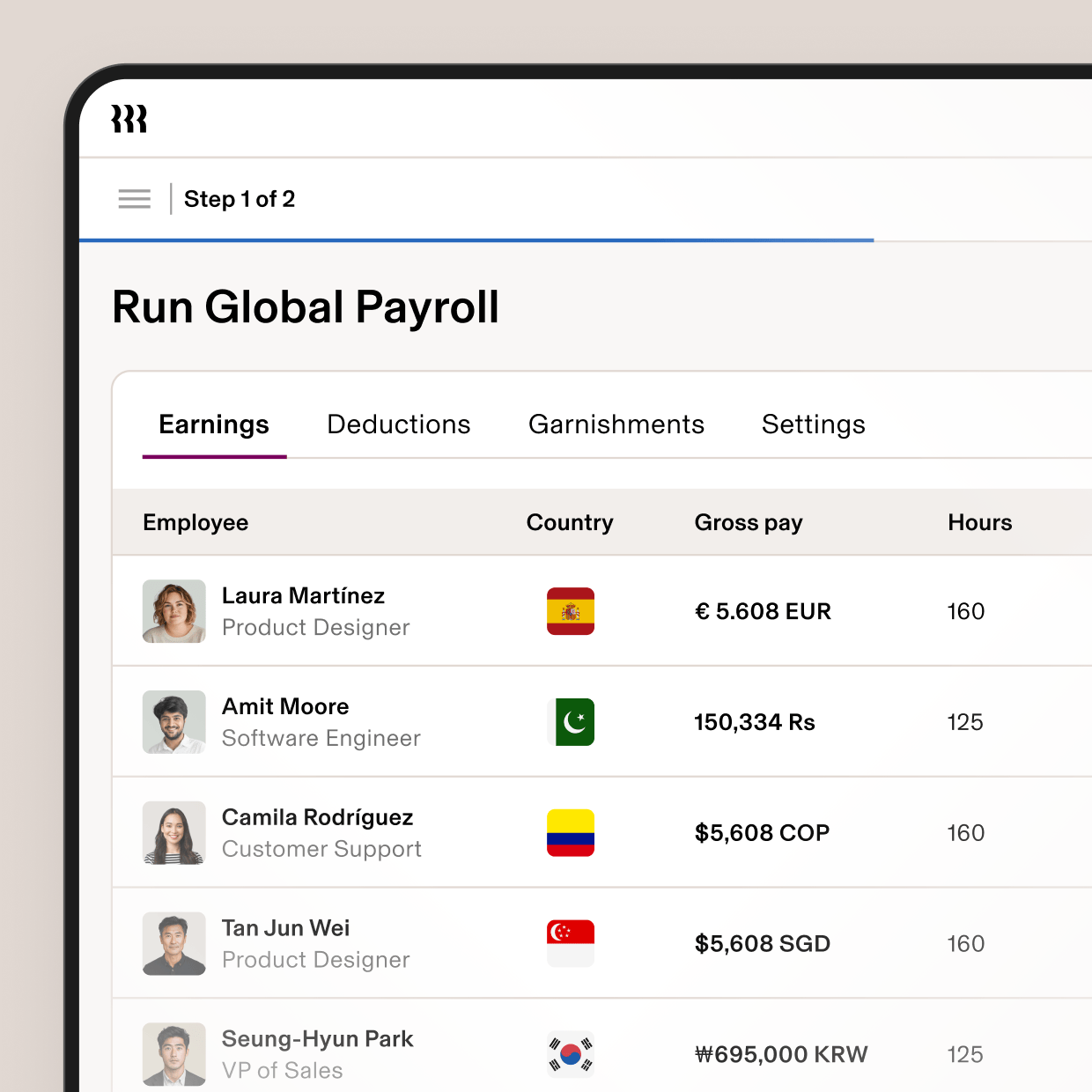
Pay your US team in USD — in minutes
Pay all of your employees in the US without waiting on transfers or conversion.
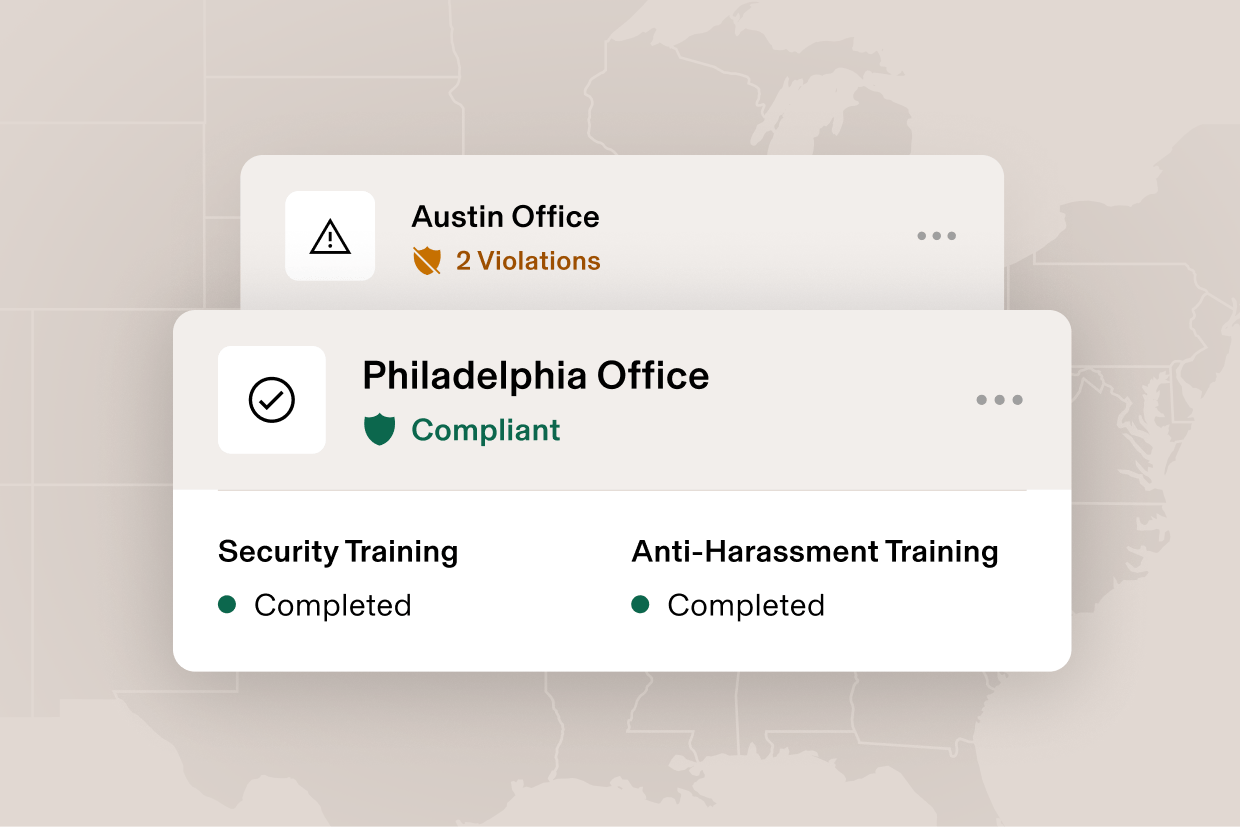
Automate your HR compliance work
Understanding and complying with US laws is hard work. Rippling does it for you.
Manage HR, IT, and Finance in one system
Juggling multiple systems for your team? That creates silos and busy work. Rippling does it all — in a single system.
Employer of Record (EOR) pricing
Everything you need to run and pay a global team
Rippling can help you address every step of your international growth while allowing you to transition easily between stages.
“Our CEO describes Rippling’s ability to scale globally as ‘priceless.’”
Annabel Tomlin
VP of Operations at Sitemate

“Before Rippling, I would have had to coordinate with seven different people in different time zones. But I was able to do it for myself in 15 minutes — it was surprising and delightful, and inspirational.”
Varun Sharma
CEO at Enterpret
“I feel safe with Rippling—much more safe compared to Deel.”
Jisselle Baldwin-Todd
Head of HR at Crate
“We were originally working with Remote, as Deel was too expensive—but we knew we needed an all-in-one platform for future growth, and that was the key differentiator with Rippling.”
Christoper Welz
General Manager of Operations at Mozaik
“Rippling has eliminated tedious manual work, improved accuracy, and enabled faster, more efficient people operations, making HR and IT processes far more scalable and strategic.”
Selina Purdie
Head of People at SurrealDB
The preferred choice in the industry

Trusted by 25,000+ companies worldwide
Global hiring & employment
Hire employees in the United States in 90 seconds
Payrol and taxes
In the US, payroll and taxes can be complex — state and local tax rates vary, and employers must register with the right agencies for each hire. Rippling simplifies the entire process by automatically calculating, withholding, and remitting taxes to the correct authorities, so you stay compliant without the manual admin. Here are a few important costs to take note:
Federal income tax
10% to 37%, depending on the employee’s income and marital status.
State income tax
It varies across different states. For more information on state and local taxes, read more here.
Social Security and Medicare (FICA)
- Social Security: 6.2% of the first $168,600 of the employee’s earnings
- Medicare: 1.45%
Federal and state unemployment taxes (FUTA and SUTA)
- Federal unemployment tax: 0.6% of the first $7,000 of the employee’s earnings (up to 6%)
- State unemployment tax: Varies by state and employer claims history (0.11 to 7%, with most new businesses in the 2-3% range)
Determine your US workers’ employment status
Before onboarding or running payroll, it’s critical to classify your US workers correctly — as employees or independent contractors. Misclassification can lead to steep penalties, including unpaid wages, back taxes, and fines from the IRS, Department of Labor, and state agencies. Rippling’s Worker Classification Analyzer helps you review and validate worker status to reduce risk and ensure compliance from day one.
With Rippling you can:
Employees
Employees are more integrated into the company, follow employer direction, receive benefits like insurance and paid leave, and are generally engaged for ongoing indefinite roles, with the employer responsible for workplace protections.
Contractors
Contractors have greater control over how they work, use their own tools, aren’t entitled to employee benefits, and typically work on short-term projects while managing their own taxes and liabilities.

Mandatory employee benefits in the US
The US has fewer mandatory benefits requirements for employers than most other developed countries around the world. Here’s what you need to know.
Health insurance
Under the Affordable Care Act, applicable large employers or ALEs (those with 50 or more full-time or full-time equivalent employees) must provide affordable healthcare coverage to at least 95% of their full-time employees and their dependent children. To meet the federal mandate, policies must cover at least 60% of employees’ healthcare costs, and employees can’t pay more than 9.86% of their household income for care.
Small businesses with fewer than 50 full-time or full-time equivalent employees aren’t required to offer coverage.
Social Security and Medicare
Both employers and employees contribute taxes to Social Security, a nation-backed retirement fund, and Medicare, a public health insurance program for Americans over the age of 65.
Social Security also funds programs that provide income for people who can’t work due to disability and survivor benefits for dependents of people who have died.
Unemployment insurance
Unemployment insurance provides supplemental income for people who have lost their jobs. Employers must contribute to the federal fund but may be exempt from most of their contributions if they pay into state unemployment insurance funds instead.
Family and medical leave
The Family and Medical Leave Act (FMLA) guarantees qualifying employees up to 12 weeks of job-protected, unpaid leave each year for certain family and medical reasons, such as:
- Caring for a newborn
- Adopting a child
- Recovering from an illness
- Caring for a sick family member
There is no federal law that mandates paid time off for US employees, but several states, including California, New York, and Washington, have implemented their own leave laws with varying requirements.
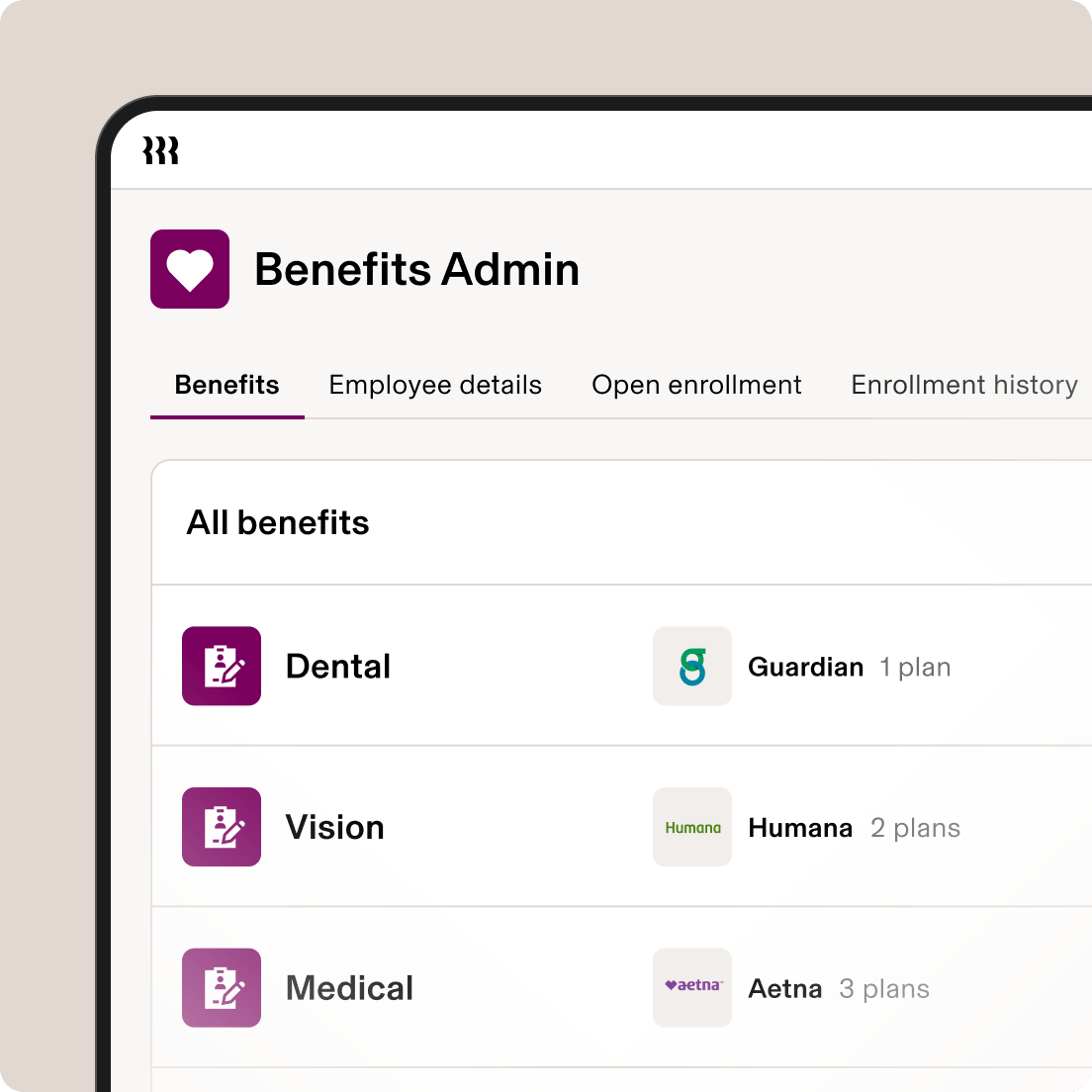
Supplemental benefits
While few benefits are required for US employees, many are standard for employers to offer to help them attract the best talent. These are some common parts of a benefits package for a full-time employee in the US:
- Retirement plans
- Healthcare
- Vision and dental coverage
- Paid time off
- Paid sick leave
- Paid family leave
- Equity benefits (such as stock options, restricted stock, or performance shares)
- Paid days off on public holidays
Labor law and compliance for employees in the US
Labor and employment law compliance in the US can be tricky. In addition to federal laws, each state can have varying laws that employers need to follow based on where their employees live and work. Here are a few key regulations to know:
Wages and hours
Under the federal Fair Labor Standards Act, qualifying employees are entitled to the federal minimum wage of $7.25 per hour plus overtime of 1.5 times their regular pay rate if they work more than 40 hours in a workweek. While states, counties, and cities cannot enact laws with minimum wages lower than the federal rate, they can enact minimum wages that are higher — and many have done so.
Workplace health and safety
The Occupational Safety and Health (OSH) Act is administered by the Occupational Safety and Health Administration (OSHA) and a number of OSHA-approved state programs. It requires employers to follow standards for keeping their workers safe and healthy, including protecting them from recognized, serious hazards.
Workers’ compensation
Workers’ compensation insurance provides income support and covers medical expenses for people who can’t work due to a job-related illness or injury. Federal workers’ compensation programs exist for federal employees and employees in the longshore, energy, and mining sectors. For other employees, businesses typically pay workers’ compensation taxes to the state where the employee lives; rates and requirements vary by state.
Labor unions
The National Labor Relations Act gives all employees the right to unionize, bargain collectively with their employer, strike or picket, or choose not to participate in any of these activities. The Act also makes it illegal for a union or an employer to threaten or harass an employee for choosing to participate or not.
FAQs
Do I need a local entity to hire employees in the US?
No. With an Employer of Record (EOR) like Rippling, you can legally hire and pay US employees without setting up a local legal entity. Rippling handles compliance, payroll, tax filings, and benefits administration on your behalf.
How does Rippling help classify US workers correctly?
Misclassifying employees as contractors can lead to fines and back taxes. Rippling’s Worker Classification Analyzer helps you determine the correct status of each worker, reducing risk and ensuring you stay compliant with IRS and Department of Labor rules.
What taxes am I responsible for when employing someone in the US?
US employment taxes vary by state and include federal income tax, Social Security, Medicare (FICA), federal unemployment tax (FUTA), state taxes, and local taxes. Rippling automatically calculates, withholds, and files these taxes to the right agencies.
What benefits are mandatory for US employees?
While the US has fewer federally mandated benefits than many countries, you may be required to offer Social Security, Medicare, unemployment insurance, and workers’ comp. Rippling can also help you offer competitive voluntary benefits like health insurance and 401(k) plans.
How long does it take to onboard a US employee using Rippling’s EOR?
With Rippling, you can typically onboard a US employee in just a few days. We manage offer letters, compliance documents, payroll setup, and IT provisioning — all in one unified platform.
Rippling global solutions
Ready to see Rippling Global in action?
By clicking “See Rippling”, you agree to the use of your data in accordance with Rippling’s Privacy Notice, including for marketing purposes.