


Currency: Pakistani Rupee (PKR)
Hire, manage, and pay employees in Pakistan
Hiring in Pakistan? Rippling handles local complexity and compliance so you can focus on growing your business.
Capital: Islamabad (UTC+5)
Payroll cycle: Monthly
Official language: Urdu
We value your privacy. Learn more.
![[Hero - Image] Pakistan](/_next/image?url=https%3A%2F%2Fimages.ctfassets.net%2Fk0itp0ir7ty4%2F5Ja1YxUMYdkjR07Wlqw481%2F4ddad708b1b561fd5672ce49083a4fe0%2Fpakistan-eor-hero-image-min_7-min.png&w=1440&q=75)
Trusted by 25,000+ companies
Rippling EOR makes it easy to hire in Pakistan
Onboard Pakistani employees in 90 seconds
Set up new hires in Pakistan with everything they need, from country-specific trainings to apps like Slack.
Pay your Pakistani team in PKR — in minutes
Pay all of your employees in Pakistan without waiting on transfers or conversion.
Automate your HR compliance work
Understanding and complying with Pakistani laws is hard work. Rippling does it for you.
Manage HR, IT, and Finance in one system
Juggling multiple systems for your team? That creates silos and busy work. Rippling does it all — in a single system.
Employer of Record (EOR) pricing
Everything you need to run and pay a global team
Rippling can help you address every step of your international growth while allowing you to transition easily between stages.
“Our CEO describes Rippling’s ability to scale globally as ‘priceless.’
Annabel Tomlin
VP of Operations at Sitemate

“Before Rippling, I would have had to coordinate with seven different people in different time zones. But I was able to do it for myself in 15 minutes — it was surprising and delightful, and inspirational.”
Varun Sharma
CEO at Enterpret
“I feel safe with Rippling—much more safe compared to Deel.”
Jisselle Baldwin-Todd
Head of HR at Crate
“We were originally working with Remote, as Deel was too expensive—but we knew we needed an all-in-one platform for future growth, and that was the key differentiator with Rippling.”
Christoper Welz
General Manager of Operations at Mozaik
“Rippling has eliminated tedious manual work, improved accuracy, and enabled faster, more efficient people operations, making HR and IT processes far more scalable and strategic.”
Selina Purdie
Head of People at SurrealDB
The preferred choice in the industry


Trusted by 25,000+ companies worldwide
Global hiring & employment
Hire employees in Pakistan in 90 seconds
Payroll and taxes
To run payroll in Pakistan, you need to understand regional wage regulations, determine the correct minimum wage based on province and worker skill level, and calculate mandatory employer and employee contributions. Rippling simplifies the entire process with one system for payroll and compliance. Since employers are responsible for calculating payroll deductions, it’s important to keep the following costs and regulations in mind:
Wages and payroll in Pakistan
There are several wage laws in Pakistan, including the Minimum Wages Ordinance of 1961 and the Payment of Wages Act of 1936. While the country has a national minimum wage for certain workers, each province and ICT sets its own wage regulations based on recommendations from the local Minimum Wage Board. Gaining a clear picture of local payroll practices is crucial to ensure compliance when hiring in Pakistan.
Minimum wage in Pakistan
Minimum wages in Pakistan are set at the provincial level and differ by region, industry, and skill level. Employers must check the latest provincial notifications — such as those issued by Punjab, Sindh, Khyber Pakhtunkhwa, Balochistan, and the Islamabad Capital Territory — to ensure compliance.
Employers will need to familiarize themselves with the wage laws of each region where they intend to hire.
Payroll frequency in Pakistan
Pakistan does not have a typical payroll frequency, meaning employers can pay employees daily, weekly, bi-weekly, or monthly—though you must pay them at least once a month. Employers should outline pay cycles in the employment agreement to ensure all parties are on the same page.
Employer and employee taxes
Pakistani employers must comply with tax obligations, including withholding and remitting payroll taxes and making mandatory contributions to the Employees’ Old-Age Benefit (EOAB) [5%], Provident Fund, and Punjab Employees Social Security Institution (PESSI) [6%]. Failing to comply with tax laws can result in serious consequences, especially with the Federal Board of Revenue’s recent push toward stricter tax enforcement and penalties.
![[River Flow Item - Image] Run Global Payroll | Paid Global Pakistan](/_next/image?url=https%3A%2F%2Fimages.ctfassets.net%2Fk0itp0ir7ty4%2F1mmJjZnPTYq0GRqh8WvwNx%2F81971a73f6941380e52ec9b6519a8531%2FRun_Global_Payroll_enPK.png&w=2880&q=75)
Determine your Pakistani workers’ employment status
Before onboarding your workers, and certainly before you run payroll, it’s crucial to understand who you’re paying in the eyes of Pakistani labor law: Are your workers employees or contractors?
It’s essential to classify them correctly to avoid penalties and compliance issues. If they’re employees, you’ll also be responsible for payroll deductions and mandatory contributions—such as income tax withholding, Employees’ Old-Age Benefit (EOAB), social security programs like PESSI, and other statutory benefits that vary by region.
With Rippling you can:
Employees
Employees are more integrated into the company, follow employer direction, receive benefits like insurance and paid leave, and are generally engaged for ongoing indefinite roles, with the employer responsible for workplace protections.
Contractors
Contractors have greater control over how they work, use their own tools, aren’t entitled to employee benefits, and typically work on short-term projects while managing their own taxes and liabilities.

Mandatory employee benefits in Pakistan
When hiring employees in Pakistan, it's crucial to offer them the right benefits package to stay compliant with Pakistani labor laws, as employees in Pakistan are entitled to a range of statutory protections and social security programs. Providing competitive benefits is also essential for attracting and retaining skilled talent in a rapidly growing labor market.
Invalidity and injury compensation
Employers must compensate employees for injuries or illnesses sustained in the workplace. In cases of temporary disability, the employers must pay a half-monthly payment for one year or one-third of the employee’s monthly wages for up to five years. If the injury results in permanent incapacity, the employer must pay the employee’s dependents a lump sum of PKR 200,000.
Old-age pension
Employers and employees both pay into the old-age pension, which female employees can receive at age 55 and male employees at age 60. The minimum monthly pension is PKR 5,250.
Survivor pension
If an employee dies as a result of an employment injury, their dependents are entitled to their minimum monthly pension.
Death grant
This grant is paid to the families of employees who passed away while receiving Pakistan’s sickness benefit. The amount must equal 30 times the rate of the daily sickness benefit and be a minimum of PKR 1,500.
Life insurance
Pakistani employers must offer group life insurance coverage of up to PKR 500,000 to their employees. The insurance plan must be from a reputable company.
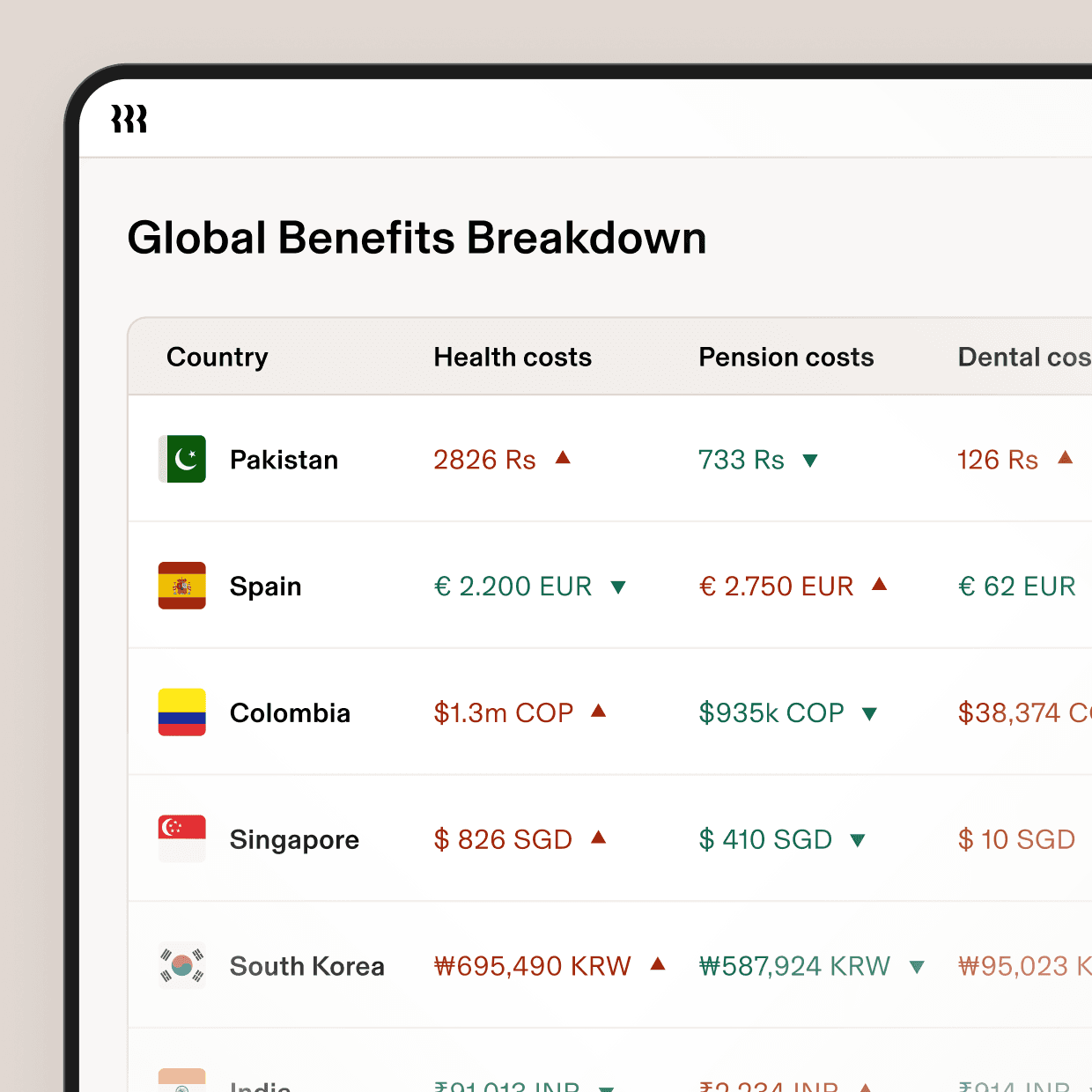
Complying with Pakistani labor laws
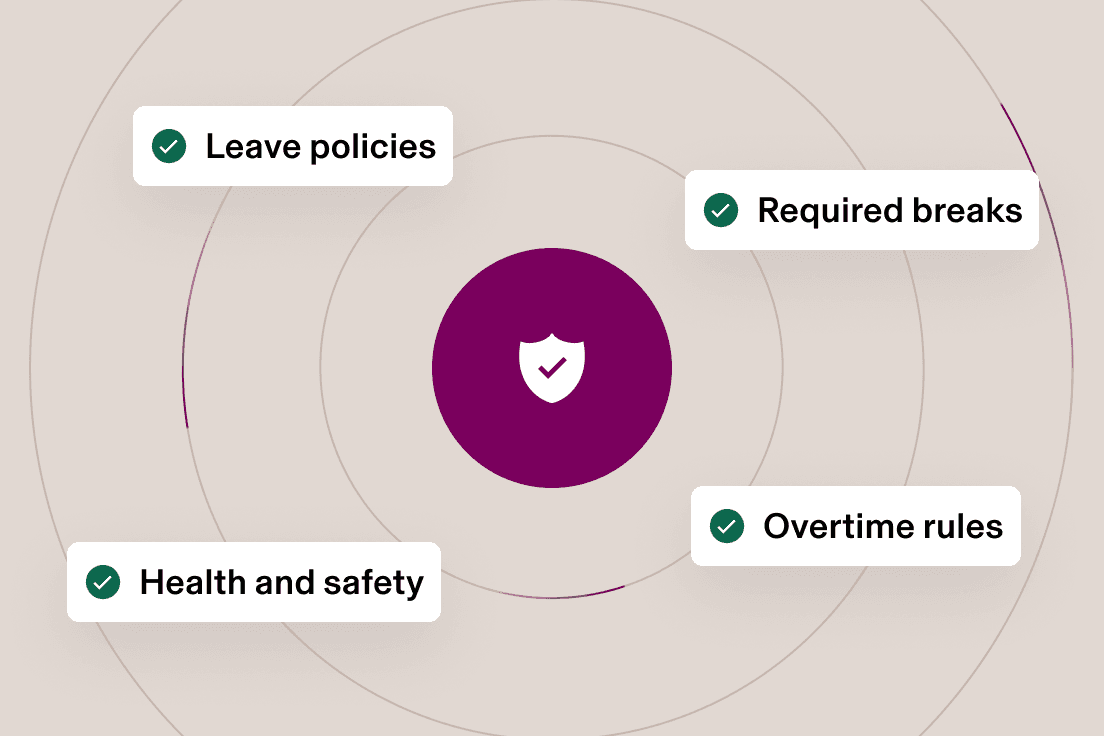
Ensuring you’re in compliance with Pakistani labor laws is one of the most crucial aspects of hiring. But Pakistan’s compliance landscape can be complex, especially as employers must navigate multiple labor statutes, provincial variations, and industry-specific rules — each with its own requirements and standards.
Here are some of the most important regulations you need to know when hiring in Pakistan:
Employment contracts in Pakistan
Pakistan requires employers to issue a written employment contract (appointment letter) that clearly defines the terms of service, as mandated by laws like the Standing Orders Ordinance 1968 and the Sindh Standing Orders Act 2015. Employment agreements vary by category—such as permanent, temporary, badli, apprentice, and contract workers. Contracts must outline key details including job role, wages, working hours, benefits, start date, probation, termination terms, and confidentiality clauses.
Labor unions in Pakistan
Unionization is not common in Pakistan. The country has a fairly low rate of union membership—only 2.2% of the workforce is unionized. Trade unions, in particular, have seen a strong decline, from 25% down to just 1% as of 2023. This is due to several socioeconomic challenges, including the rise of short-term contracts and political party leanings.
FAQs
Do I need a local entity to hire employees in Pakistan?
You can either set up a local legal entity or hire through an Employer of Record (EOR). With your own entity, you must register with authorities like the Federal Board of Revenue (FBR), Employees’ Old-Age Benefits Institution (EOBI), and relevant provincial labor departments, and handle payroll, taxes, and compliance yourself.
If you use an EOR, they act as the legal employer in Pakistan and manage contracts, payroll, taxes, and compliance so you can focus on managing the team’s day-to-day work.
What are the key requirements for employment contracts in Pakistan?
Written employment contracts (appointment letters) are required. They must follow local laws and clearly set out the employee’s terms of service. Key items to include are: • Employer and employee names • Start date and job description • Wages and working hours • Benefits and leave entitlements • Length of probation (often up to three months) • Termination policies • Any confidentiality and non-compete clauses
This gives clarity to both parties and reduces the risk of disputes.
How do I distinguish between an employee and an independent contractor in Pakistan?
Even though Pakistani law does not define contractors and employees as separate legal categories, authorities can still treat someone as an employee based on how they actually work. In general:
- Contractors control how, when, and where they work, can work for multiple clients, and handle their own taxes and benefits.
- Employees work under your direction, are integrated into your business, rely on you for regular wages, and receive statutory benefits and protections.
Misclassification can lead to back payment of wages and benefits, unpaid taxes, fines, and potential legal action from workers.
What are the main rules on working hours, wages, and leave in Pakistan?
Key points include:
- Working hours: Standard is nine hours per day and 48 hours per week. Overtime is capped and usually paid at double the normal hourly rate, though some roles and industries have different rules.
- Minimum wage: Set at the provincial level and by Islamabad Capital Territory, and can vary by industry and skill level, so you must check local rates where you hire.
- Leave: Employees are entitled to 14 days of annual paid leave after one year of service, 16 days of sick leave at 50% pay (with a medical certificate), 10 days of casual leave, and paid public holidays. Maternity and paternity leave rules depend on whether the employer operates in one province or across multiple provinces, with a federal act covering trans-provincial employers.
How does termination, notice, and severance work in Pakistan?
At-will employment does not exist in Pakistan. Employers must have a valid reason for termination and follow legal procedures.
- Probation: Up to three months, during which the relationship can be ended without notice, but all worked time must be paid.
- Notice: After probation, either party can end employment by giving one month of notice. If the employer does not give notice, they must pay one month of wages in lieu.
- Severance (gratuity): If the termination is not due to misconduct, employees are usually entitled to 30 days of wages for every year of service (rounding up when service exceeds six months in a given year).
Using an EOR can help ensure terminations follow local law and reduce legal risk.
Rippling global solutions
Ready to see Rippling Global in action?
We value your privacy. Learn more.