


Currency: Philippine peso (PHP)
Hire, manage, and pay employees in the Philippines
Hiring in the Philippines? Rippling handles local complexity and compliance so you can focus on growing your business.
Capital: Manila (GMT+8)
Payroll cycle: Biweekly
Official language: Filipino and English
We value your privacy. Learn more.

Trusted by 25,000+ companies
Rippling EOR makes it easy to hire in the Philippines
Onboard Filipino employees in 90 seconds
Set up new hires in the Philippines with everything they need, from country-specific trainings to apps like Slack.
Pay your Filipino team in PHP — in minutes
Pay all of your employees in the Philippines without waiting on transfers or conversion.
Automate your HR compliance work
Understanding and complying with laws in the Philippines is hard work. Rippling does it for you.
Manage HR, IT, and Finance in one system
Juggling multiple systems for your team? That creates silos and busy work. Rippling does it all — in a single system.
Employer of Record (EOR) pricing
Everything you need to run and pay a global team
Rippling can help you address every step of your international growth while allowing you to transition easily between stages.
“Our CEO describes Rippling’s ability to scale globally as ‘priceless.’
Annabel Tomlin
VP of Operations at Sitemate

“Before Rippling, I would have had to coordinate with seven different people in different time zones. But I was able to do it for myself in 15 minutes — it was surprising and delightful, and inspirational.”
Varun Sharma
CEO at Enterpret
“I feel safe with Rippling—much more safe compared to Deel.”
Jisselle Baldwin-Todd
Head of HR at Crate
“We were originally working with Remote, as Deel was too expensive—but we knew we needed an all-in-one platform for future growth, and that was the key differentiator with Rippling.”
Christoper Welz
General Manager of Operations at Mozaik
“Rippling has eliminated tedious manual work, improved accuracy, and enabled faster, more efficient people operations, making HR and IT processes far more scalable and strategic.”
Selina Purdie
Head of People at SurrealDB
The preferred choice in the industry

Trusted by 25,000+ companies worldwide
Global hiring & employment
Hire employees in the Philippines in 90 seconds
Payroll and taxes
There is no nationally set minimum wage in the Philippines, so pay ranges can vary across regions — typically highest in the country’s capital, Manila. Once you’ve decided between an EOR or your own entity and chosen a payroll solution, it’s important to take note of the following:
Minimum wage and overtime
The minimum wage in the Philippines varies by sector and region, with Metro Manila offering the highest at PHP 645 per day (PHP 608 for most agriculture, service, and retail roles).
Employees who work beyond eight hours a day must be paid at least 125% of their regular rate, with higher rates applicable on special holidays.
Cost of living allowance (COLA)
COLA is an integral part of minimum wage, designed to offset living costs in the Philippines. Employees can receive this fixed amount in addition to their base salary. Keep in mind that the exact amount differs based on sector and region.
Social security system (SSS)
A government-mandated program, acting like a state-run pension fund to which both an employer and employee contribute 12% of an employee’s monthly salary (8% employer share, 4% employee share) for a maximum salary of P20,000. The fund supports employees in the case of sickness, disability, and maternity benefits.
PhilHealth (Philippine health insurance corporation)
An affordable health insurance program for all Filipino employees. Employees and employers contribute to the fund on a monthly basis through 3% of an employee's salary.
Home development mutual fund (Pag-IBIG)
A national fund to which employers and employees contribute (contribution rates depend on the salary), offering home loan provisions for affordable housing to Philippine employees.

Determine your Filipino workers’ employment status
Before onboarding workers — or running payroll — it’s essential to correctly classify your workforce under Philippine law: Are they employees or independent contractors?
Misclassifying workers can lead to costly fines and compliance issues. The Philippines draws clear legal distinctions between contractors and employees, with different tax, benefits, and payroll obligations depending on classification. Here are some of the key differences under Philippine labor regulations:
With Rippling you can:
Employees
Employees are more integrated into the company, follow employer direction, receive benefits like insurance and paid leave, and are generally engaged for ongoing indefinite roles, with the employer responsible for workplace protections.
Contractors
Contractors have greater control over how they work, use their own tools, aren’t entitled to employee benefits, and typically work on short-term projects while managing their own taxes and liabilities.

Mandatory employee benefits in the Philippines
The Labor Code of the Philippines, which sets the minimum labor standards for its workforce, requires mandatory benefits programs — and the penalty for not complying is a sizable fine. While employers must meet these minimums, they are welcome to provide supplemental benefits as well. Mandatory benefits include:
Social security
The Philippines has a Social Security System (SSS) that funds the majority of its benefits. After employees and employers make their mandatory SSS contributions, the benefits that this system covers include retirement, sick leave, disability, maternity leave, death benefit, unemployment insurance, and funeral grants.
Health insurance
PhilHealth, the Philippine Health Insurance Corporation, is a government-owned healthcare program that covers all full-time Filipino employees. Employees and employers split monthly contributions 50-50, with premiums at 4.5% of an employee’s base salary — though this will increase to 5% for 2024 and 2025.
Home development mutual fund
The Pag-IBIG Fund is a government program that provides housing loans and financial assistance to Filipino citizens in search of affordable housing. Employers are required to contribute 2% of an employee’s monthly salary to the fund, while employees themselves contribute 1% or 2%, depending on their income.
Vacation entitlements
For every year they work, Filipino employees are entitled to five days of paid “service incentive leave,” which can also be converted to cash if not used.
Statutory holidays
There are two types of holidays in the Philippines: “regular holidays” and “special non-working holidays.” During regular holidays, employees are entitled to double pay if they are called in to work. On the other hand, special days are unpaid — except if an employee does have to work, in which case they’re entitled to a 30% pay bump.
13th month pay
Employers must provide all non-management employees in the Philippines with an extra month’s pay by Christmas Eve. To confirm they’ve made the mandatory payment, employers are required to file a compliance report by mid-January.
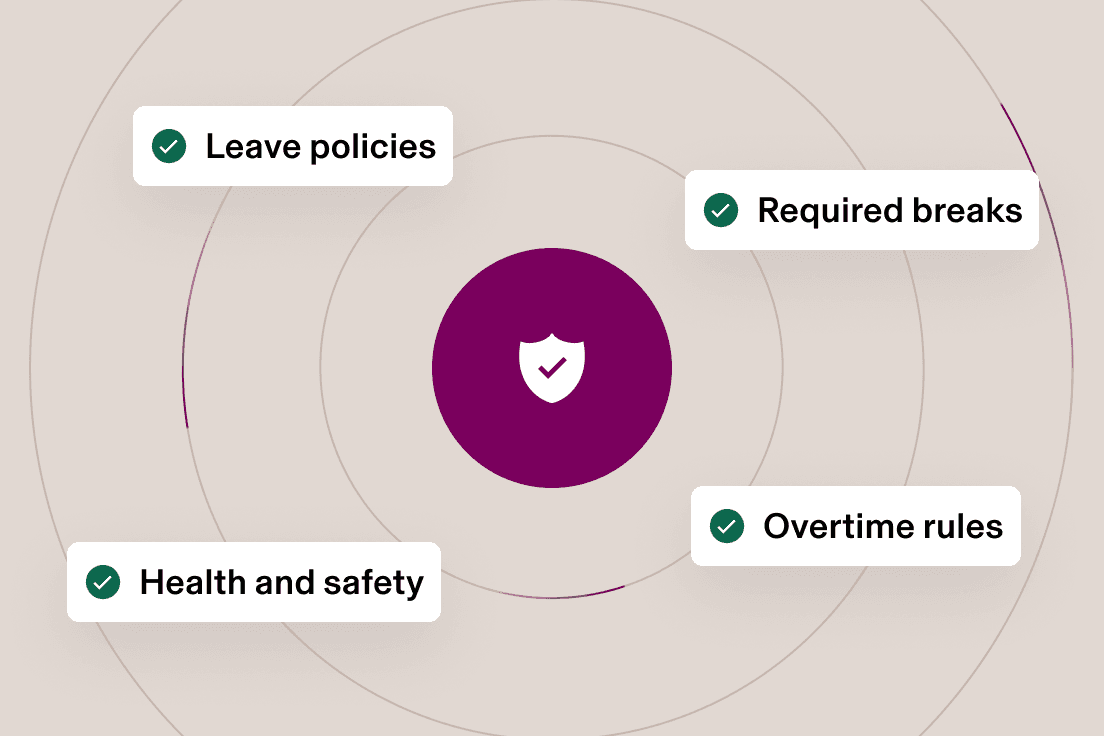
Complying with Philippine labor laws
The labor laws in the Philippines differ from any other country when it comes to leave benefits, social security, and overtime pay — and non-compliance could result in tens of thousands of PHP in fines or potential jail time.
Here are some regulations to keep in mind:
At-will employment doesn’t exist
Employees have a “right to security of tenure” and can only be dismissed for “just” or “authorized” causes as defined in the Labor Code of the Philippines.
Misclassifying employees can cost companies up to PHP 500,000
Employers who misclassify employees can face penalties like back pay, benefits reimbursement (with interest), hefty fines, and possible jail time.
Non-disclosure agreements (NDAs) are legally binding
Philippine courts typically uphold NDAs — provided they comply with other laws of the Philippines and aren’t used to cover up criminal behavior.
Employers are responsible for workplace health and safety standards
Employees are protected from injury, sickness, and other safety hazards, with violation penalties ranging from PHP 20,000 to PHP 50,000.
Filipino employees have the right to join trade unions
Collective bargaining agreements give employees a say in their working conditions. These agreements include provisions like information on wages, night shift differential pay, service incentive leave, terminations, working conditions, and disciplinary action.
FAQs
Do I need to set up a local entity to hire employees in the Philippines?
No. You can hire full-time employees in the Philippines without setting up a local entity by using an Employer of Record (EOR) like Rippling. The EOR becomes the legal employer, handling payroll, compliance, taxes, and benefits on your behalf — so you can start hiring in days instead of months.
What are the key compliance risks when hiring in the Philippines?
The most common risks include worker misclassification, non-compliance with labor laws (like 13th month pay and statutory benefits), and failure to withhold the right taxes. Rippling mitigates these risks by ensuring compliant employment contracts, accurate payroll deductions, and automatic tax filings.
Do employers in the Philippines commonly implement a probationary period for new hires?
Yes, Philippine companies often have probationary periods, typically lasting six months. Employers use that time to monitor a new hire’s performance and determine whether they are a good fit for the company in the long run.
If we look at it from a payroll perspective, two things are important to keep in mind:
- Probationary employees are usually entitled to the same pay rate as regular employees, although their benefits may differ depending on the company’s policy.
- If an employer decides not to retain a probationary employee, they must ensure that termination complies with due process under Philippine law. On the other hand, whether severance pay will be required depends on the circumstances of the termination.
What are the mandatory employee benefits in the Philippines?
Employers must contribute to the Social Security System (SSS), PhilHealth, and Pag-IBIG Fund. Employees are also entitled to 13th month pay, 5 days of service incentive leave, and holiday pay. Rippling automates these benefits and ensures timely contributions to all government agencies.
What are the late tax filing penalties in the Philippines?
The BIR imposes several penalties for violating tax requirements:
- Surcharge: There is a civil penalty rate of 25% on the amount of tax due for failing to file a return
- Interest: Any unpaid taxes are subject to a 12% annual interest fee or 1% per month
- Compromise: If you don’t file a return on time, provide inaccurate information, or fail to withhold the necessary tax deductions, you’re subject to fines of up to PHP 20,000 and can face between 1 and 10 years’ imprisonment
Rippling global solutions
Ready to see Rippling Global in action?
We value your privacy. Learn more.