


Currency: South Korean won (KRW)
Hire, manage, and pay employees in South Korea
Hiring in South Korea? Rippling handles local complexity and compliance so you can focus on growing your business.
Capital: Seoul (GMT +9)
Payroll cycle: Monthly
Official language: Korean
We value your privacy. Learn more.
![[Hero - Image] South Korea](/_next/image?url=https%3A%2F%2Fimages.ctfassets.net%2Fk0itp0ir7ty4%2F3tDNwb9BujX19kUHAcjlaA%2F686b484abf390d583f4973f7f1d58db5%2Fsouthkorea-eor-hero-image-min_10-min.png&w=1440&q=75)
Trusted by 25,000+ companies
Rippling EOR makes it easy to hire in South Korea
Onboard South Korean employees in 90 seconds
Set up new hires in South Korea with everything they need, from country-specific trainings to apps like Slack.
Pay your South Korean team in KRW — in minutes
Pay all of your employees in South Korea without waiting on transfers or conversion.
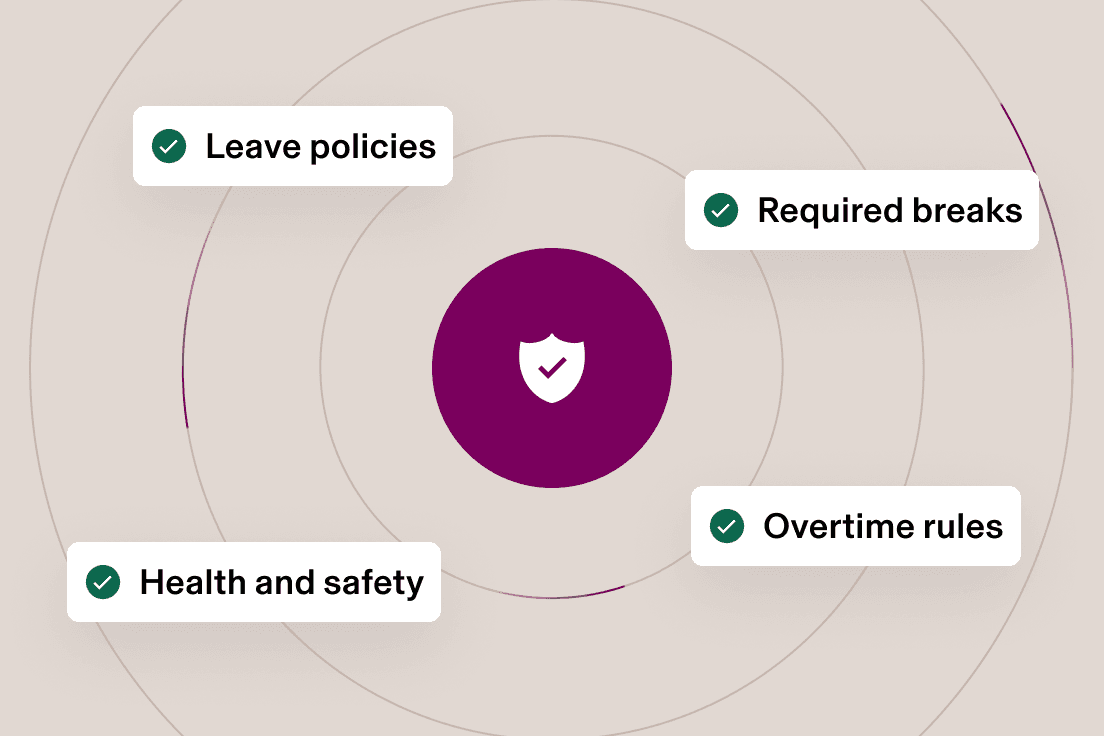
Automate your HR compliance work
Understanding and complying with South Korean laws is hard work. Rippling does it for you.
Manage HR, IT, and Finance in one system
Juggling multiple systems for your team? That creates silos and busy work. Rippling does it all — in a single system.
Employer of Record (EOR) pricing
Everything you need to run and pay a global team
Rippling can help you address every step of your international growth while allowing you to transition easily between stages.
“Our CEO describes Rippling’s ability to scale globally as ‘priceless.’
Annabel Tomlin
VP of Operations at Sitemate
“Before Rippling, I would have had to coordinate with seven different people in different time zones. But I was able to do it for myself in 15 minutes — it was surprising and delightful, and inspirational.”
Varun Sharma
CEO at Enterpret
“I feel safe with Rippling—much more safe compared to Deel.”
Jisselle Baldwin-Todd
Head of HR at Crate
“We were originally working with Remote, as Deel was too expensive—but we knew we needed an all-in-one platform for future growth, and that was the key differentiator with Rippling.”
Christoper Welz
General Manager of Operations at Mozaik
“Rippling has eliminated tedious manual work, improved accuracy, and enabled faster, more efficient people operations, making HR and IT processes far more scalable and strategic.”
Selina Purdie
Head of People at SurrealDB
The preferred choice in the industry

Trusted by 25,000+ companies worldwide
Global hiring & employment
Hire employees in South Korea in 90 seconds
Payroll and taxes
To run payroll in South Korea, you need to understand national wage regulations, stay current with annual minimum wage updates, and calculate mandatory employer and employee contributions. Rippling simplifies the entire process with one system for payroll and compliance. Since employers are responsible for calculating payroll deductions, it’s important to keep the following costs and regulations in mind:
Payroll frequency in South Korea
Most employers in South Korea pay employees monthly, with wages required by law to be paid in full, directly to the worker, on a fixed date at least once per month. Payroll involves calculating gross wages, withholding taxes, making mandatory social insurance contributions, and ensuring accurate, on-time payments to avoid disputes.
13th month pay in South Korea
Unlike some markets where a 13th salary is customary, South Korea does not legally mandate a 13th month payment. However, many employers offer performance bonuses or seasonal allowances, particularly around the Lunar New Year (Seollal) and Chuseok holidays, as part of cultural tradition.
Providing holiday or seasonal bonuses can foster goodwill and help you stand out as a considerate employer.
Employer taxes in South Korea
- National Pension: 4.50%
- National Health Insurance: 3.545%
- Employment Insurance (varies by industry): 1.05% to 1.65%
- Long Term Care Insurance: 0.459%
- Worker Accident Compensation Insurance (varies by industry): 0.606%-18.60%
- Resident Tax: 0.50%
![[River Flow Item - Image] Run Global Payroll | Paid Global South Korea](/_next/image?url=https%3A%2F%2Fimages.ctfassets.net%2Fk0itp0ir7ty4%2F4SAdikk83z1fdyo2eOs4Ik%2Fb0746353a8b4bbc96a726775488d3fa2%2FRun_Global_Payroll_enKR.png&w=2880&q=75)
Determine your South Korean workers’ employment status
Before onboarding your workers, and certainly before you run payroll, it’s crucial to understand who you’re paying in the eyes of South Korean labor law: Are your workers employees or independent contractors?
It’s essential to classify them correctly to avoid penalties and compliance issues. If they’re employees, you’ll also be responsible for payroll deductions and mandatory contributions—such as income tax withholding, National Pension, Health Insurance, Employment Insurance, and Industrial Accident Compensation Insurance.
With Rippling you can:
Employees
Employees are more integrated into the company, follow employer direction, receive benefits like insurance and paid leave, and are generally engaged for ongoing indefinite roles, with the employer responsible for workplace protections.
Contractors
Contractors have greater control over how they work, use their own tools, aren’t entitled to employee benefits, and typically work on short-term projects while managing their own taxes and liabilities.
Mandatory employee benefits in South Korea
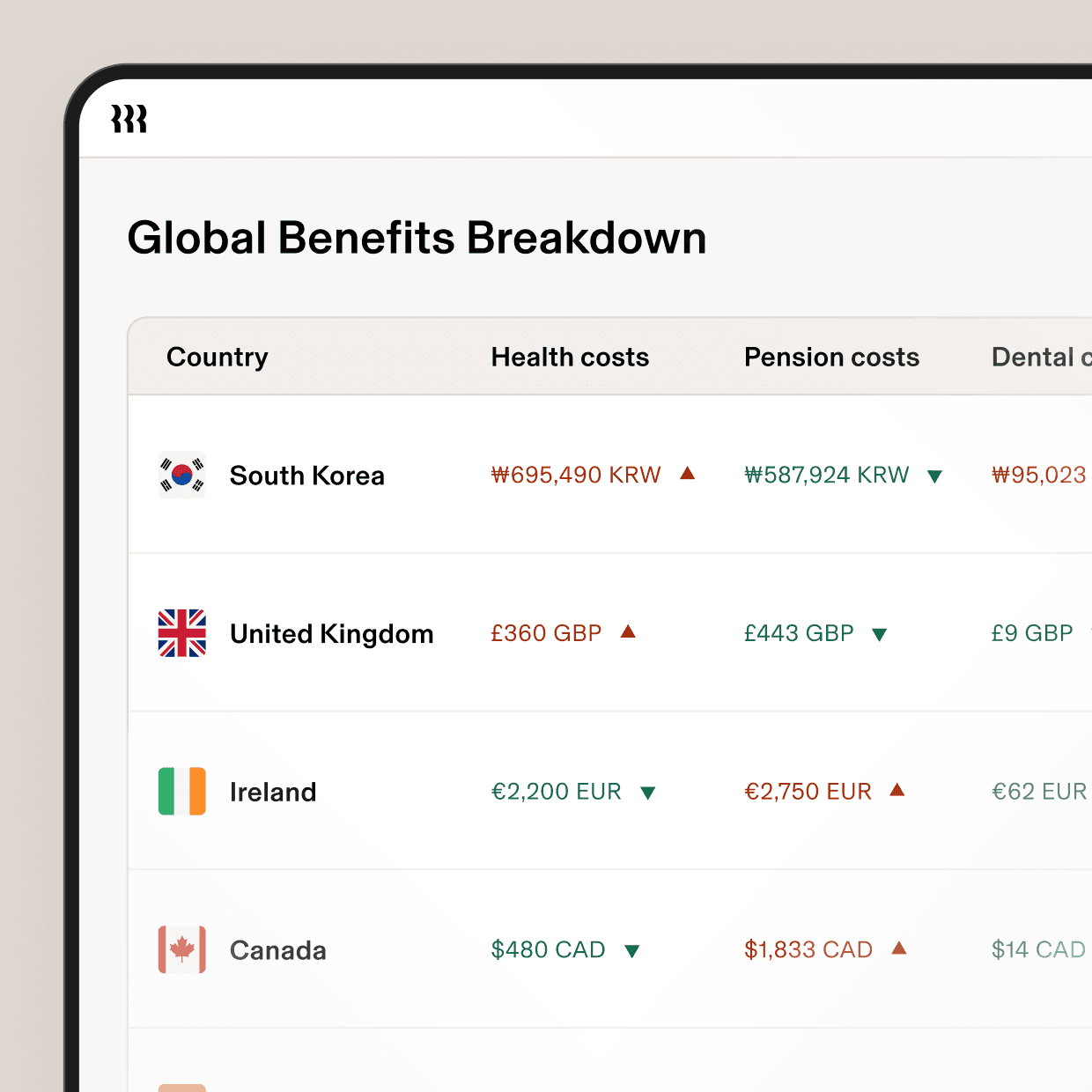
When hiring in South Korea, employers must provide legally required benefits and social security contributions to stay compliant with labor laws. Competitive optional perks—like meal allowances or commuter support—can further strengthen your ability to attract and retain top talent. Understanding both mandatory and optional benefits early on helps ensure compliance and enhances your employer brand.
National Pension
Both employees and employers contribute to South Korea's pension scheme. The pension rate is currently 4.5%.
National Health Insurance
All South Korean residents receive automatic coverage from the country's National Health Insurance Program, which is funded by contributions from employees and employers, government subsidies, and surcharges from tobacco product sales. The employee and employer contribution rate is 3.43%.
Employment Insurance
Employment Insurance covers living expenses for South Korean residents who find themselves unemployed. Rates for employer contributions range from 1.05% to 1.65%, and the employee contribution rate is 0.8%.
Industrial Accident Compensation Insurance
South Korean employees are covered by this insurance in the event of a work-related accident. Employers contribute at a rate of 0.7% to 1.9%.
Complying with South Korean labor laws
Ensuring compliance with South Korean labor laws is essential when hiring employees. Korea’s regulatory landscape is highly developed, with strict national statutes governing contracts, wages, social insurance, working hours, and terminations. Employers must also consider rules around worker classification, visas, and required benefits, all of which carry significant penalties for noncompliance.
Here are some of the most important regulations you need to understand when hiring in South Korea:
Employment contracts in South Korea
To hire employees in South Korea, employers must provide a written contract outlining key terms such as role duties, working hours, compensation, benefits, and termination rules. Most contracts are indefinite by default, while fixed-term contracts require a legally justifiable reason. Agreements should clearly specify contract type, statutory working-hour limits, pay structure, and severance (퇴직금), with precise wording to prevent disputes.
Labor unions in South Korea
Unions in South Korea remain influential, particularly in large industrial sectors and Chaebol companies, where they advocate for wages and working conditions and may operate under collective bargaining agreements. During disputes or layoffs, unions can initiate strikes or involve the Ministry of Employment and Labor for mediation. Maintaining positive, cooperative relationships with unions helps employers foster stability and long-term workforce loyalty.
Mitigating permanent establishment risk in South Korea
A permanent establishment (PE) arises when a foreign company has a fixed place of business in South Korea—such as a branch, office, factory, construction site exceeding six months, or a location where employees provide services for a sustained period. If classified as a PE, the company may owe Korean corporate taxes on profits generated locally. Because PE rules are complex, consulting Korean tax and legal experts is recommended to ensure compliance and manage risk.
Probationary period in South Korea
In South Korea, probation periods of up to three months are common, during which employers may terminate employment for poor performance, though decisions can still be legally challenged and employees are entitled to severance and other protections. Some collective bargaining agreements set additional rules. Employers should provide training, feedback, and fair evaluations to ensure a constructive and respectful probation process.
Local laws in South Korea
In addition to core labor laws, employers in South Korea must comply with regulations on data privacy, workplace safety, and fair hiring to avoid penalties and support a harmonious work environment. Key laws include the Personal Information Protection Act (PIPA), the Occupational Safety and Health Act, and the Fair Hiring Procedure Act, which govern data handling, safety standards, and nondiscriminatory recruitment practices.
FAQs
Do I need a local entity to hire in South Korea, or can I use an EOR?
You can hire in South Korea either by setting up a local legal entity or by using an Employer of Record (EOR).
With your own entity, you register with the National Tax Service (NTS), enroll employees in the four major social insurances, and manage compliance with laws like the Labor Standards Act yourself.
With an EOR such as Rippling, the EOR becomes the legal employer in South Korea. They handle employment contracts, payroll, taxes, and social insurance while you manage the employee’s day to day work. This is usually faster and less complex if you are just entering the market or have a smaller team.
What is the difference between an employee and an independent contractor in South Korea?
Under Korean law, employees receive statutory protections, while independent contractors do not.
- Independent contractors set their own hours, use their own tools, can subcontract work, often work for multiple clients, and usually perform project-based or time-limited work. They handle their own taxes and social security.
- Employees work under the employer’s direction regarding when, where, and how they work, use company tools, cannot subcontract their duties, and usually work continuously for one employer. They are entitled to benefits, severance, and employment protections under the Labor Standards Act.
If you manage someone like an employee but call them a contractor, courts may treat them as an employee, which can trigger back pay, unpaid benefits, and penalties for misclassification.
What are the basic payroll and tax obligations for employers in South Korea?
Employers must pay at least the national minimum wage and follow strict rules on wage payment timing and methods. Most employees are paid monthly, on a fixed date, and wages must be paid in full and directly to the worker.
You are also responsible for calculating and paying your share of social insurance and withholding the employee share. Typical employer contributions include:
- National Pension
- National Health Insurance and Long Term Care Insurance
- Employment Insurance
- Industrial Accident Compensation Insurance
- Resident (local) tax
You must withhold employee contributions to those programs and also withhold and remit national and local income taxes on a progressive rate schedule.
What are standard working hours, overtime rules, and leave entitlements in South Korea?
The standard workweek is 40 hours, usually five days of eight hours each. Hours beyond this count as overtime, which is generally capped at 12 hours per week. Some sectors can exceed this if employees receive at least 11 hours of rest between shifts.
Key rules include:
- Overtime is paid at least 1.5 times the regular hourly wage, with higher rates for night work and public holidays.
- Employees working at least 4 hours get a 30 minute break; at 8 hours they get at least a 1 hour break.
- Employees must receive at least one rest day per week.
- Annual leave starts at 11 days and scales up with years of service for employees who maintain at least 80 percent attendance.
- There are statutory entitlements for maternity, paternity, parental, adoption, and childcare leave, plus protections like breastfeeding breaks after maternity leave.
How does termination work in South Korea, and is at will employment allowed?
At will employment does not exist in South Korea. Employers must have just cause and follow fair procedures to terminate an employee. Valid reasons include serious misconduct, underperformance that has been documented, or genuine business needs like restructuring.
Key termination rules:
- At least 30 days’ notice or 30 days’ pay in lieu is required, except in serious misconduct cases.
- Severance pay is mandatory for employees with at least one year of continuous service and is typically one month of average wages per year of service, paid within 14 days of termination.
- Poorly documented or arbitrary terminations can be ruled invalid, leading to reinstatement or compensation.
Many foreign employers use an EOR to help manage just cause standards, notice, and severance so terminations stay compliant with Korean labor law.
Rippling global solutions
Ready to see Rippling Global in action?
We value your privacy. Learn more.