


Currency: Euro (€)
Hire, manage, and pay employees in Spain
Hiring in Spain? Rippling handles local complexity and compliance so you can focus on growing your business.
Capital: Madrid (GMT +1)
Payroll cycle: Monthly
Official language: Spanish
We value your privacy. Learn more.
![[Hero - Image] Spain](/_next/image?url=https%3A%2F%2Fimages.ctfassets.net%2Fk0itp0ir7ty4%2F5bzAzH0BzawPwoAGz20oaF%2Fb4ea4f450cf9ff391b7b55e1712c2764%2Fspain-eor-hero-image-min_9-min.png&w=1440&q=75)
Trusted by 25,000+ companies
Rippling EOR makes it easy to hire in Spain
Onboard employees in Spain
Set up new hires in Spain with everything they need, from country-specific trainings to apps like Slack.
Pay your team in Spain
Pay all of your employees in Spain without waiting on transfers or conversion.
Automate your HR compliance work
Understanding and complying with Spanish laws is hard work. Rippling does it for you.
Manage HR, IT, and Finance in one system
Juggling multiple systems for your team? That creates silos and busy work. Rippling does it all — in a single system.
Employer of Record (EOR) pricing
Everything you need to run and pay a global team
Rippling can help you address every step of your international growth while allowing you to transition easily between stages.
“Our CEO describes Rippling’s ability to scale globally as ‘priceless.’
Annabel Tomlin
VP of Operations at Sitemate

“Before Rippling, I would have had to coordinate with seven different people in different time zones. But I was able to do it for myself in 15 minutes — it was surprising and delightful, and inspirational.”
Varun Sharma
CEO at Enterpret
“I feel safe with Rippling—much more safe compared to Deel.”
Jisselle Baldwin-Todd
Head of HR at Crate
“We were originally working with Remote, as Deel was too expensive—but we knew we needed an all-in-one platform for future growth, and that was the key differentiator with Rippling.”
Christoper Welz
General Manager of Operations at Mozaik
“Rippling has eliminated tedious manual work, improved accuracy, and enabled faster, more efficient people operations, making HR and IT processes far more scalable and strategic.”
Selina Purdie
Head of People at SurrealDB
The preferred choice in the industry

Trusted by 25,000+ companies worldwide
Global hiring & employment
Hire employees in Spain in 90 seconds
Payroll and taxes
To run payroll in Spain, you need to understand national wage regulations, comply with Spain’s statutory minimum wage (SMI), and apply the terms of any relevant collective bargaining agreements (CBAs). Rippling simplifies the entire process with one system for payroll and compliance. Since employers are responsible for calculating payroll deductions, it’s important to keep the following costs and regulations in mind:
Social security
Varies by industry. Typically 30-32% with a contribution ceiling. Employers may owe more for high-risk work.
Wage Guarantee Fund
0.2%
Vocational Training
0.6%
Unemployment
5.5%
Occupational Insurance
Varies depending on industry and coverage
![[River Flow Item - Image] Run Global Payroll | Paid Global Spain](/_next/image?url=https%3A%2F%2Fimages.ctfassets.net%2Fk0itp0ir7ty4%2F3aBezlfgC47XM41QdNOYak%2F6c0d559f5f03372985626b093d5f2dc9%2FRun_Global_Payroll_enES_enCO_enKR_enPK_enSG.png&w=2880&q=75)
Determine your Spanish workers’ employment status
Before onboarding workers in Spain, it's crucial to determine whether they should be classified as employees or independent contractors, as misclassification can lead to penalties and back payments.
With Rippling you can:
Employees
Employees are more integrated into the company, follow employer direction, receive benefits like insurance and paid leave, and are generally engaged for ongoing indefinite roles, with the employer responsible for workplace protections.
Contractors
Contractors have greater control over how they work, use their own tools, aren’t entitled to employee benefits, and typically work on short-term projects while managing their own taxes and liabilities.

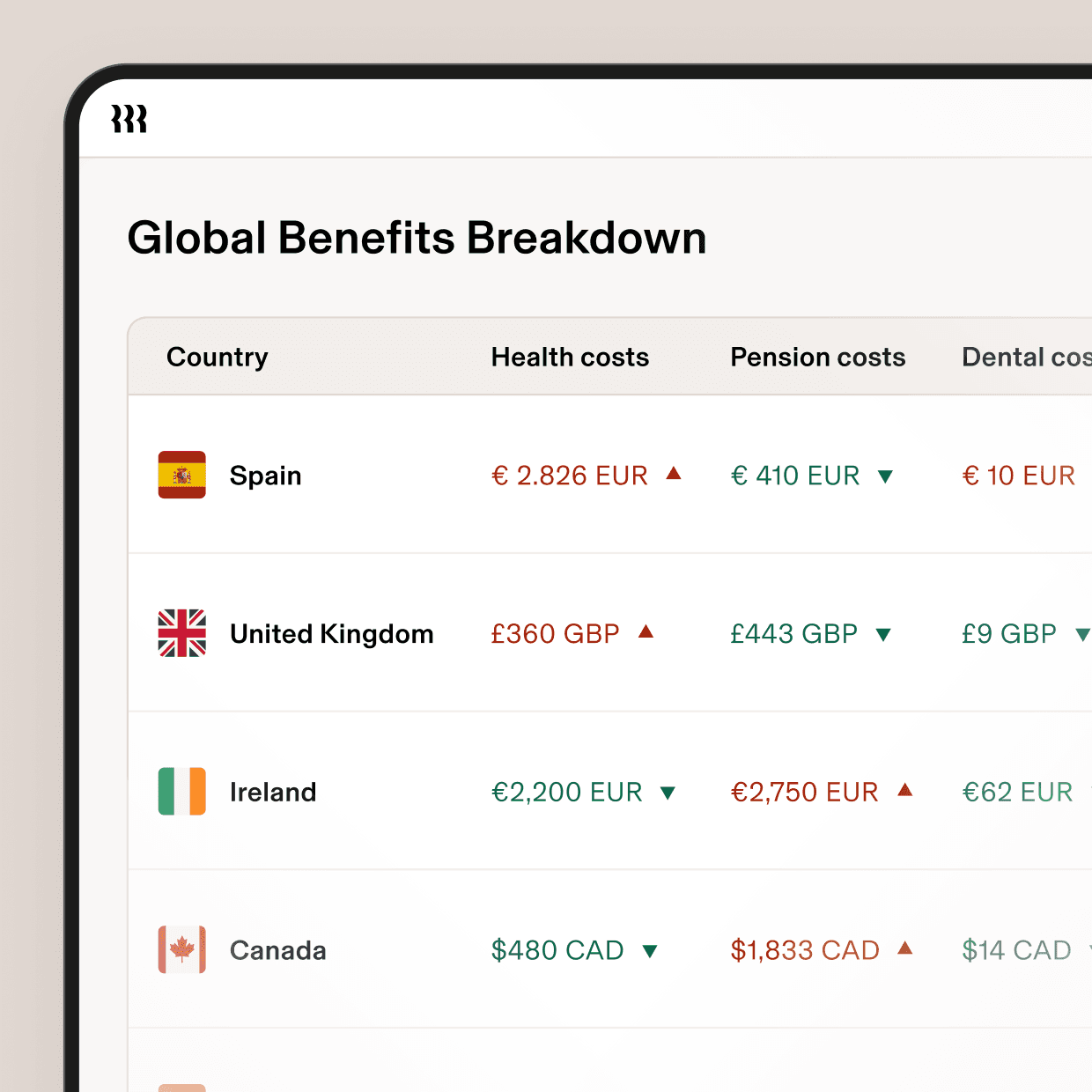
Mandatory employee benefits in Spain
When hiring in Spain, employers must provide benefits that comply with national labor laws and collective bargaining agreements. Spain provides a mix of national, regional, and local public holidays (up to 14 per year), with exact entitlements depending on location and a range of legally required leave entitlements such as maternity, paternity, and sick leave. While Spain’s social security system offers extensive protections, employers must still meet their statutory obligations when designing employee benefit packages.
Statutory holidays
In Spain, employees enjoy 14 days of paid public holidays, including both national and local holidays, with the practice of taking off the following Monday if a holiday falls on a weekend.
Leave
Spain has very specific laws for leave which may change per collective bargaining agreements. This includes paternity, maternity, sick leave, and more.
Complying with Spanish labor laws
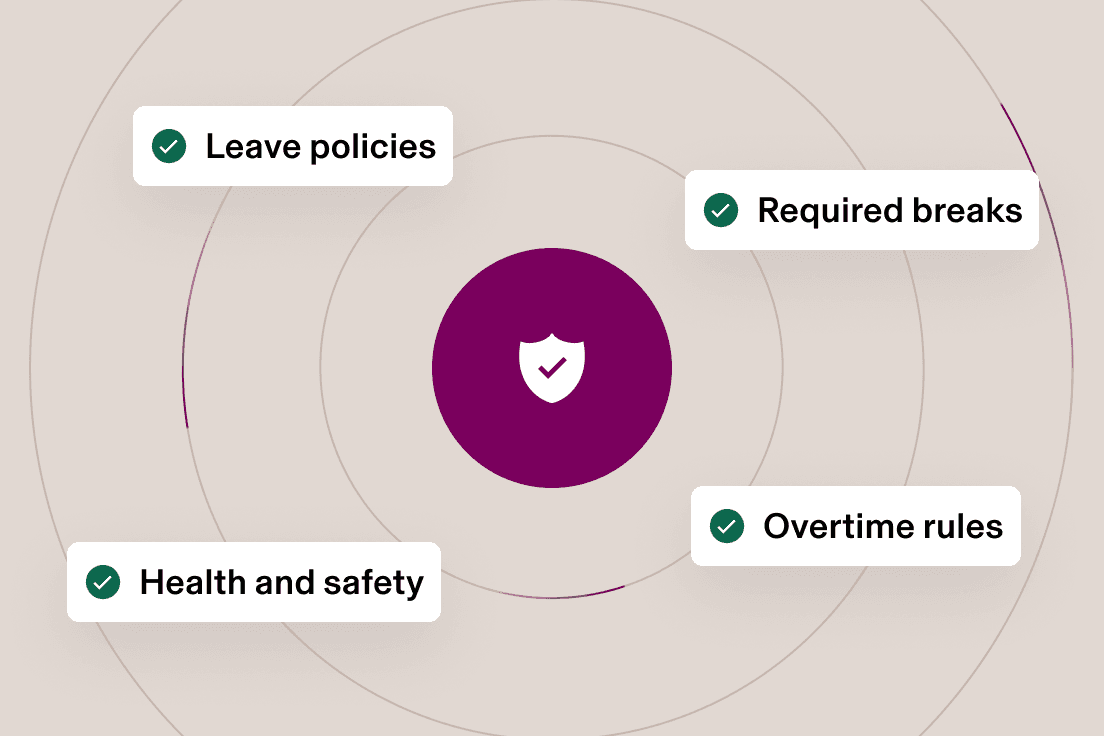
Ensuring you’re in compliance with Spanish labor laws is one of the most crucial aspects of hiring. But Spain’s compliance landscape can be complex, especially as employers must navigate national legislation, EU regulations, collective bargaining agreements, and industry-specific standards — each with its own requirements and obligations.
Here are some of the most important regulations you need to know when hiring in Spain:
Job regulations vary by industry
Job regulations vary by industry, with each professional category having its own laws regarding working hours, vacation time, and compensation.
Spanish workers have generous vacation entitlements
Full-time workers in Spain get 30 paid days of vacation per year.
Spain has strict laws around data protection for workers
Employees are protected from being unfairly monitored through the EU’s General Data Protection Regulation (GDPR) and Spain’s Data Protection Act.
Terminating employees in Spain
Employment law in Spain is very strict when it comes to dismissals. They need to be based on objective grounds and most cases also require notice periods and severance pay.
In Spain, the employer must provide written notice to both the affected workers and their representatives (HR and the union) to terminate an employment contract. However, if the termination is the result of disciplinary issues, the employer does not need to provide a notice or severance pay.
FAQs
Do I need a local entity to hire employees in Spain, or can I use an EOR?
You can do either.
If you set up a legal entity, you must register with local authorities like the Spanish Tax Agency and National Social Security Institute, obtain an NIF tax ID, open a local bank account, notarize documents, and manage tax and labor compliance yourself. This is slower to set up but can be more cost-effective once you have a larger team.
If you use a Spanish EOR, they act as the legal employer. They handle localized contracts, payroll, benefits, and collective bargaining agreement (CBA) obligations, so you can start hiring in days without creating an entity. The tradeoff is that ongoing cost scales with headcount.
How should I classify workers in Spain: employees vs. contractors?
Spain is strict on misclassification and “falso autónomo” (fake freelancer) arrangements. In general:
Contractors
- Organize their work with autonomy and set their own hours and holidays
- Are not in the company org chart and usually work on their own premises
- Use and pay for their own tools
- Are paid for completed projects or goals, not a regular salary
- Do not receive employee benefits and pay their own taxes
Employees
- Work under the employer’s direction, with guided working methods and hours
- Are integrated into the organization, often on the employer’s premises
- Use company-provided or reimbursed tools
- Receive a consistent salary or wage
- Are entitled to minimum wage, overtime, vacation, parental leave, and other benefits
Misclassifying employees as contractors can lead to fines and legal exposure.
Who needs a work permit in Spain, and what types are available?
Any non-EU citizen generally needs a work permit to work in Spain. Employing someone without proper authorization is illegal and can lead to fines, criminal penalties, or even a ban on hiring foreign workers.
Spain offers several types of work permits, including:
- Type A: Seasonal or limited work, up to nine months
- Type B (initial and renewal): Work in a specific occupation and region, up to two years total
- Type C: Renewal after a Type B permit
- Permanent work permit: After Type C, allows unlimited duration but must be renewed every five years
- Extraordinary permit: For non-EU citizens who contribute to Spain’s economic or cultural progress
- Type F: For work at Spanish borders while residing in the country of origin
- EU Blue Card: For highly skilled, highly educated non-EU workers, allowing work in many EU countries
What are the basics of paying employees in Spain?
You first need to choose a payroll setup through either your own entity or an EOR. Then:
- Confirm each worker is correctly classified.
- Collect required employee data (name, dates, contact, and bank details).
- Pay in EUR, or obtain written consent if paying in another currency.
- Apply statutory deductions correctly.
- Run payroll on schedule.
Key employer payroll costs include:
- Social security: Typically around 30–32 percent, with a contribution ceiling and higher rates for high-risk work
- Wage Guarantee Fund: 0.2 percent
- Vocational Training: 0.6 percent
- Unemployment insurance: 5.5 percent
- Occupational insurance: Varies by industry and coverage
What mandatory benefits and labor protections do employees in Spain receive?
Spanish employees benefit from protections set by EU law, the Spanish Constitution, the Workers’ Statute, and collective bargaining agreements. At a minimum, you must provide:
- Public holidays: 14 paid public holidays per year, combining national and local days
- Generous vacation: Full-time employees receive 30 paid vacation days per year
- Leave entitlements: Statutory maternity, paternity, sick leave, and other leave types, often enhanced by CBAs
- Strong data and privacy protections: Employees are protected from unfair monitoring under GDPR and Spain’s Data Protection Act
Termination is tightly regulated. Most dismissals require objective grounds, written notice to the employee and their representatives, and often severance pay. Disciplinary dismissals follow different rules and may not require notice or severance if justified and documented correctly.
Rippling global solutions
Ready to see Rippling Global in action?
We value your privacy. Learn more.