


Currency: Pound Sterling (GBP)
Hire, manage, and pay employees in the UK
Hiring in the UK? Rippling handles local complexity and compliance so you can focus on growing your business.
Capital: London (GMT+1)
Payroll cycle: Monthly
Official language: English
We value your privacy. Learn more.

Trusted by 25,000+ companies
Rippling EOR makes it easy to hire in the UK
Onboard UK employees in 90 seconds
Set up new hires in the UK with everything they need, from country-specific trainings to apps like Slack.
Pay your UK team in GBP (£) — in minutes
Pay all of your employees in the UK without waiting on transfers or conversion.
Automate your HR compliance work
Understanding and complying with the UK laws is hard work. Rippling does it for you.
Manage HR, IT, and Finance in one system
Juggling multiple systems for your team? That creates silos and busy work. Rippling does it all — in a single system.
Employer of Record (EOR) pricing
Everything you need to run and pay a global team
Rippling can help you address every step of your international growth while allowing you to transition easily between stages.
“Our CEO describes Rippling’s ability to scale globally as ‘priceless.’
Annabel Tomlin
VP of Operations at Sitemate

“Before Rippling, I would have had to coordinate with seven different people in different time zones. But I was able to do it for myself in 15 minutes — it was surprising and delightful, and inspirational.”
Varun Sharma
CEO at Enterpret
“I feel safe with Rippling—much more safe compared to Deel.”
Jisselle Baldwin-Todd
Head of HR at Crate
“We were originally working with Remote, as Deel was too expensive—but we knew we needed an all-in-one platform for future growth, and that was the key differentiator with Rippling.”
Christoper Welz
General Manager of Operations at Mozaik
“Rippling has eliminated tedious manual work, improved accuracy, and enabled faster, more efficient people operations, making HR and IT processes far more scalable and strategic.”
Selina Purdie
Head of People at SurrealDB
The preferred choice in the industry


Trusted by 25,000+ companies worldwide
Global hiring & employment
Hire employees in the UK in 90 seconds
Payroll and taxes
To run payroll in the UK, you need to register with HMRC, collect key employee information, pay in GBP, and handle all tax and National Insurance deductions through the PAYE system. Rippling simplifies the entire process with one system for payroll, compliance, and reporting. Since UK employers are responsible for calculating and remitting deductions, it’s important to keep these core obligations in mind:
National Minimum Wage and National Living Wage rates
The rates change on 1 April every year.
From April 2025, the rates (per hour) are:
- £12.21 (aged 21 and over)
- £10 (aged 18 to 20)
- £7.55 (aged under 18)
- £7.55 (apprentice rate)
Pay As You Earn (PAYE) and income tax
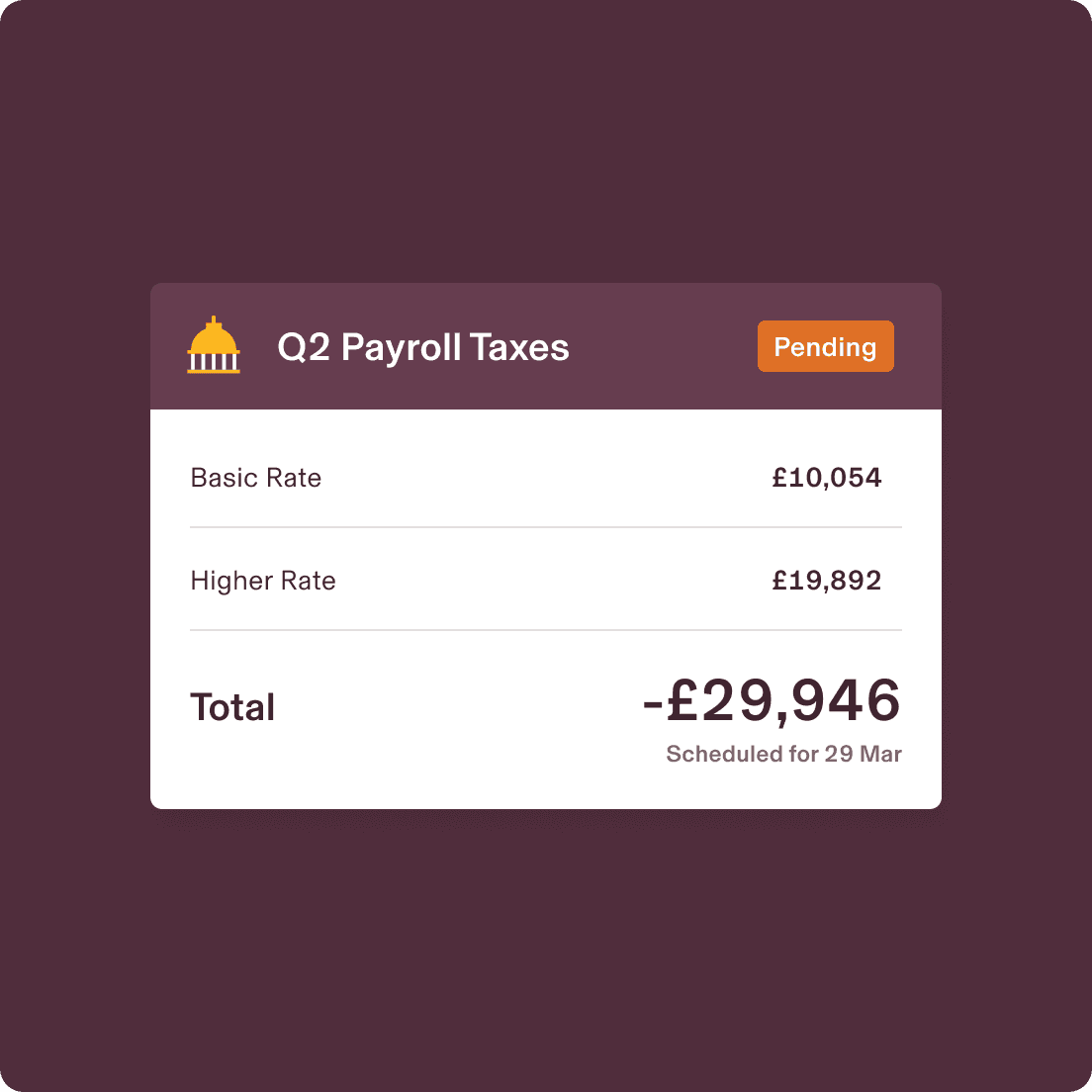
In the UK, income tax is collected through the Pay As You Earn (PAYE) system. Employers don’t pay income tax themselves but are responsible for withholding and remitting it on behalf of their employees to HMRC using a PAYE reference number. Most employees receive a £12,570 tax-free personal allowance. Earnings above that are taxed at:
- 20% (Basic Rate): £12,571–£50,270
- 40% (Higher Rate): £50,271–£125,140
- 45% (Additional Rate): Over £125,140
For high earners, the personal allowance tapers off above £100,000 and is fully removed at £125,140. Non-residents may receive reduced or no allowance depending on residency status and tax treaties.
National Insurance contributions (NICs)
National Insurance contributions (NICs) are payments made by both employers and employees to fund state benefits like unemployment, retirement, illness, and parental leave. For 2024–2025, employees pay 12% on weekly earnings between £242 and £967, and 2% on earnings above that. Rates vary based on earnings and employment category.
Pension auto-enrolment
Employers must auto-enroll eligible employees into a workplace pension and contribute at least 3% of qualifying earnings.
Payroll reporting and deadlines
You must submit a Full Payment Submission (FPS) to HMRC each payday and pay any tax due by the 22nd of the month to avoid penalties.
Determine your UK workers’ employment status
Before running payroll in the UK, make sure your workers are correctly classified as employees or contractors. Misclassification can trigger serious penalties from HMRC.
If they’re employees, you’re responsible for PAYE taxes, pensions, and statutory benefits.
With Rippling you can:
Employees
Employees are more integrated into the company, follow employer direction, receive benefits like insurance and paid leave, and are generally engaged for ongoing indefinite roles, with the employer responsible for workplace protections.
Contractors
Contractors have greater control over how they work, use their own tools, aren’t entitled to employee benefits, and typically work on short-term projects while managing their own taxes and liabilities.

Mandatory employee benefits in the UK
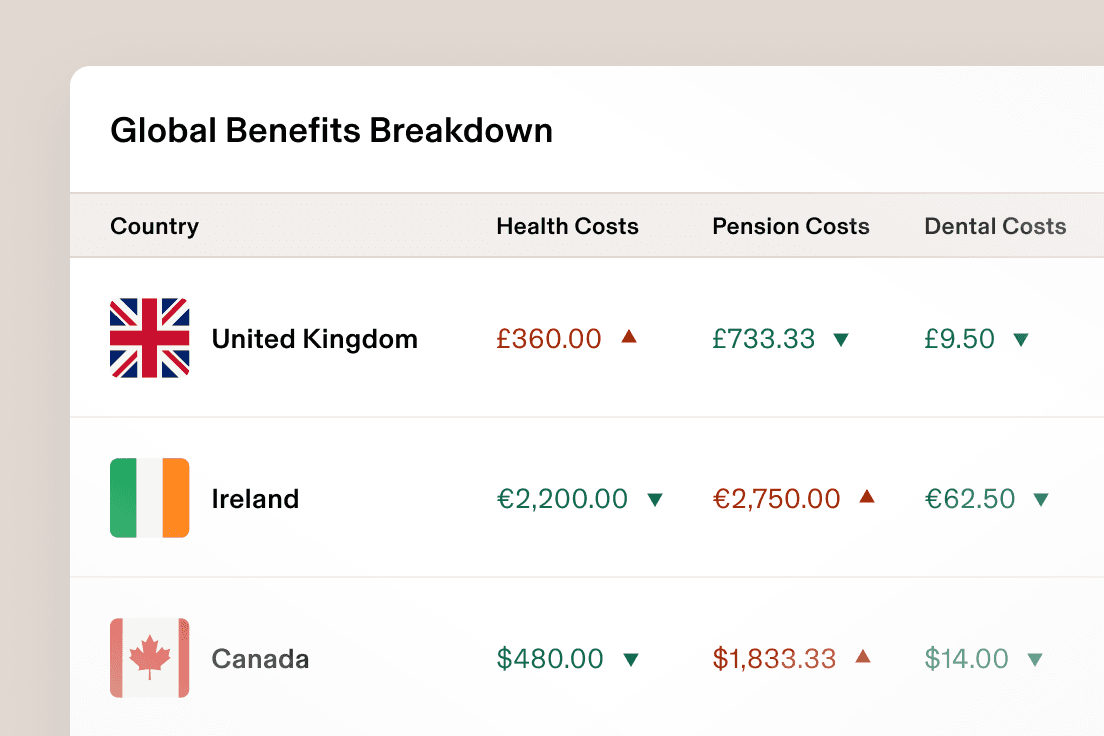
When hiring employees in the UK, it’s important to offer the right benefits to stay compliant with UK labor laws. UK employees are entitled to more statutory protections than in countries like the US. This includes automatic pension enrollment, paid sick leave, maternity leave, and a minimum of 5.6 weeks of annual holiday. Make sure these benefits are built into your employment contracts from day one.
Workplace pension
You are required to automatically enroll employees in workplace pensions if they meet the following criteria: They’re between the ages of 22 and 66. They can be classified as a “worker.” And they’re earning a minimum of £10,000 per year.
Statutory sick pay
As the employer, you’re required to provide Statutory Sick Pay (SSP) to employees who are too ill to work. You have to pay them a minimum of £109.40 per week for up to 28 weeks.
Statutory maternity leave
The UK affords mothers up to 52 weeks of maternity leave. This is divided into 39 weeks of Ordinary Maternity Leave plus 13 weeks Additional Maternity Leave. During their maternity leave, women are also entitled to statutory maternity pay for up to 39 weeks.
Annual holiday leave
Employers are required to provide employees with at least 5.6 weeks of holiday leave per calendar year.
Complying with UK labor laws
As you move through the onboarding process, you want to be sure you’re in compliance with UK labor and employment laws at every step. Otherwise, the penalties can be harsh, including hundreds of thousands of GBP in fines and potential jail time.
Be mindful of the following regulations when hiring in the UK:
The UK has a National Minimum Wage and a National Living Wage
There are two categories of statutory minimum wage that employees can be paid. The National Living Wage is paid to employees ages 23 and up. And the National Minimum Wage is paid to employees ages 22 and younger.
There is no at-will employment in the UK
You must provide a reason for dismissing employees, and all employees are entitled to a written notice of their dismissal. They can only be dismissed immediately without notice if they engage in gross misconduct.
Employees have the right to unionize
UK employees can join one or more trade unions, including those that their employer doesn’t negotiate with.

FAQs
Do I need to set up a legal entity to hire employees in the UK?
No. You can hire employees in the UK either by setting up your own legal entity or by using an Employer of Record (EOR). An EOR handles compliance, payroll, and benefits on your behalf — letting you hire without forming a local company.
What are the key legal requirements when hiring employees in the UK?
You must:
- Verify the employee’s right to work in the UK
- Register with HMRC for PAYE
- Provide a compliant employment contract
- Enroll eligible employees in a workplace pension
- Follow UK labor laws on wages, leave, and termination
How do I run payroll and pay employees in the UK?
To run UK payroll, you must:
- Pay employees in GBP
- Register for PAYE
- Deduct income tax and National Insurance contributions
- File with HMRC
- Issue payslips and keep payroll records
What benefits are employers required to provide in the UK?
Mandatory UK employee benefits include:
- Workplace pension enrollment
- Statutory sick pay
- Statutory maternity/paternity leave
- Minimum 5.6 weeks of paid holiday per year
What are the late tax filing penalties in the UK?
If a company fails to file its tax return on time, HMRC will issue penalties based on how late the submission is:
- 1 day late: £100 penalty
- 3 days late: An additional £100 fine
- 6 months late: HMRC will estimate the tax owed and impose a penalty of 10% of the unpaid tax in addition to any fines already applied
- 12 months late: Another 10% penalty is added to the outstanding tax amount
- Continuous negligence: If a company files its tax return late three times in a row, the initial £100 penalty increases to £500 for each late submission after that
Rippling global solutions
Ready to see Rippling Global in action?
We value your privacy. Learn more.