


By clicking "See Rippling," you agree to the use of your data in accordance with Rippling's Privacy Notice, including for marketing purposes.
Rippling HCM
Manage and automate the entire employee lifecycle
Overview
A full-suite HCM. Built from the ground up.
Most HCMs consist of siloed modules. Every application in Rippling was built to work together. Rippling's best-of-breed apps cover the full breadth of your global HR needs from onboarding to offboarding.
Onboarding automation
Automate the entire new hire checklist
Once you select “Onboard”, Rippling takes care of the rest—sending an offer letter, initiating benefits enrolment, assigning training, and more—tailored to each individual employee.

Transition automation
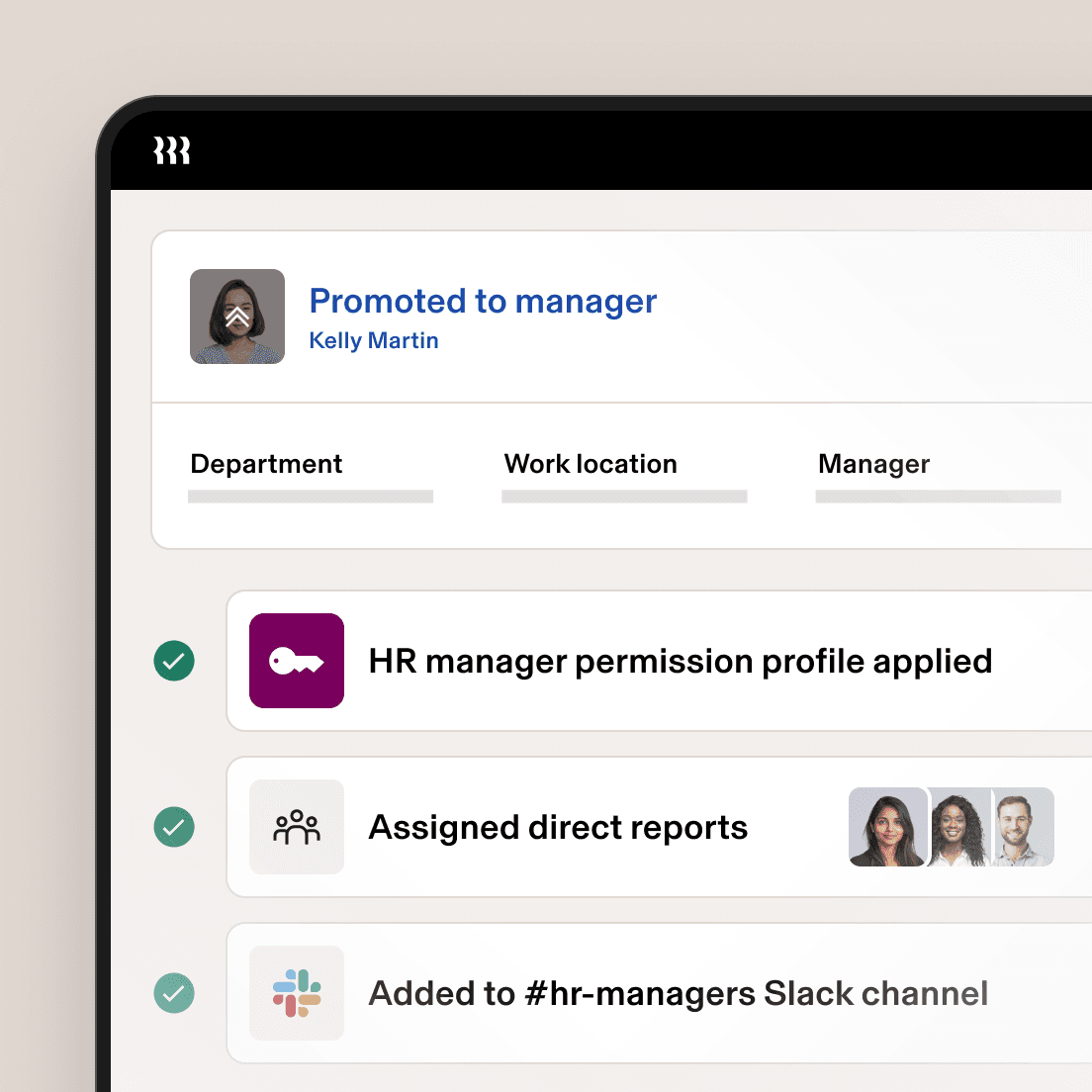
Manage promotions and other employee changes
Employee changes often have downstream effects, such as the need to assign new compliance training when an employee relocates. Rippling automates these processes, saving hours of manual work.
Offboarding automation
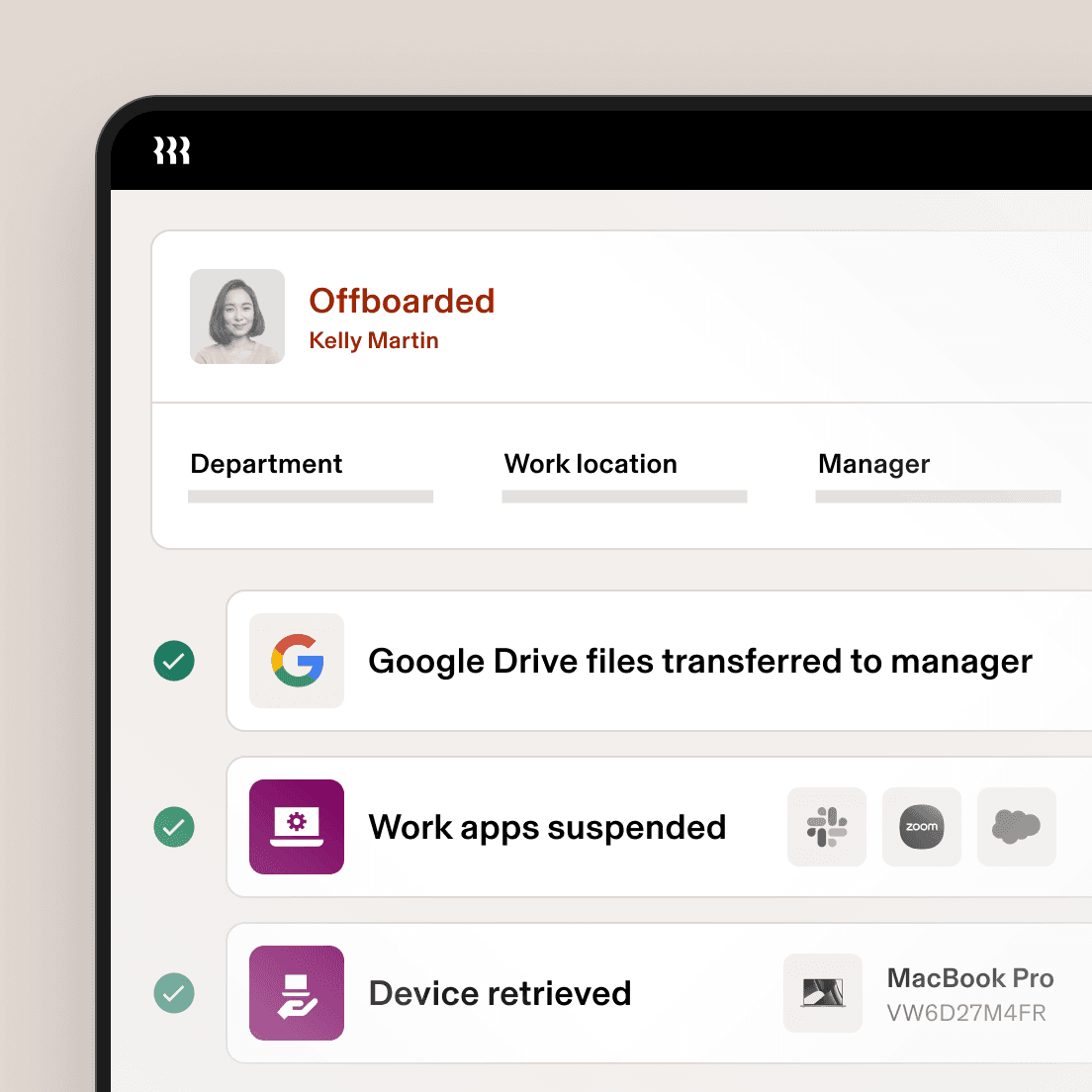
Ensure all offboarding tasks are fully covered.
Offboarding an employee in Rippling triggers automated workflows to ensure their departure is secure, compliant, and minimally disruptive to your operations.
Compliance 360
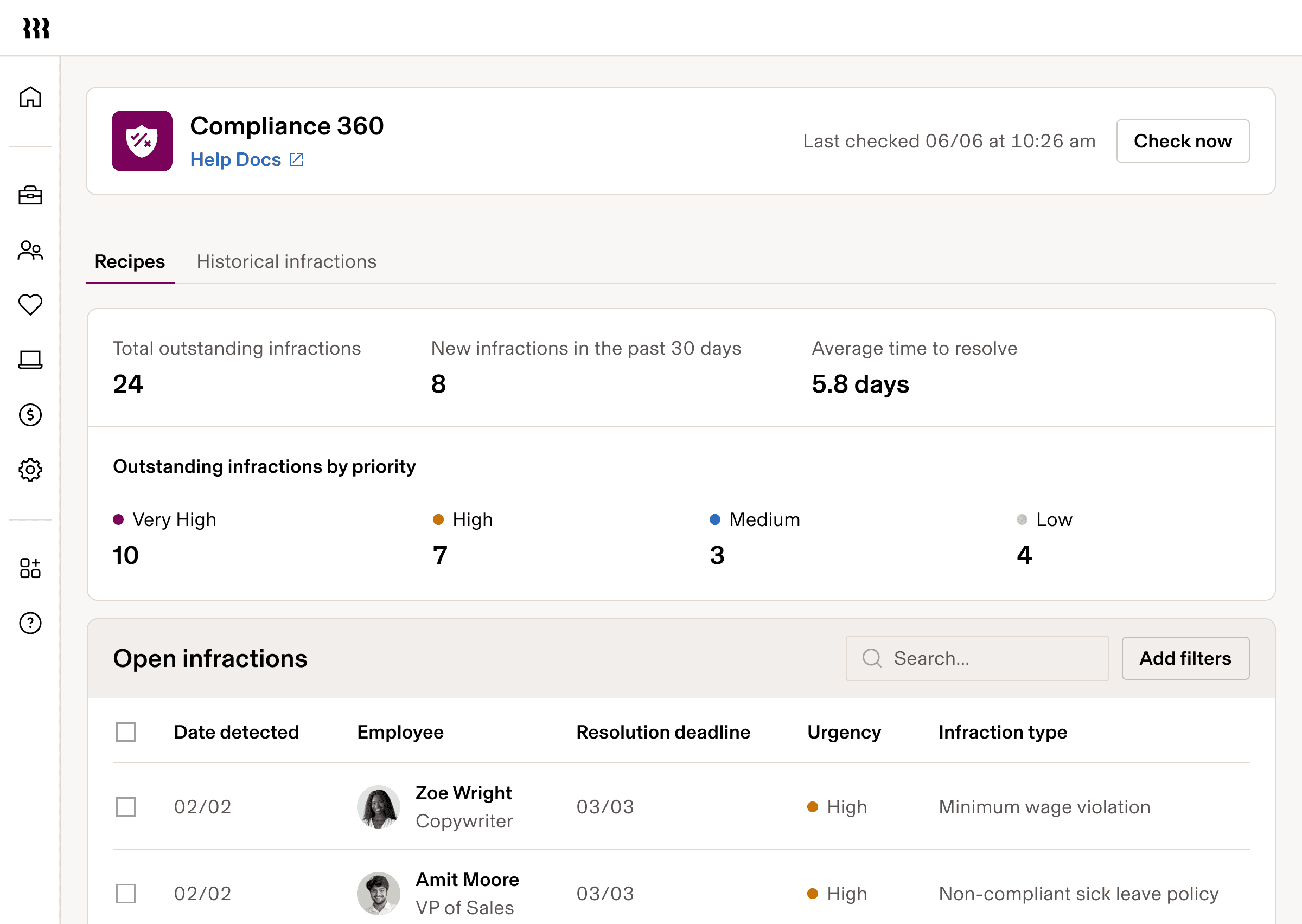
Automatically flag and correct compliance issues
Rippling automatically flags local, state, and federal infractions and recommends a plan of action for each one

Global HRIS
Learn about Rippling for Global TeamsOne HR system for your team everywhere
With Rippling, you can consolidate employee data from around the world into a single system. Rippling dynamically localises everything—from fields and documents to currencies—based on each employee’s work location.








Built different
Learn more about the Rippling platformAnalyse, automate, and orchestrate anything
Most “all-in-one” software consists of acquired systems. These modules are disconnected, resulting in disconnection of business data. Rippling takes a platform-based approach, building products on a single source of truth for all employee-related business data. This rich and flexible data source unlocks a powerful set of capabilities.


Analytics
Run powerful reports across modules. No code required.
Easily track hiring against open headcount with reports that show progress by location, start date, cost and more.
Identify retention risks by splicing and dicing exit survey responses by department, gender or any employee attribute you can think of.
Only Rippling allows you to report on your external employee data that lives in third-party apps – like Slack, Zendesk and GitHub – alongside your internal HR data.
View total compensation data in one place, in real time. No need to download CSVs from multiple systems and manipulate data every time you need to know an employee’s total compensation.
Consolidate your data
The Employee Graph consolidates data across your Rippling and third-party applications using a common data model, eliminating the need to combine separate data sets.
Query without code
Rippling’s report builder enables you to ask complex questions of your data using intuitive, Excel-like formulas. No SQL knowledge is required.
Automatically govern access
Role-based permissions limit visibility based on attributes such as level. When a report is shared, Rippling only displays data that the viewer is authorised to access.
FAQs
What is an HCM?
A Human Capital Management (HCM) system consolidates the systems typically managed by human resources (HR)—including headcount planning, compensation bands, recruiting, HRIS, time tracking, learning management, surveys, performance management, and more—into a single platform. Bringing these systems together allows HR teams to derive greater value from their software through a shared infrastructure and user interface. While many HCM providers assemble full-suite solutions by acquiring and stitching together separate products, Rippling builds all of its software in house. Its HR applications function seamlessly, making it easy to create automations and generate reports across different HR functions.
What is an HRIS vs. HCM?
A Human Resources Information System (HRIS) is a software solution that integrates core HR functions and processes, such as storing employee data, managing payroll, and administering benefits. An HCM is broader in scope than an HRIS and often includes capabilities such as talent management, learning management, and more.
How does Rippling HCM differ from other HCMs?
Most HCM solutions on the market today have been consolidated through mergers and acquisitions. Every application within Rippling HCM is built in house and shares a common data model known as the Employee Graph. This shared framework makes advanced reporting simple and intuitive, with point-and-click functionality—no coding or data science expertise required.
What is all-in-one HR software, or an all-in-one HR platform?
The term “all-in-one” has become a common way for vendors to describe their HR offerings. However, not all all-in-one solutions are the same. Many vendors provide the expected applications, such as applicant tracking or benefits administration, but lack true integration beneath the surface. These so-called Frankensystems offer a shared user interface while operating as separate systems at the data level. This makes it difficult, or even impossible, to centrally manage permissions, create reports that combine disparate data sets, and automate manual processes. Rippling takes a different approach to “all-in-one” by building a unified set of applications on a common platform—one that operates more like the operating system on your laptop than a collection of disconnected applications.
See Rippling Global in action
Learn how Rippling can help you seamlessly onboard and manage your employees, whether your workforce includes 2 or 2,000 people