







Performance management software helps organizations establish goals, track progress, and manage performance reviews and feedback.
Unlock business-critical insights and delegate tedious tasks to AI built for HR, Payroll, IT, and Finance.
Learn more
Get engineer-built custom apps in Rippling to automate any business process you have.
Learn more

Employer of Record
Hire globally without entities

Global Payroll
Pay employees anywhere

Global Contractors
Pay contractors anywhere

Contractor of Record
Mitigate contractor risk

Global HRIS
Run global HR in one place

Global HR Advisor
Get localized HR expertise

Global Benefits
Manage benefits anywhere

Global Spend
Save everywhere you operate

Customer Stories


Barry’s empowers their workforce with a scalable HR solution

Forterra automates busywork to drive impact

Chess.com creates a frictionless people process

Clay grew 5x by automating 80% of its onboarding tasks

Blank Street Coffee saves 40 hours by automating open enrollment

Rippling gave Andros automation superpowers


EN
United States (EN)


Australia (EN)

Canada (EN)
Canada (FR)

France (FR)

Germany (DE)

Ireland (EN)

Netherlands (NL)

Spain (ES)

United Kingdom (EN)
EN
United States (EN)
Australia (EN)
Canada (EN)
Canada (FR)
France (FR)
Germany (DE)
Ireland (EN)
Netherlands (NL)
Spain (ES)
United Kingdom (EN)
EN
United States (EN)
Australia (EN)
Canada (EN)
Canada (FR)
France (FR)
Germany (DE)
Ireland (EN)
Netherlands (NL)
Spain (ES)
United Kingdom (EN)
In this article
The 13 best performance management software platforms for US teams range from standalone feedback tools like Lattice and 15Five to unified workforce platforms like Rippling that embed performance management within HR, payroll, and IT systems.
Organizations should choose performance management software based on how tightly performance needs to integrate with existing HR, payroll, and workforce operations, not on feature lists alone.
US companies face growing AI compliance requirements in performance management: states like New York City (Local Law 144), Illinois, and Colorado now regulate how AI can be used in employee evaluations and hiring decisions.
Platforms that unify performance data with compensation, engagement, and workforce analytics (such as Rippling, Workday, and Culture Amp) provide stronger reporting capabilities than standalone review tools.
Continuous feedback and goal-tracking models have largely replaced annual reviews in the US market, making features like OKR alignment, regular check-ins, and manager coaching tools critical selection criteria.
The best performance management software plays a central role in how organizations set expectations, track progress, and support employee development. In the US, performance management has evolved well beyond the annual review. Many companies now rely on continuous feedback, goal tracking, and regular performance conversations to keep teams aligned and employees engaged throughout the year.
As organizations grow, it can be challenging to manage performance review processes informally. Management teams need consistent approaches to guide unified performance discussions. HR teams need visibility into how employee performance aligns with engagement, development, and retention. Employees also increasingly expect to see clarity around their own goals and feedback.
This is where performance management software can make a significant impact. It provides the structure, consistency, and visibility needed to ensure these workflows run effectively.
A broad range of performance management software is now available to help organizations manage their teams more effectively. Some platforms focus on reviews and feedback. Others embed performance management inside broader HR, payroll, and workforce systems. Enterprise platforms commonly prioritize standardization and scale, while mid-market tools may emphasize usability and flexibility. Understanding what each vendor delivers is the key to making a well-informed decision.
To help you identify the best performance management software in the US, we reviewed and scored the top 13 leading platforms. Each platform was assessed for key capabilities:
Goal setting, OKRs (objectives and key results), and alignment
Performance reviews and feedback
Continuous performance
Insights, reporting, and analytics
Integrations, automation, and ecosystem
Usability, scalability, and value
A note on transparency: Our product, Rippling, is included in this list. The same scoring criteria were applied across all platforms using publicly available information. The full research methodology and scores are available to view inthe supporting spreadsheet.
Performance Management Software Company | Best for | Choose this if |
|---|---|---|
1. Rippling | Organizations wanting performance management embedded in a broader workforce platform | You want performance management connected to HR, payroll, and core employee systems |
2. Lattice | Feedback-driven performance and engagement programs | You prioritize continuous feedback and structured performance reviews |
3. Workday | Large enterprises with complex HR environments | You need performance management integrated into an existing enterprise HCM suite |
Global enterprises managing formal performance cycles | You operate across regions and require standardized goal and review workflows | |
Enterprise organizations already using Oracle’s HR ecosystem | You want performance management aligned with Oracle’s broader HCM stack | |
6. Leapsome | Performance and development-focused teams | You want to combine goals, feedback, and employee development workflows |
7. Betterworks | Goal-centric performance management programs | You emphasize OKRs and alignment between individual and company goals |
8. Culture Amp | Analytics-led performance and engagement initiatives | You want performance insights tied closely to employee engagement data |
9. HiBob | Mid-market organizations looking for modern HR platforms | You want performance management built into a contemporary HR system |
10. 15Five | Manager-led coaching and feedback models | You focus on regular check-ins and manager effectiveness |
11. Paylocity | Payroll-centric HR teams | You want performance management inside an existing payroll-led HR platform |
12. UKG | Workforce-heavy and operational environments | You need performance aligned with workforce and labor management |
Organizations already using ADP for payroll and HR | You want basic performance tools within an established payroll system |
This table provides a high-level snapshot of how the leading performance management platforms are commonly positioned in the US market. It’s intended as a starting point, not as a final decision tool. Each platform approaches performance management differently, depending on whether it’s designed as a standalone solution, part of a wider HR system, or embedded within an enterprise HCM (Human Capital Management) suite.
Now that we’ve given you a snapshot of the top 13 options, let’s take a deeper look at each platform. Based on our research and public reviews, we’ll share where each platform stands out and what kinds of issues users have experienced.
Rippling
Lattice
Workday
SAP SuccessFactors
Oracle Fusion Cloud HCM
Leapsome
Betterworks
Culture Amp
HiBob
15Five
Paylocity
UKG
ADP Workforce Now
Rippling delivers a unified workforce platform rather than just a standalone performance management tool. Performance management, HR, payroll, benefits, and IT are covered within the same system. This helps shape how organizations typically use it. Instead of running reviews or goal tracking in isolation, performance data is directly connected to live employee records and business processes.
From a performance management perspective, this approach is best for organizations that want fewer disconnected systems. Reviews, goals, and feedback are managed in one place, reducing the administrative overhead, especially as teams grow or reorganize. System connectivity and automation are at the forefront.
This makes Rippling ideal for organizations that view performance management as one part of a broader operational structure, rather than a standalone initiative owned solely by HR.
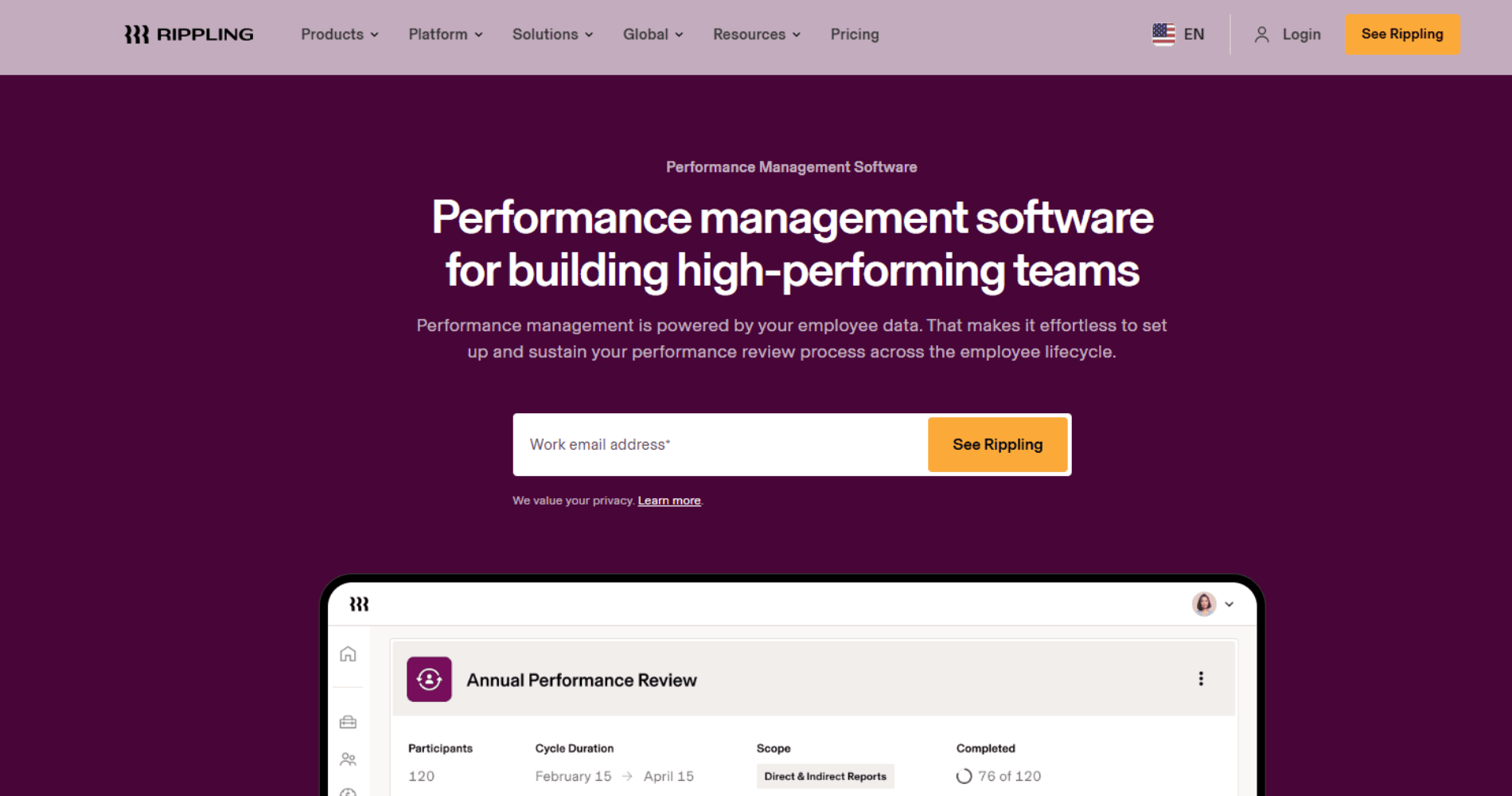
Source: Rippling Performance Management
Companies often choose Rippling when they want performance management embedded within a wider workforce platform. It’s commonly selected by teams working to reduce fragmentation across HR, payroll, and employee systems, rather than managing performance in a separate tool.
“Fantastic. I would recommend it to anyone. I came on with my company without a lot of tech skills and there was nothing intimidating about Rippling functions.” —Rippling Capterra Review
Using a wider platform can require more initial configuration than a single-purpose performance tool.
Teams may need time to adapt to a system that covers multiple workforce functions.
Lattice is a performance-focused platform centered on feedback, engagement, and structured reviews. Unlike many broader HR systems, Lattice is typically used in conjunction with an existing HRIS (Human Resources Information System) and serves as a dedicated layer for performance conversations, rather than replacing core HR administration.
Lattice's performance management provides continuous feedback, goal tracking, and recurring review cycles. The platform is often used by organizations that want to formalize performance conversations without introducing a full HCM suite. This positioning aligns with teams that prioritize engagement and clarity around expectations.
Because Lattice operates as a standardized tool, it is frequently evaluated on how well it supports a feedback culture and review cadence rather than on how it connects to payroll or workforce operations.
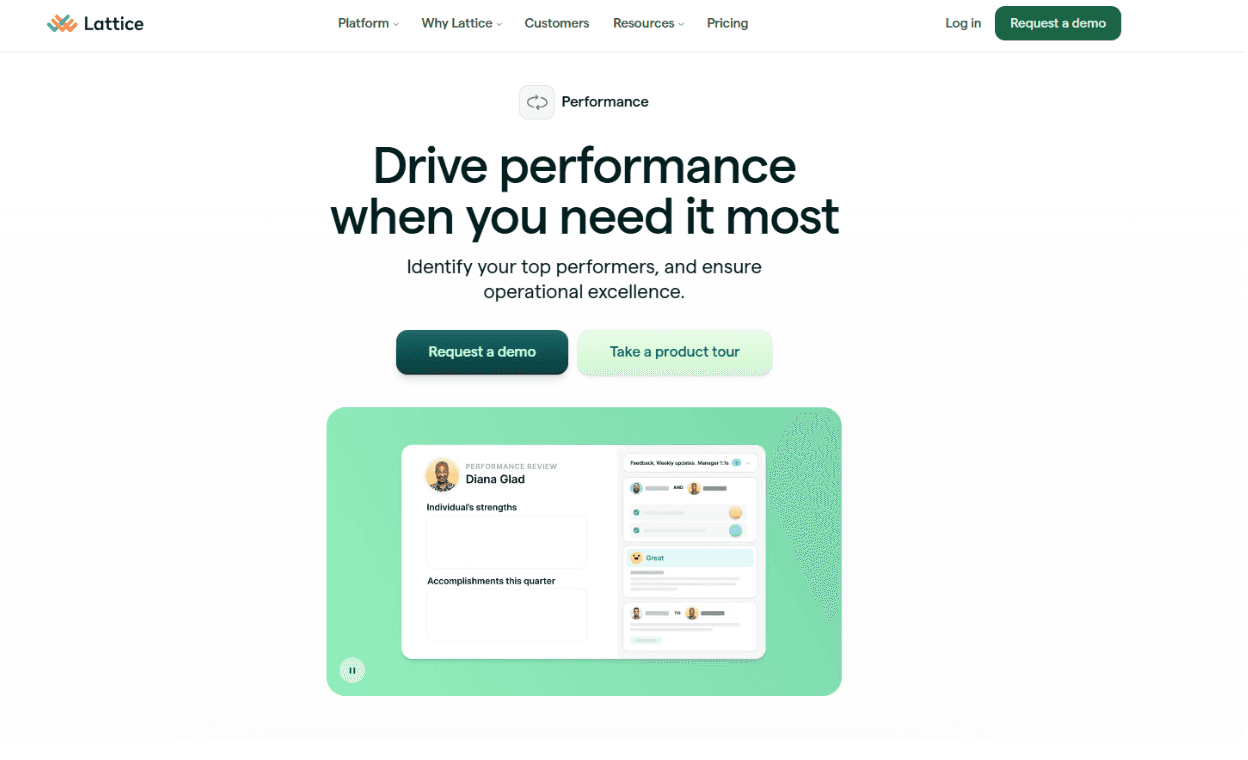
Source: Lattice Performance Management
Companies choose Lattice when they want a dedicated performance and feedback platform that integrates with their existing HR systems. It is commonly selected by teams that prioritize structured reviews and ongoing feedback, without requiring changes to their core HR infrastructure.
“It is a great tool to get feedback from colleagues and managers regarding your tasks, objectives and progress.” —Lattice Capterra Review
Using a specialized performance tool alongside existing HR systems can increase overall tool sprawl.
Reporting depth may vary depending on the configuration and the use cases.
Workday represents an enterprise-grade HCM platform. Performance management is delivered as part of a wider suite that typically includes talent management, compensation, and workforce planning. This positioning makes Workday most relevant for large organizations with complicated systems.
Performance management in Workday is commonly used in formal, standardized review cycles. Goals, evaluations, and performance outcomes are often tied to wider enterprise processes, such as succession planning or compensation reviews. This represents a more formal approach compared to lighter, feedback-first tools.
Workday’s strength lies in its ability to scale and integrate across enterprise HR functions rather than simplicity or speed of setup.
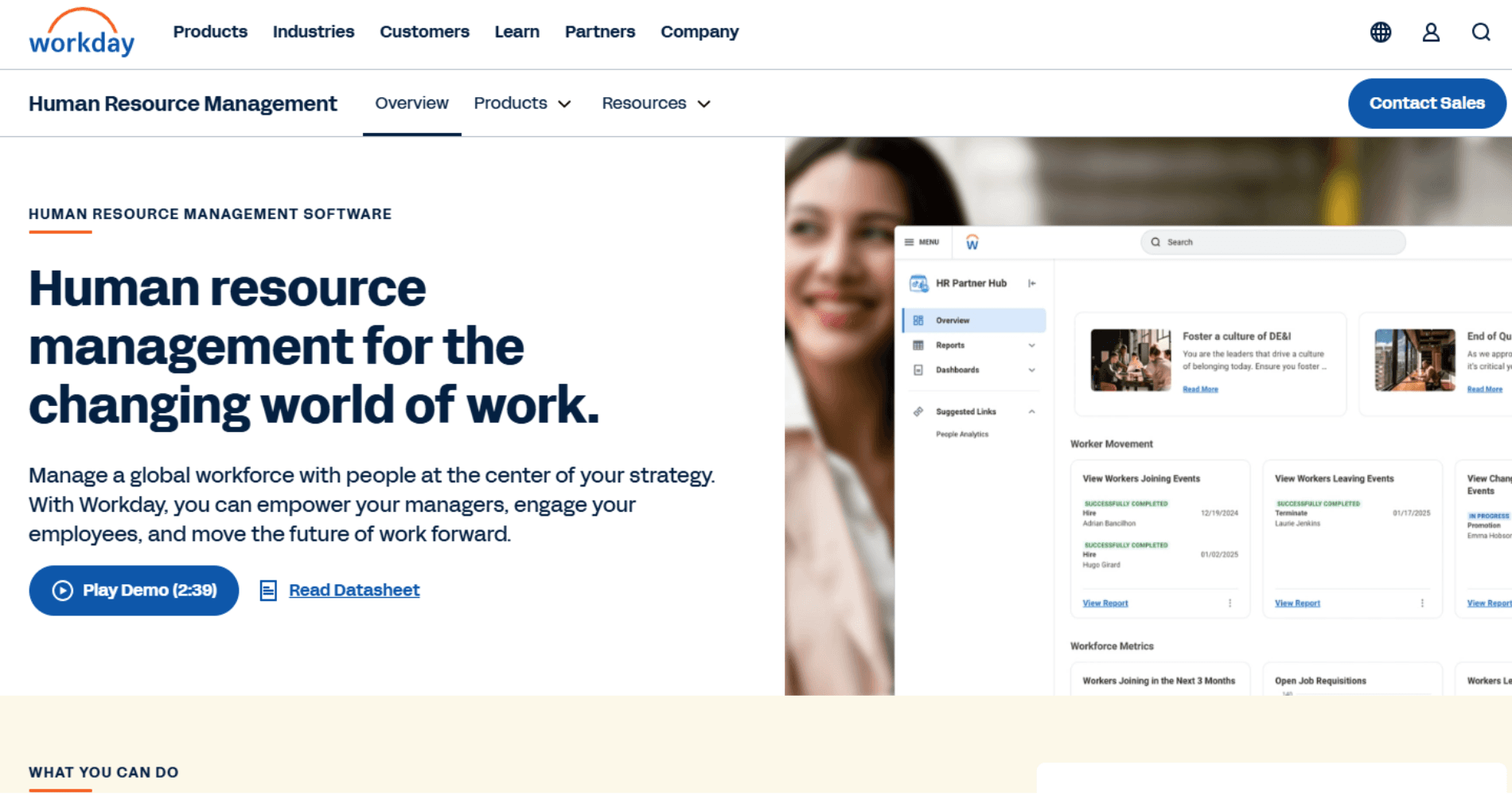
Source: Workday Performance Management
It’s a good option for large enterprises seeking to fully integrate performance management into their enterprise HCM environment. It is often selected when consistency and standardization across large teams are key priorities.
“Workday has been a great company to partner with. Customer Support is excellent and the community and partnership that exists between different Workday customers is extremely helpful.” —Workday Capterra Review
Enterprise platforms can involve longer implementation timelines.
Performance management workflows may feel rigid compared to more specialized tools.
SAP SuccessFactors is a global enterprise HCM solution. Organizations that manage formal goals and review activities across complex structures (e.g., multiple regions or business units) often use the tool.
The platform is commonly associated with structured performance cycles, cascading goals, and alignment with wider talent management processes. This makes it relevant for organizations focused on consistency and governance across geographically distributed teams.
Organizations often adopt SuccessFactors when they are already operating within the SAP ecosystem, where performance management is one component of a wider HR and enterprise software strategy.
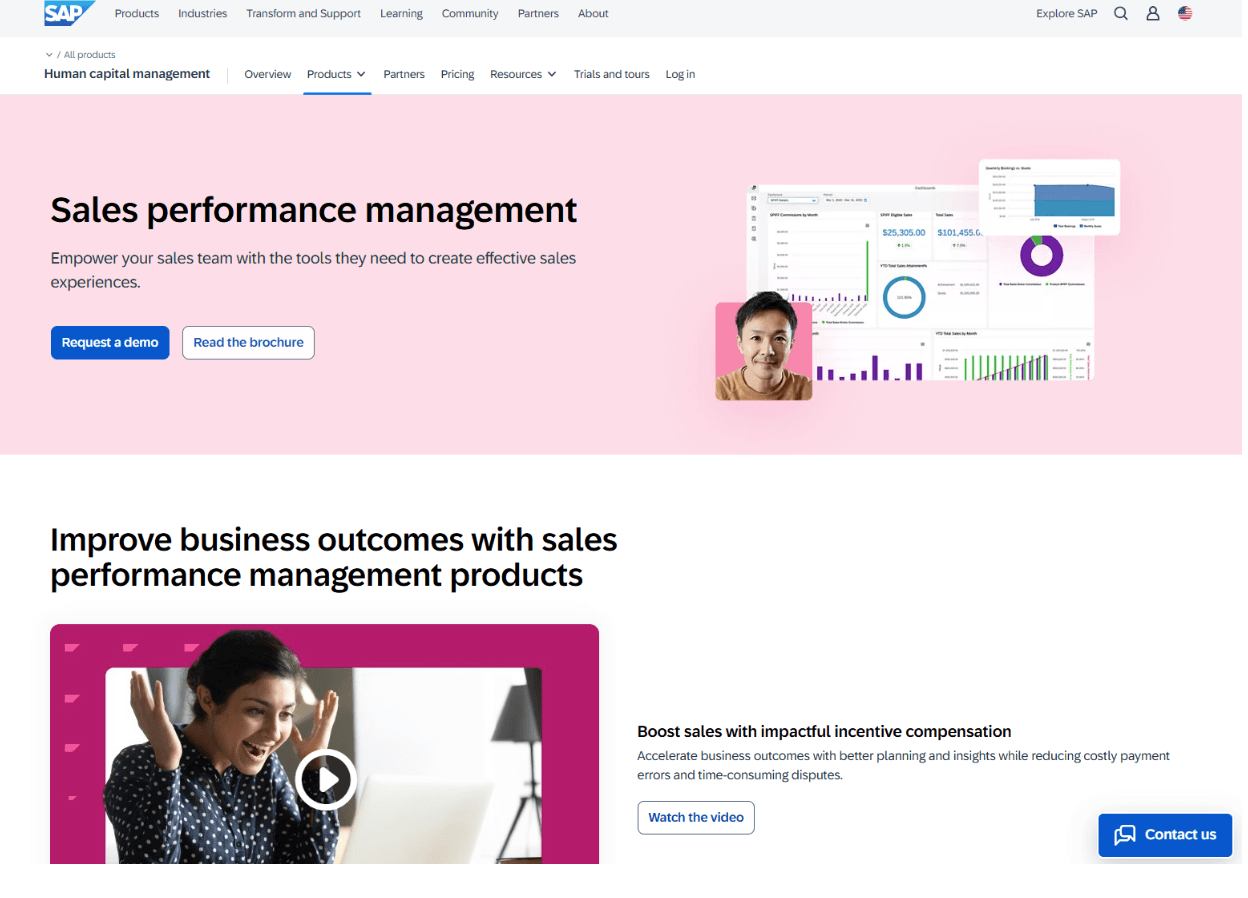
Source: SAP SuccessFactors Performance & Goals
Companies mostly choose SAP SuccessFactors when they need performance management that supports global scale and formalized review frameworks. It is commonly selected by organizations seeking conformity across regions and synchronization with existing SAP systems.
“Excellent product, Is easy to deploy and be the administration in the back end. has the feature to "be another user" to identify issues/problems.” —SAP SuccessFactors Capterra Review
Enterprise-grade configuration can require significant setup effort.
The user experience can feel less flexible than newer, performance-specific tools.
Oracle Fusion Cloud HCM is an enterprise human capital management platform. Performance management is delivered as part of Oracle’s broader HCM suite, rather than as a standalone platform. This shapes how organizations typically use it, with performance processes frequently tied closely to other HR and enterprise systems.
In practice, Oracle’s performance management tools are commonly used when HR processes are already standardized across the Oracle ecosystem. Goals, reviews, and evaluations tend to sit within formal performance cycles that match with wider talent and workforce planning initiatives. This positioning typically favors consistency and integration over lightweight or highly flexible workflows.
Oracle Fusion Cloud HCM’s placement here should be understood mainly through its enterprise orientation and ecosystem alignment.
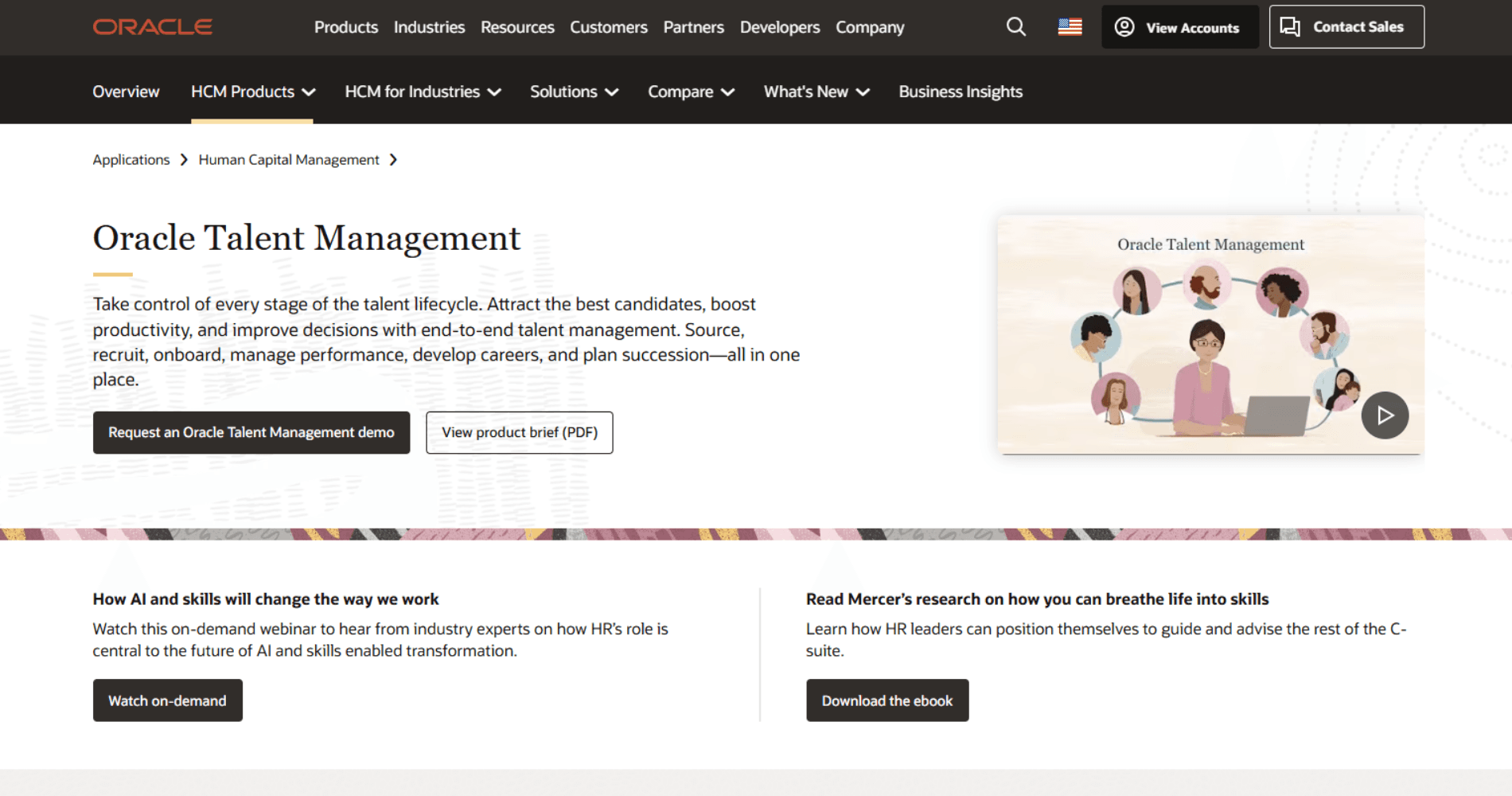
Source: Oracle Fusion Cloud HCM – Performance Management
Companies often choose Oracle Fusion Cloud HCM when they’re already invested in Oracle’s enterprise software stack and want performance management aligned with that environment. It also promotes consistency across HR and enterprise systems.
“Good! I like it as someone who has technology experience and grew up using technology but I think it can be challenging for people other than me.” —Oracle Fusion Cloud Capterra Review
It can involve longer setup and configuration periods.
Performance workflows may feel more structured and less flexible than performance-specific tools.
Leapsome is a performance- and development-focused platform that combines goals, feedback, and employee development into a single experience, rather than treating the performance purely as evaluation.
In Leapsome, performance management is associated with continuous improvement models. Teams often use it to link performance conversations with learning, growth, and development planning, making it relevant for organizations that want performance management to support long-term capability building, not just short-term assessments.
Leapsome is typically thought of as a standalone performance and development tool rather than part of a full HRIS, which influences how organizations use it.
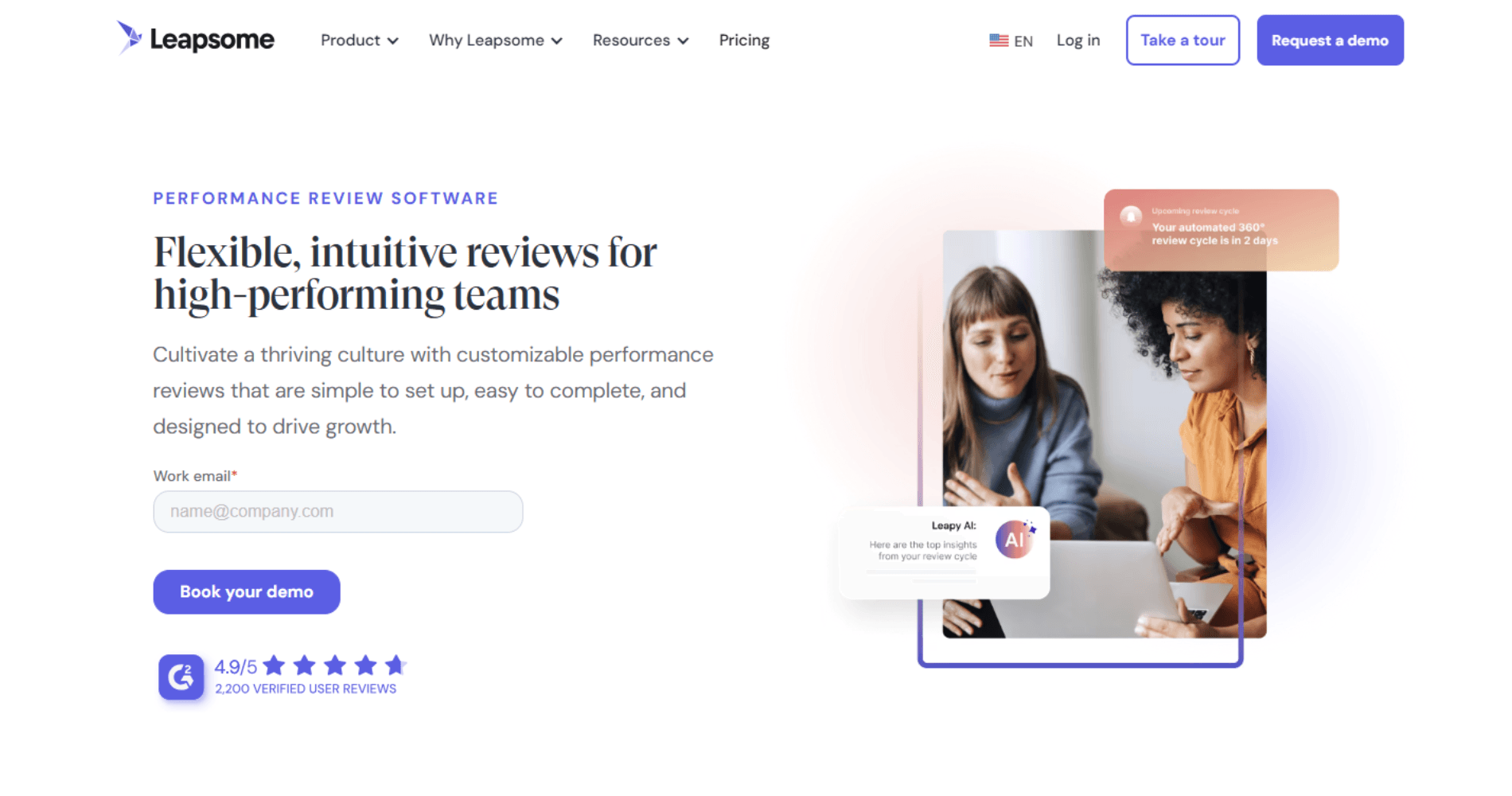
Source: Leapsome Performance Management
Companies often choose Leapsome when they want performance management closely tied to employee development. It’s also popular with teams looking to balance structure with flexibility in how performance conversations are run.
“Leapsome has been an excellent tool for supporting team growth and engagement. From a leadership perspective, it helps create clarity, consistency and a strong feedback culture.” —Leapsome Capterra Review
Having a separate performance and development platform alongside an existing HRIS can increase the complexity of existing systems.
Configuration options may call for careful setup to match up to internal processes.
Betterworks is a goal-centric performance management platform that is associated with OKRs (objectives and key results) and performance alignment, rather than broad HR administration.
Performance management in Betterworks typically focuses on setting, tracking, and synchronizing goals across teams. This approach appeals to organizations that view performance mainly through the lens of measurable objectives and strategic consistency, rather than feedback or engagement alone.
Betterworks is commonly used as a specialized performance tool, often alongside an existing HR system, rather than as part of a full HCM suite.
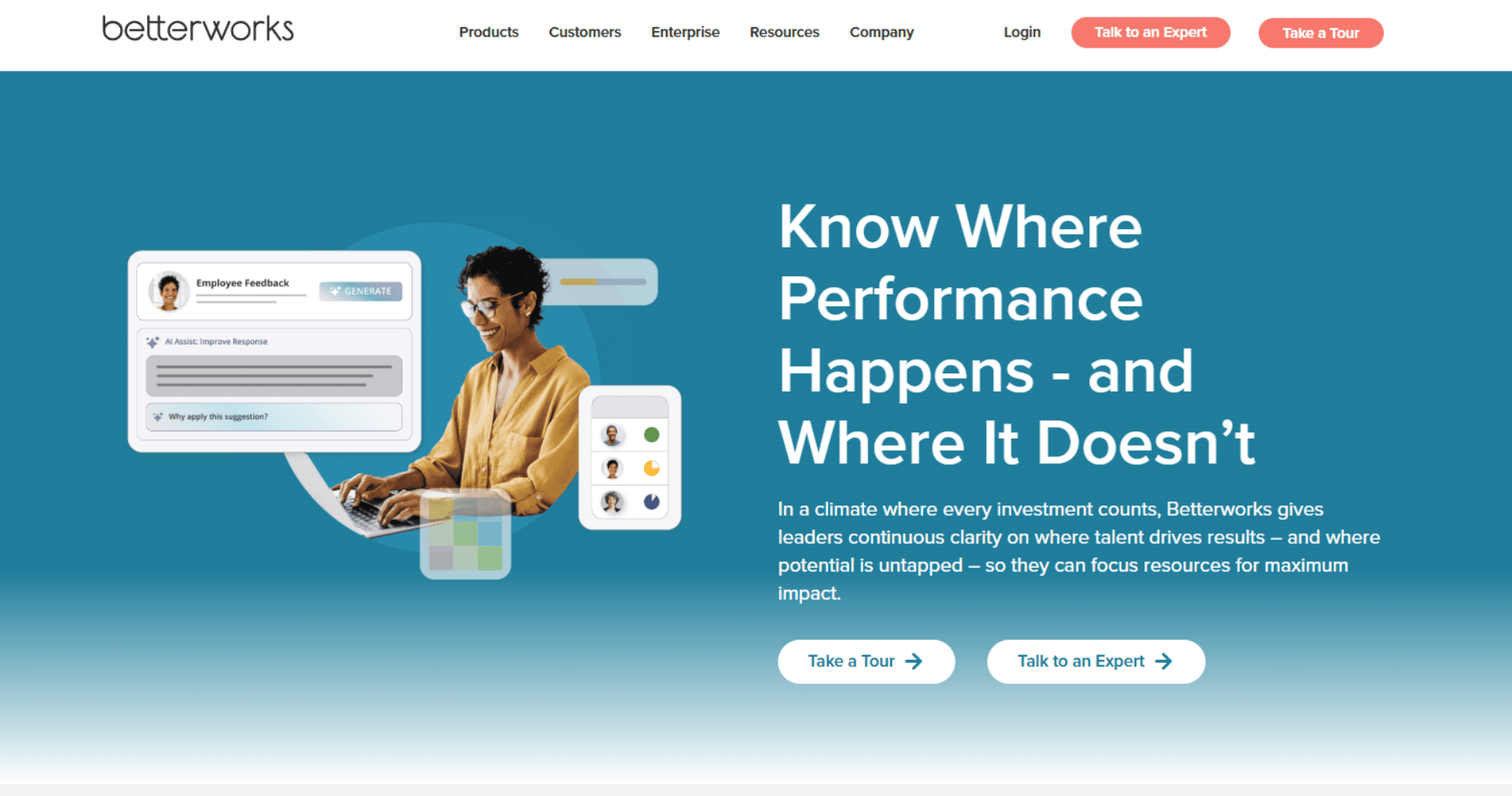
Source: Betterworks Performance Management
Organizations often choose Betterworks when goal alignment is central to their performance strategy. It is commonly chosen by teams seeking a well-defined framework for tracking objectives across the organization.
“It was good. It allowed us to give kudos and give feedback that was able to give immediate rewards to our employees.” —Betterworks Capterra Review
A strong focus on goal management may require complementary tools for wider performance conversations.
Reporting depth can vary depending on how goals are configured.
Culture Amp is an analytics-led platform that links performance management with employee engagement insights. Its strengths are in data and insights as opposed to transactional HR functionality.
Performance management in Culture Amp is often used in conjunction with engagement surveys to provide context around how employees are performing and how they feel, making it relevant for organizations that focus on insight-driven decision-making and want to understand operational trends at scale.
Culture Amp is typically used as a standardized tool rather than a full-blown HR platform.
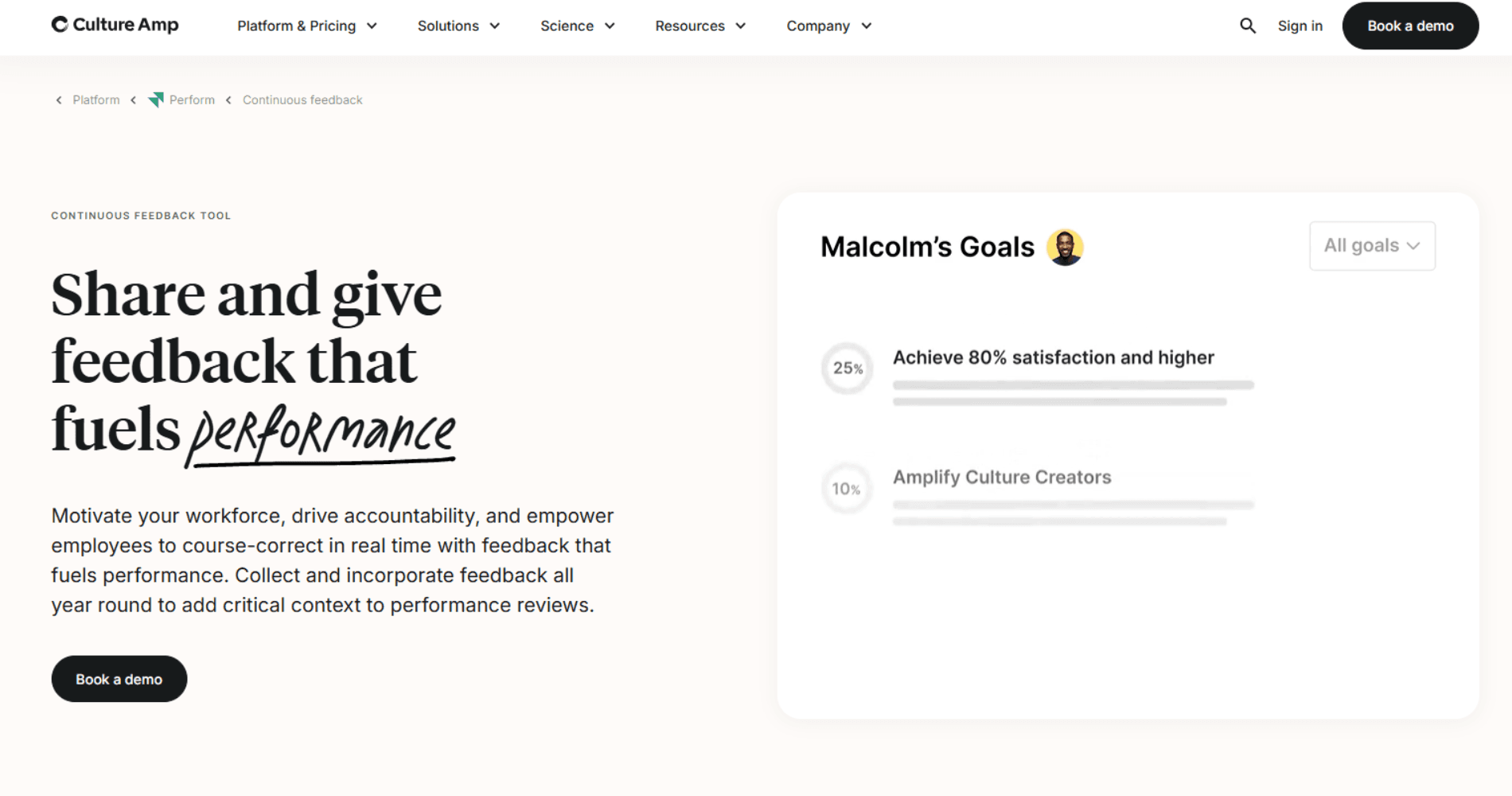
Source: Culture Amp Performance Management
Companies often choose Culture Amp when they want performance management supported by the relevant analytics and engagement data. It’s commonly selected by organizations that value insight and trend analysis in performance discussions.
“Overall, culture amp has been great to document the progress new hires are making in the company, I can provide actionable and constructive feedback to my peers.” —Culture Amp Capterra Review
The analytics-heavy platform may require strong internal expertise to act on the generated insights accurately.
The platform offers limited features.
HiBob is a modern HR platform with built-in performance management. It’s ideal for mid-market organizations, with performance management integrated directly into a wider employee experience offering.
Organizations seeking a modern alternative to conventional HR systems often use HiBob’s performance management tool. Reviews, goals, and feedback are managed within the same platform as core HR data, simplifying processes for growing teams.
Companies often choose HiBob when they want performance management built into a modern HR platform without adopting a full enterprise HCM.
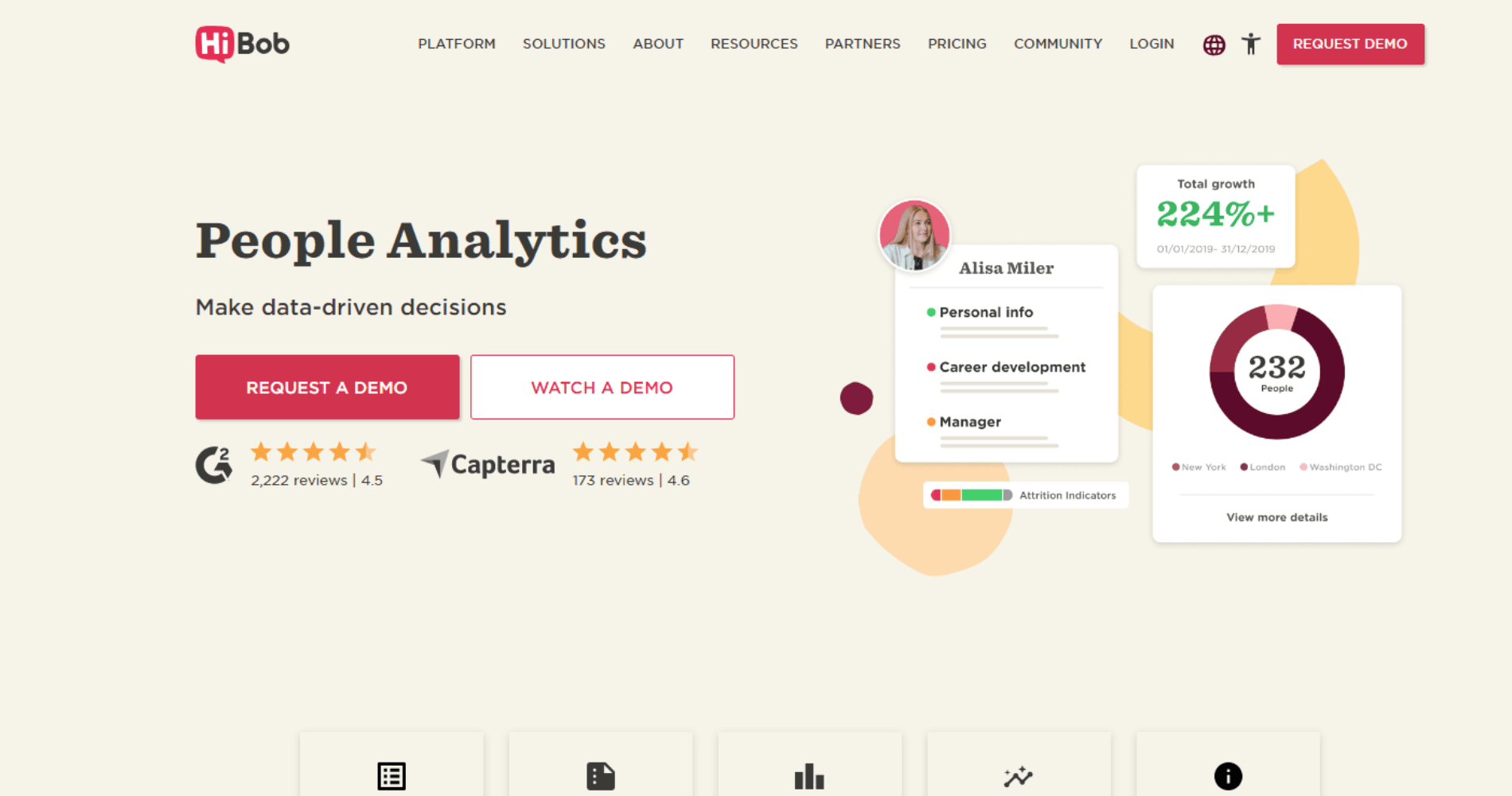
Source: HiBob Performance Management
Companies often choose HiBob when they want performance management built into a modern HR platform. Mid-market teams attempting a balance between usability and structure also find it appealing.
“Very good experience, have used it in my 2 most recent roles and I find it very easy to use for requesting holidays, seeing what benefits we have, current organisation of the company etc, very intuitive and at the moment would not change anything about it for how I use it.” —HiBob Capterra Review
Newer HR platforms tend to have less depth in certain advanced performance review workflows.
Integrations with legacy systems may require additional configuration, which may add to the cost.
15Five stresses manager-led coaching and continuous feedback. Rather than focusing on formal review cycles alone, performance management in 15Five is commonly used to support frequent check-ins and ongoing conversations between managers and employees.
This approach appeals to organizations that want to strengthen manager effectiveness and keep performance discussions frequent and lightweight. Performance management is frequently framed as a coaching process rather than an evaluative one, with an emphasis on communication and alignment.
15Five is typically used as a standardized tool alongside an existing HR system, rather than as a full HR platform.
Source: 15Five Performance Management
Companies often choose 15Five when they want performance management to support regular coaching and manager-employee communication. It’s also good for teams that value continuous check-ins over formal, infrequent reviews.
“My overall experience has been great! I love the integrations and collaboration opportunities it offers.” —15Five Capterra Review
A coaching-focused approach may need to be complemented by other tools for formal performance documentation.
Adoption depends heavily on manager engagement.
Paylocity is a payroll-centric HR platform, with performance management included in its wider HR offering. Performance tools are commonly used by organizations already relying on Paylocity for payroll and core HR administration.
Performance management in Paylocity is typically adopted for convenience and integration rather than depth. Reviews and feedback sit alongside payroll and employee data, decreasing the need for additional systems.
Paylocity works well for organizations prioritizing consolidation within a payroll-led environment.
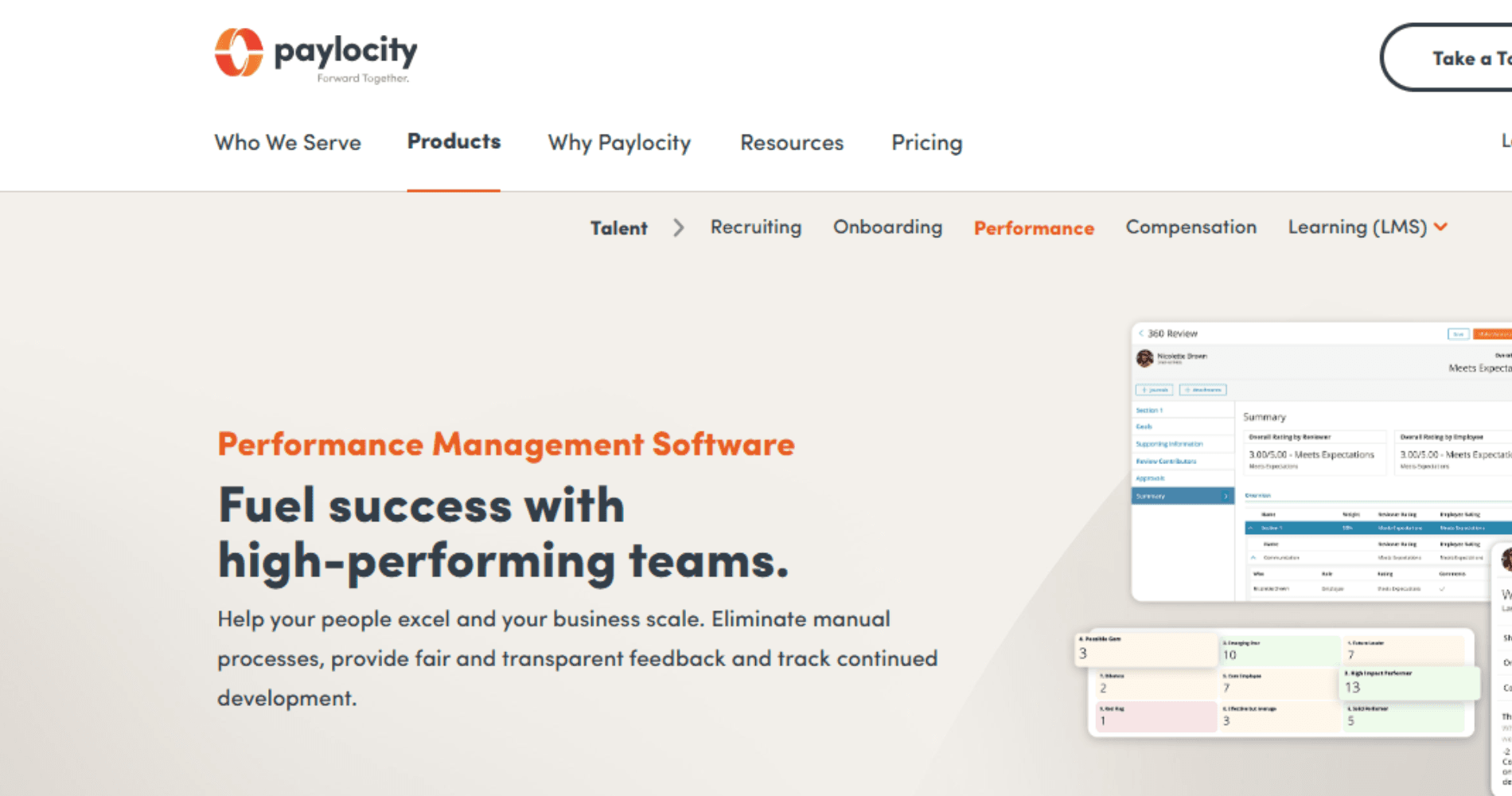
Source: Paylocity Performance Management
Companies often choose Paylocity when they want performance management within an existing payroll and HR platform. Teams looking to minimise the need for additional tools also like it.
“We have had been using Paylocity for approximately five years. We have used other service providers and evaluated others as well but find Paylocity to best suit our needs.” —Paylocity Capterra Review
Embedded performance tools can offer less flexibility than dedicated platforms.
Advanced performance workflows may require additional configuration.
UKG is a solution for workforce-heavy and working environments. Performance management is typically aligned with labor management, scheduling, and workforce operations.
This strategy is often used in industries where performance outcomes are closely tied to operational activity, such as shift-based or regulated environments. Performance management may be less focused on continuous feedback and more on formal evaluation aligned with workforce data.
It’s a popular option for companies that already use UKG’s workforce management capabilities.
Source: UKG Pro Performance Management
Companies often choose UKG when they need performance management aligned with workforce and labor management. It’s a helpful tool in operationally complicated environments.
“UKG Pro always provides great customer service and their customer Customer Success Manager always provides updates of their latest features.” —UKG Capterra Review
Operational focus can restrict flexibility in performance conversations.
Configuration may be required to adapt workflows to non-operational roles.
ADP Workforce Now includes performance management as part of a payroll-led HR platform. It’s a popular option for organizations already embedded in ADP’s ecosystem.
Performance management in ADP Workforce Now is typically positioned as a supporting function rather than a primary performance tool. Reviews and feedback are available, but the platform is usually chosen first for payroll and HR administration.
This makes ADP Workforce Now relevant for entities seeking basic performance functionality without introducing additional systems.
Source: ADP Workforce Now Performance Management
Companies often choose ADP Workforce Now when they want basic performance management within an established payroll and HR system. It's also known for its dependability and familiarity.
“My overall experience is positive . The security features are great and I feel like it is a very secure platform.” —ADP Workforce Capterra Review
Performance tools lack the depth of dedicated platforms.
Advanced performance workflows may require supplementary tools.
Choosing performance management software starts with understanding how performance fits into your wider people operations. Some organizations view performance management as a standalone process owned by HR. Others see it as part of a broader system that connects goals, payroll, development, and workforce planning.
It’s also important to consider how performance conversations happen in practice. Teams that focus on continuous feedback may prefer tools built around frequent check-ins. Other organizations have formal review cycles, and they often need more structured workflows. The right software should support your existing management culture rather than force a new one on your teams.
Integration is another key factor. Standalone performance tools can offer depth and flexibility, but they will often need to sit alongside an existing HRIS. Unified platforms can reduce system sprawl, though they may require more extensive adoption across HR processes.
Finally, scalability is important. Performance management software should grow with your organization, supporting new teams, managers, and reporting needs without introducing any unnecessary complexity.
Performance management software is increasingly intersecting with regulation, particularly where artificial intelligence (AI) is used to support evaluations, scoring, or decision-making. In the US, this use of AI is being shaped less by a single federal rule and more by a growing patchwork of state and city-level requirements. These requirements tend to focus on bias, transparency, and human management.
The common thread across recent legislation is concern that AI-powered tools could introduce or maintain discrimination if left unchecked. For employers using performance management systems that rely on algorithms, machine learning, or automated decision support, this has important consequences for how these tools are configured and, perhaps more importantly, governed.
The key developments to be aware of are taken from this article on algorithmic bias in the workplace. Organizations should, of course, consult legal counsel when assessing any of the compliance obligations detailed below, which include:
This law regulates the use of automated employment decision-making tools. Though initially focused on hiring and promotion, its scope has expanded. This creates implications for performance-related systems that influence pay, promotion, or termination decisions.
Employers are now required to conduct independent bias audits, provide notice to employees, and offer transparency around how automated tools, especially those that are AI-based, are being used in employment processes.
Colorado introduced rules aimed at high-risk AI systems used in employment contexts. These requirements emphasize risk assessments, bias control, documentation, and ongoing monitoring. For performance management software, this reinforces the need for transparency and clearly established governance protocols when AI influences evaluations.
Illinois has moved to restrict the use of generative AI in HR-related decision-making, including performance reviews. The legislation highlights obligations around notice, fairness, and oversight, particularly where AI outputs could materially affect employment outcomes.
Across these regulations, several shared expectations are beginning to emerge:
Bias audits to identify and address discriminatory outcomes
Notifying employees when AI-assisted tools are used for evaluation
Human review to ensure decisions are not fully automated
Documentation and accountability for how AI models are deployed
For organisations using performance management software, this does not mean AI features must be avoided. However, it does mean HR and legal teams should understand how performance tools work under the hood, where automation is applied, and how decisions can be explained and reviewed.
As these rules continue to expand, supported by tightening enforcement during 2026, performance management software that supports transparency, configurability, and human involvement in workflows is likely to be easier to meet evolving compliance expectations.
Performance management software plays a key role in aligning people, goals, and outcomes. The right platform depends on how closely performance needs to connect with your HR, payroll, and workforce systems and how your organization approaches feedback and evaluation.
For organizations seeking performance management that easily connects with the rest of their workforce operations, unified software like Rippling performance management offers a consolidated approach.
Performance management software helps organizations establish goals, track progress, and manage performance reviews and feedback.
Yes, it is. Many tools are specifically designed for small and mid-sized teams, but your organizational structure and growth will determine your needs.
Many modern platforms allow ongoing feedback in addition to formal reviews.
Some tools integrate with current systems, while others embed performance management within a wider platform.
Disclaimer
Rippling and its affiliates do not provide tax, accounting, or legal advice. This material has been prepared for informational purposes only, and is not intended to provide or be relied on for tax, accounting, or legal advice. You should consult your own tax, accounting, and legal advisors before engaging in any related activities or transactions.

Content Marketing Manager, HR
Vanessa Kahkesh is a content marketer for HR passionate about shaping conversations at the intersection of people, strategy, and workplace culture. At Rippling, she leads the creation of HR-focused content. Vanessa honed her marketing, storytelling, and growth skills through roles in product marketing, community-building, and startup ventures. She worked on the product marketing team at Replit and was the founder of STUDENTpreneurs, a global community platform for student founders. Her multidisciplinary experience — combining narrative, brand, and operations — gives her a unique lens into HR content: she effectively bridges the technical side of HR with the human stories behind them.
Increase savings, automate busy work, and make better decisions by managing HR, IT, and Finance in one place.
