

















The best HR software for retail depends on your business size, number of locations, and specific operational needs. Look for platforms that handle multi-location scheduling, high-volume onboarding, variable-hour payroll, and mobile access for frontline employees. Rippling is a strong option for retailers that want HR, payroll, scheduling, sales, and labor data unified in one system.
How to choose HR software for retail businesses
In this article
The tools retailers use to manage their workforce often weren't built for the realities of retail. Scheduling lives in one system, payroll in another, onboarding still relies on paperwork, and HR teams are left stitching together disconnected workflows just to keep operations moving. For businesses managing hourly employees, variable schedules, seasonal hiring, and high turnover, that fragmentation quickly becomes costly.
And retail is hardly a narrow category. The industry spans everything from grocery stores, apparel brands, furniture retailers, jewelers, and sporting goods chains to ecommerce companies and automotive dealerships. Despite their differences, these businesses face many of the same workforce challenges: hiring at scale, managing shift-based schedules, maintaining compliance, and paying employees accurately across constantly changing hours and roles.
That's why purpose-built retail HR software has become essential. The right platform brings scheduling, payroll, onboarding, compliance, and workforce management together in a single system designed for the speed and complexity of retail operations. Instead of forcing teams to work around disconnected tools, modern retail HR software helps streamline processes across the entire employee lifecycle.
In this guide, we'll cover what to look for in retail HR software, the common pitfalls to avoid, and the features that matter most when choosing a solution that can support your workforce today and scale with your business tomorrow.
Why retail needs specialized HR software
Retail has a workforce profile unlike almost any other industry. The combination of high turnover, seasonal hiring swings, and distributed store locations creates HR complexity that general-purpose software consistently underserves.
High employee turnover
Retail turnover rates consistently outpace most other industries, with some estimates putting annual turnover above 60%. That means HR teams are constantly running onboarding for new hires while simultaneously processing offboarding for departing employees, all while managing seasonal fluctuations. Without software built to handle that volume efficiently, the administrative burden alone can consume HR resources that should be focused on retention and culture.
The right retail HR system reduces the friction that drives early turnover, giving new hires a smooth first-day experience with digital paperwork, automatic system access, and clear first-week expectations all handled before they walk in the door.
Seasonal hiring challenges
Most retailers hire aggressively before peak seasons—particularly the holiday period between October and January—and then scale back just as quickly. That cycle creates a recurring HR sprint: sourcing candidates, running background checks, completing onboarding for dozens or hundreds of new hires at once, setting up payroll, and then offboarding those same workers a few months later.
HR software that handles seasonal workers well makes this repeatable instead of chaotic. Look for platforms that support bulk onboarding, rehire workflows for returning seasonal employees, and automated offboarding to close out short-term workers cleanly.
Multi-location workforce management
A retailer with five locations—let alone fifty—is managing scheduling, compliance, and payroll across multiple environments simultaneously. That means variable state and local labor laws, minimum wage rates that differ by jurisdiction, and scheduling rules like predictive scheduling requirements in some cities. Without workforce management software that handles multi-location complexity natively, store managers end up making compliance decisions they aren't equipped to make.
Essential features for retail HR software
Not every HR platform is built to handle what retail actually requires. These are the features that matter most.
Employee scheduling and shift management
Scheduling is the operational heartbeat of any retail business. The right retail scheduling software needs to handle rotating shifts, part-time and full-time employees on the same roster, shift swaps, and open shift coverage without requiring managers to manually track every change. One store manager shouldn't need to call three people to fill a Saturday afternoon shift.
Supports multi-location scheduling from a single dashboard
Sends automated alerts to managers when coverage gaps appear
Allows employees to swap shifts or pick up open shifts directly from their phones
Flags when a scheduled shift would trigger overtime or violate a labor law threshold
Payroll integration
Retail payroll is more complex than it looks. You're dealing with hourly employees, variable hours week to week, shift differentials for evenings and weekends, overtime calculations across multiple pay periods, and in some cases, tip reporting. Your HR software needs a payroll engine that handles all of it accurately, or integrates directly with one that does. Manual payroll entry in a high-volume retail environment is a compliance risk—every manual step is an opportunity for an error that results in a wage complaint or an audit.
Onboarding and training tools
In retail, new hires often start within days of accepting an offer, leaving very little time for manual onboarding processes. The right HR software has dedicated onboarding tools to get new employees through paperwork, policy acknowledgments, and initial training before their first shift—so they can focus on learning the job rather than filling out forms. Look for digital document signing, automated task checklists, and built-in learning management for role-specific training like safety protocols, POS system usage, and customer service standards.
Mobile accessibility for employees
Most retail employees don't have a company laptop or a desk. They're on the floor, in the stockroom, or between locations. If your HR software isn't fully functional on a mobile device, it isn't fully functional for your workforce. Look for a dedicated app where employees can clock in and out, view their schedule, request time off, access pay stubs, and pick up open shifts—all without a computer.
Performance tracking
High turnover in retail often comes down to a lack of feedback and recognition. HR software with built-in performance tracking gives managers a structured way to document performance conversations, set goals, and identify high performers worth investing in before they walk out the door. Even basic tools for tracking attendance patterns, shift reliability, and manager notes can give HR teams the data they need to make better retention decisions.
SPIFF and commission management
Many retail environments use SPIFFs (Sales Performance Incentive Funds) or commission structures to drive sales performance. If your HR and payroll software can't handle variable incentive pay cleanly, you're either processing it manually or paying for a separate system. Look for platforms that support custom pay types so SPIFF payouts and commissions can be processed through the same payroll run as base wages, with correct tax treatment and accurate records.
Managing seasonal and part-time workers
Seasonal and part-time workers are the backbone of retail, and managing them well requires specific capabilities most general HR tools don't prioritize.
Flexible scheduling tools
Part-time employees often have variable availability week to week, juggling retail jobs with school schedules, second jobs, or caregiving responsibilities. Scheduling software that lets employees submit their availability in advance and flags conflicts before the schedule is published prevents the last-minute coverage scrambles that make retail scheduling so painful. For seasonal workers, the ability to scale up scheduling capacity quickly without rebuilding processes from scratch is essential.
Rapid onboarding workflows
Getting a seasonal hire from offer accepted to first-shift ready in 48 hours requires an onboarding process that runs mostly without manual HR intervention. That means digital I-9 and W-4 completion, automated system access provisioning, and role-specific training queued up before day one. Retailers that nail this process see better early performance and lower early attrition from seasonal hires.
Compliance with labor laws
Part-time and seasonal workers are covered by the same labor laws as full-time employees, and in some jurisdictions, they have additional protections. Retail HR software needs to apply the correct rules based on employee type, location, and hours worked. For example, a part-time employee working more than a certain number of hours per week may qualify for benefits in some states—a threshold that's easy to miss without automated tracking. Predictive scheduling laws in certain cities also require advance notice of schedules, with penalties for last-minute changes.
Integration with your full tech stack
HR software doesn't operate in isolation in a retail environment. It needs to connect with the systems your stores already run on.
POS system integration
Your point-of-sale system holds valuable data that can inform HR decisions, particularly around staffing levels. When sales volume data from your POS connects with your scheduling software, managers can build schedules based on historical traffic patterns rather than guesswork. Before committing to an HR platform, map out your POS system and ask vendors specifically how the integration works in practice, not just whether it exists on a list.
Time tracking tools
Accurate time tracking is the foundation of retail payroll compliance: employees need a fast, reliable way to clock in and out, managers need visibility into actual hours versus scheduled hours in real time, and HR needs clean records for payroll processing and any potential audits. Look for platforms that support multiple clock-in methods—mobile app, web browser, or physical kiosk—and geofencing features that restrict clock-ins to specific locations to prevent time theft in multi-location environments.
Inventory and workforce syncing
Staffing needs in retail are often driven by inventory activity—receiving shipments, conducting counts, processing returns, and preparing for resets. When inventory planning data is visible to scheduling managers, they can staff appropriately for those labor-intensive events instead of scrambling to find coverage after the fact. This level of integration isn't available in every HR platform, but it's worth asking about as you evaluate options, particularly for larger retail operations.
Cost considerations
HR software is an investment, and understanding the full picture before you sign a contract saves you from unpleasant surprises later.
Pricing models for retail businesses
Most HR software for retail is priced on a per-employee, per-month basis, which works well for businesses with stable headcount but can create cost variability during seasonal peaks. Ask vendors directly how they handle seasonal workforce fluctuations—some platforms offer flexible billing that accounts for short-term headcount increases. Per-employee pricing typically starts around $8 per employee per month and scales depending on the features included.
ROI from automation
The clearest ROI in retail HR software comes from time saved on manual processes. Scheduling alone can take a store manager several hours per week when done manually. Onboarding a single new hire can take an HR coordinator an hour or more when relying on paper forms and manual system setup. Multiply those hours across your locations and annual hire volume, and the cost of manual processes becomes significant quickly. Automation doesn't just save time—it reduces the errors that create additional downstream work.
Scaling costs with growth
As you open new locations or add headcount, your HR software costs will increase. Model out those costs before you commit to a platform, including both the per-employee fees and any location-based or module-based charges that might apply. The right platform should scale with your business without requiring a full system migration every time you reach a new size threshold—switching HR software is expensive and disruptive, so choosing a platform you can grow into from the start is worth the extra due diligence.
Common mistakes retailers make
Choosing overly complex systems
Enterprise HR platforms built for large corporations can be overkill for a retailer with 200 employees across ten locations. The implementation takes longer, the configuration is more complex, and store managers end up ignoring features they don't understand. The best HR tools for retail are powerful without being complicated—managers shouldn't need training to build a weekly schedule, and employees shouldn't need a tutorial to clock in from their phone.
Ignoring mobile usability
If you evaluate HR software primarily from a desktop browser in a corporate office, you'll miss how it actually performs for the people using it most—floor associates and store managers on their feet all day. Before you sign, test the mobile experience with someone who represents your typical store employee: Can they find their schedule in under 30 seconds? Can they request a shift swap without calling a manager? Can they access their most recent pay stub without logging into a laptop? If the answer to any of those is no, that's a problem.
Not planning for scalability
The HR software that works for five locations may not work for twenty. Retailers that choose platforms based solely on their current needs often find themselves migrating to a new system during a period of growth—exactly when they have the least capacity to manage a technology transition. Choose a platform that can handle where you're going, not just where you are.
Your final checklist for retail HR software selection
Use this as your evaluation framework before making a final call.
Does the software support high turnover and seasonal hiring? Look for bulk onboarding, rehire workflows for returning seasonal employees, and automated offboarding.
Can it handle scheduling across multiple store locations? Multi-location scheduling from a single dashboard, location-specific labor law compliance, and automated coverage gap alerts are baseline requirements.
Is mobile access available for managers and frontline employees? Test the app, not just the website—clock-in, schedule viewing, shift swaps, pay stub access, and time-off requests should all work smoothly on a phone.
Does it integrate with POS and time tracking systems? Ask vendors to demonstrate existing integrations with your specific POS—pre-built connections are more reliable than custom API work.
How fast is the onboarding process? Measure it in hours, not days—new hires in retail often start within 48 to 72 hours of accepting an offer.
Does it provide insights into employee performance and retention? Basic tracking of attendance, schedule reliability, and manager feedback gives HR teams the data to make better retention decisions.
Is pricing flexible based on workforce size and seasonality? Clarify how the vendor handles seasonal headcount spikes before you sign.
Can an all-in-one solution like Rippling simplify HR operations as you scale? The fewer systems you're managing, the less time your team spends on administrative coordination.
Manage your retail workforce with Rippling
Retail HR doesn't get a slow day. You're managing shift workers across multiple locations, dealing with high turnover, navigating a patchwork of labor laws, and somehow also answering questions about PTO. Rippling is built for exactly this.
Rippling brings HR, payroll, scheduling, and compliance together in one platform—one that's actually designed to keep up with the pace of retail. With Rippling, retail HR teams can onboard new hires digitally so they're ready to work before day one, build and manage schedules across multiple locations from a single dashboard, run payroll that automatically accounts for variable hours and shift differentials, stay compliant with location-specific labor laws without manual oversight, and give employees mobile access to everything they need.
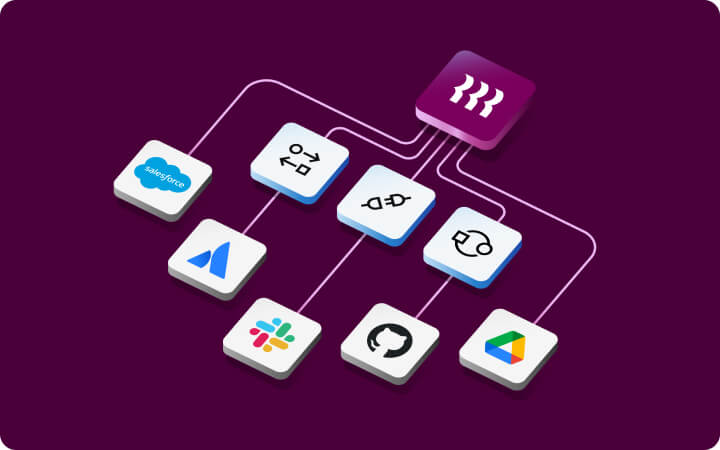
But here's what makes Rippling different: it runs on a unified data model. A schedule change, a new hire, or a pay rate update in one part of the system flows through automatically—no manual re-entry, no syncing, no spreadsheet in between. And that model connects to the systems your business already lives in: POS platforms, workforce scheduling tools, and store ops software, so the data that drives your workforce decisions moves into payroll automatically.
The result: less time reconciling systems, more time running your stores. See how Rippling supports retail workforce management.
Run Retail Award payroll accurately. On time. Every time.
Frequently asked questions
What is the best HR software for retail?
Why do retail businesses need HR software?
Retail businesses deal with high turnover, seasonal hiring spikes, complex scheduling across multiple locations, and labor law compliance that varies by jurisdiction. Generic HR tools aren't built for that combination of demands. Purpose-built retail HR systems automate the processes that would otherwise consume disproportionate amounts of manager and HR team time.
What features should retail HR software include?
At minimum, look for multi-location scheduling, mobile clock-in and self-service, digital onboarding workflows, payroll support for variable hours and shift differentials, compliance tracking for state and local labor laws, and integration with your POS and time tracking systems.
How does HR software help reduce turnover?
HR software reduces turnover by improving the new hire experience through smooth onboarding, giving employees easy access to their schedule and pay information on mobile, and providing managers with performance data to identify and recognize high performers before they leave. A poor first-day experience and scheduling friction are common drivers of early retail turnover.
Can HR software handle seasonal employees?
Yes, the right retail HR software supports bulk onboarding for seasonal workers, rehire workflows for returning employees, and automated offboarding at the end of a seasonal period. Look for platforms that also offer flexible pricing that doesn't penalize you for temporary headcount increases.
What is the cost of retail HR software?
Retail HR software is typically priced on a per-employee, per-month basis, ranging from roughly $8 to $25 per employee depending on the features included. When calculating total cost of ownership, account for implementation costs, any location-based fees, and how the vendor handles seasonal headcount increases.
How does HR software integrate with POS systems?
Some HR and workforce management platforms offer direct POS integrations that sync sales volume data with scheduling tools, helping managers staff based on actual anticipated traffic instead of guesswork. Before committing to a platform, ask vendors to demonstrate their specific integration with your POS system rather than just confirming it exists on a compatibility list.
Is mobile access important for retail HR tools?
Mobile access is essential for retail HR tools. Most retail employees don't have access to a desktop or company laptop during their shift. If employees can't view their schedule, clock in, request time off, or access their pay stub from their phone, those features aren't actually accessible to the people who need them most.
Disclaimer
Rippling and its affiliates do not provide tax, accounting, or legal advice. This material has been prepared for informational purposes only, and is not intended to provide or be relied on for tax, accounting, or legal advice. You should consult your own tax, accounting, and legal advisors before engaging in any related activities or transactions.

Author

Vanessa Kahkesh
Content Marketing Manager, HR
Vanessa Kahkesh is a content marketer for HR passionate about shaping conversations at the intersection of people, strategy, and workplace culture. At Rippling, she leads the creation of HR-focused content. Vanessa honed her marketing, storytelling, and growth skills through roles in product marketing, community-building, and startup ventures. She worked on the product marketing team at Replit and was the founder of STUDENTpreneurs, a global community platform for student founders. Her multidisciplinary experience — combining narrative, brand, and operations — gives her a unique lens into HR content: she effectively bridges the technical side of HR with the human stories behind them.
See Rippling in action
Increase savings, automate busy work, and make better decisions by managing HR, IT, and Finance in one place.