














By clicking "Rippling bekijken," you agree to the use of your data in accordance with Rippling's Privacy Notice, including for marketing purposes.
Deze content is nog niet beschikbaar in the Nederland.Terug naar startpagina van NL
- Producten
- Platform
Kernmogelijkheden

Workflow Studio
Geavanceerde workflows activeren met ongeacht welke gegevens

Analyse
Rapporteren over alles wat er in uw apps gebeurt

Beleidsregels
Bedrijfsregels automatisch toepassen

Machtigingen
Iedereen de juiste toegang geven

Integraties
De prestaties van externe apps optimaliseren

App Studio
Aangepaste apps maken zonder code
Rippling AI
Ontgrendel bedrijfskritische inzichten en delegeer vervelende taken aan AI die is ontwikkeld voor HR, salarisadministratie, IT en finance.
Meer informatie
Rippling Solutions
Krijg door engineers gebouwde maatwerkapps in Rippling om elk bedrijfsproces dat je hebt te automatiseren.
Meer informatie
- Oplossingen
- Wereldwijd

Officiële werkgever
Wereldwijd werven zonder entiteit

Internationale salarisadministratie
Medewerkers waar ook ter wereld betalen

Internationale contractanten
Contractanten waar ook ter wereld betalen

Officiële contractant
Contractantrisico beperken

Internationaal HRIS (HR-informatiesysteem)
Internationale HR centraal uitvoeren

Wereldwijde secundaire arbeidsvoorwaarden
Secundaire arbeidsvoorwaarden waar ook ter wereld beheren

Wereldwijde uitgaven
Bespaar overal waar uw bedrijf actief is
- Resources
Blog

Resources

Klantervaringen

Klantervaringen


Barry’s biedt zijn personeel meer mogelijkheden dankzij een schaalbare HR-oplossing

Forterra automatiseert tijdrovende taken om meer impact te hebben

Chess.com ontwikkelt soepele personeelsprocessen

Clay werd vijf keer zo groot door 80% van de onboardingtaken te automatiseren

Blank Street Coffee bespaart 40 uur door open inschrijvingen te automatiseren

Dankzij Rippling heeft Andros een optimale automatisering
Webinars

Verklarende woordenlijst

Gebeurtenissen

Rippling University

Helpcentrum

Vergelijken


NL
Select language

Australië (EN)

Canada (EN)
Canada (FR)

Frankrijk (FR)

Duitsland (DE)

Ierland (EN)

Verenigd Koninkrijk (EN)

Verenigde Staten (EN)
NL
Australië (EN)
Canada (EN)
Canada (FR)
Frankrijk (FR)
Duitsland (DE)
Ierland (EN)
Verenigd Koninkrijk (EN)
Verenigde Staten (EN)
NL
Australië (EN)
Canada (EN)
Canada (FR)
Frankrijk (FR)
Duitsland (DE)
Ierland (EN)
Verenigd Koninkrijk (EN)
Verenigde Staten (EN)
Headcount Planning
Headcount planning software that eliminates spreadsheets
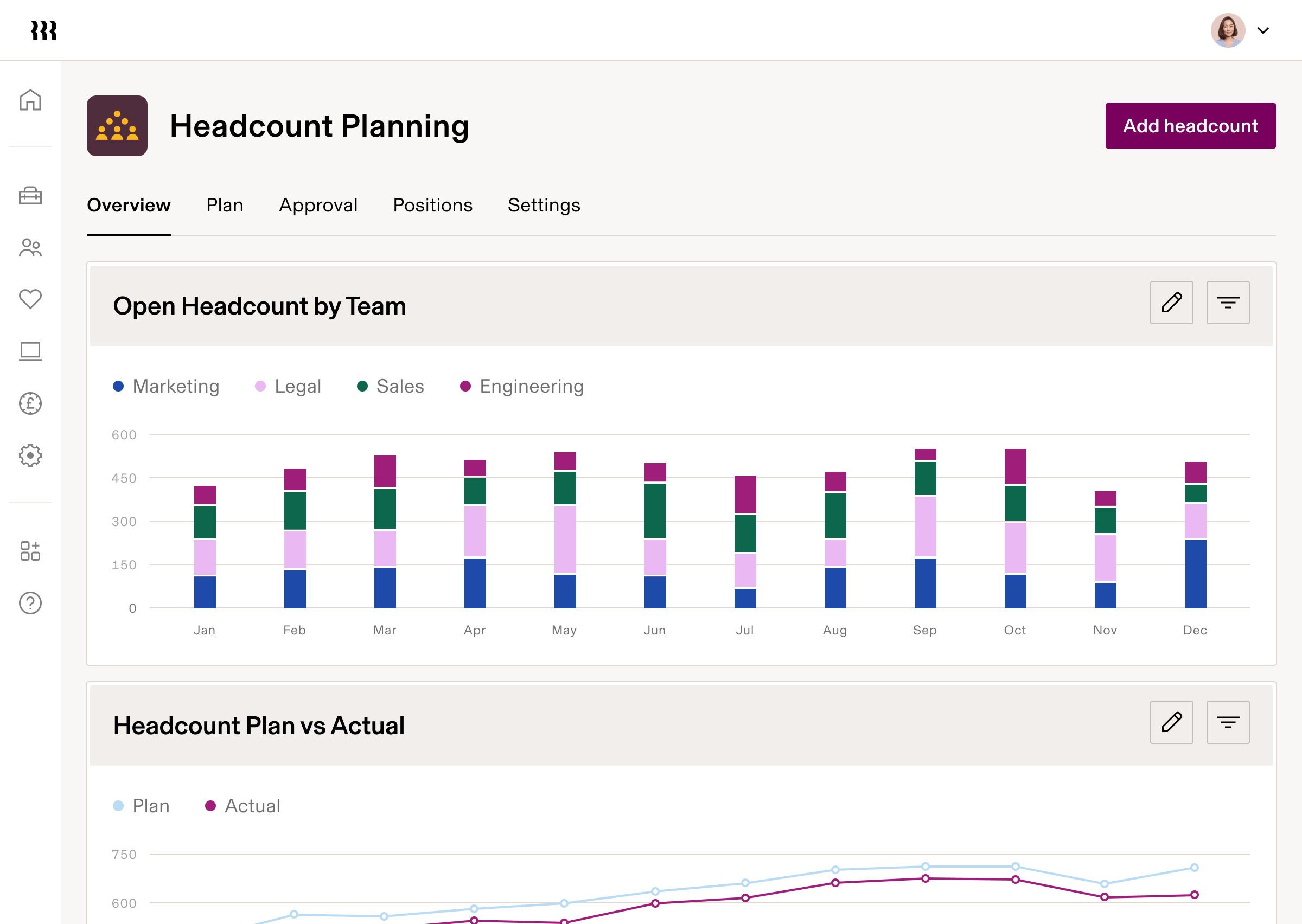
Overview
The easiest way to share, track and stick to your headcount plan
Share your hiring plan
Create and share plans across departments, aligning everyone.
Track your progress
View open roles, new recruits and costs in one place.
Stick to the plan
Use permissions and approvals to keep managers from going rogue.
Keep recruiting in sync
Give your talent acquisition team instant visibility into changes in your hiring plan throughout the year.
Unified headcount management
Spreadsheets create silos. Rippling aligns every team instantly.
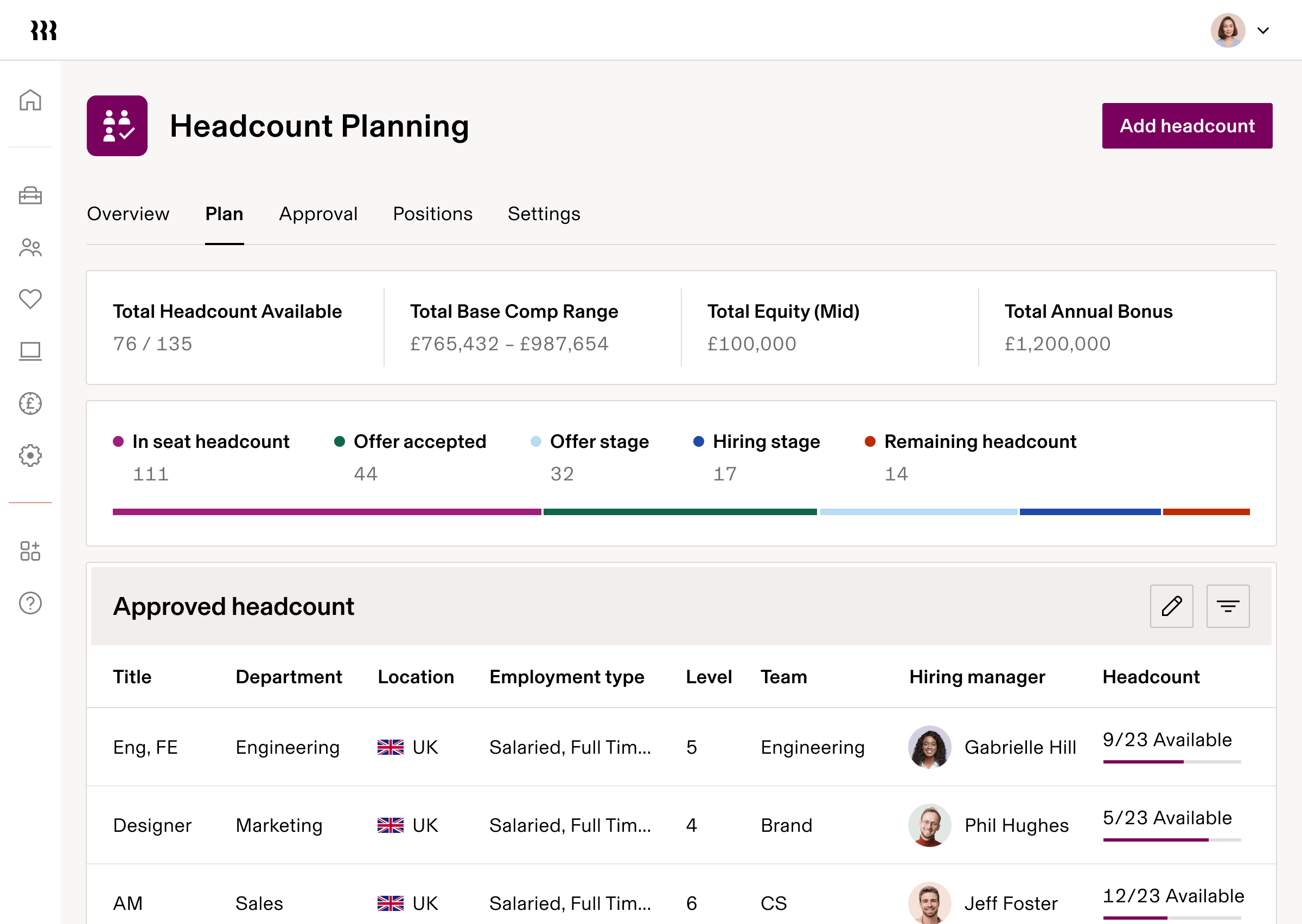
View all your plans in one place
Workforce planning goes awry when too many spreadsheets crop up. Consolidate your teams’ plans into a single interface where you can review who has headcount available and when they can hire to meet staffing needs.
Give everyone the right visibility instantly
Control which employees see which details – from open roles to current headcount – with role-based permissions. Rippling will automatically update permissions if an employee changes roles.
Eliminate confusing back-and-forth
No more confusion around who has headcount for what. In Rippling, managers can see exactly what they’re approved for and how their hiring aligns with your headcount planning process.
Unified analytics
Know how you’re pacing relative to plan, at all times


Advanced approval management
Enforce your plan with (almost) zero effort
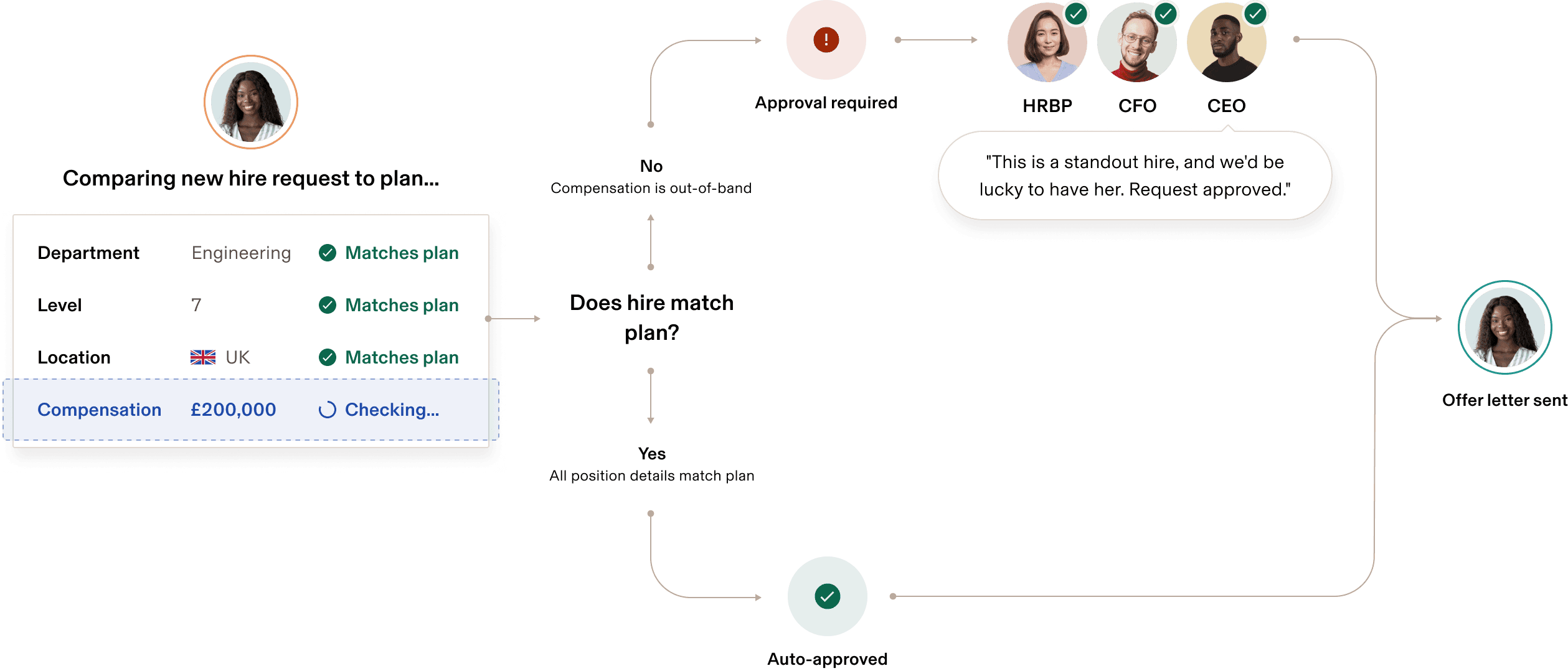
Automatically approve planned joiners
Recruits who meet your role criteria, like remuneration band or level, will be automatically approved.
Require manual approval for off-plan joiners
If a request deviates from plan, Rippling will route it through an approval chain predetermined by you.
Fast-track hiring
Stay in sync with recruiting
You can optimise recruiting capacity with Workflow Studio. It’s easy to build workflows that keep your team up to date on approved roles and change requests.
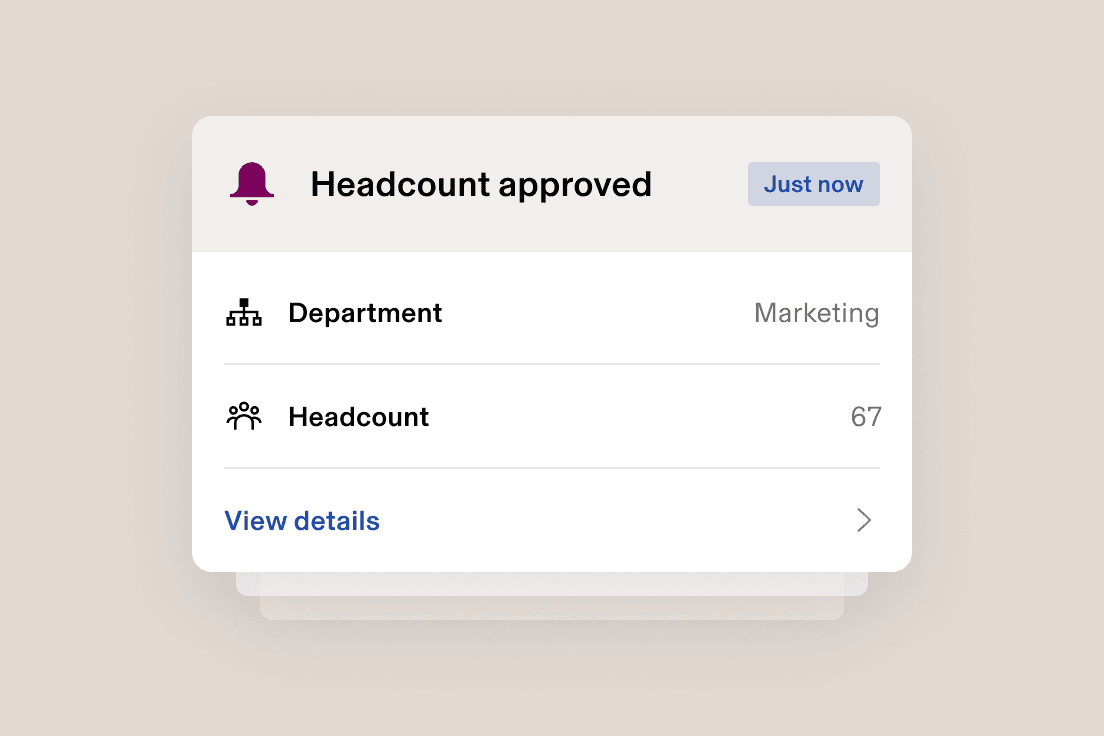
Notify recruiting when headcount is approved
As soon as headcount gets approved, Rippling automatically notifies the recruiting team with each new role’s details, so they are able to begin sourcing candidates quickly for future needs.
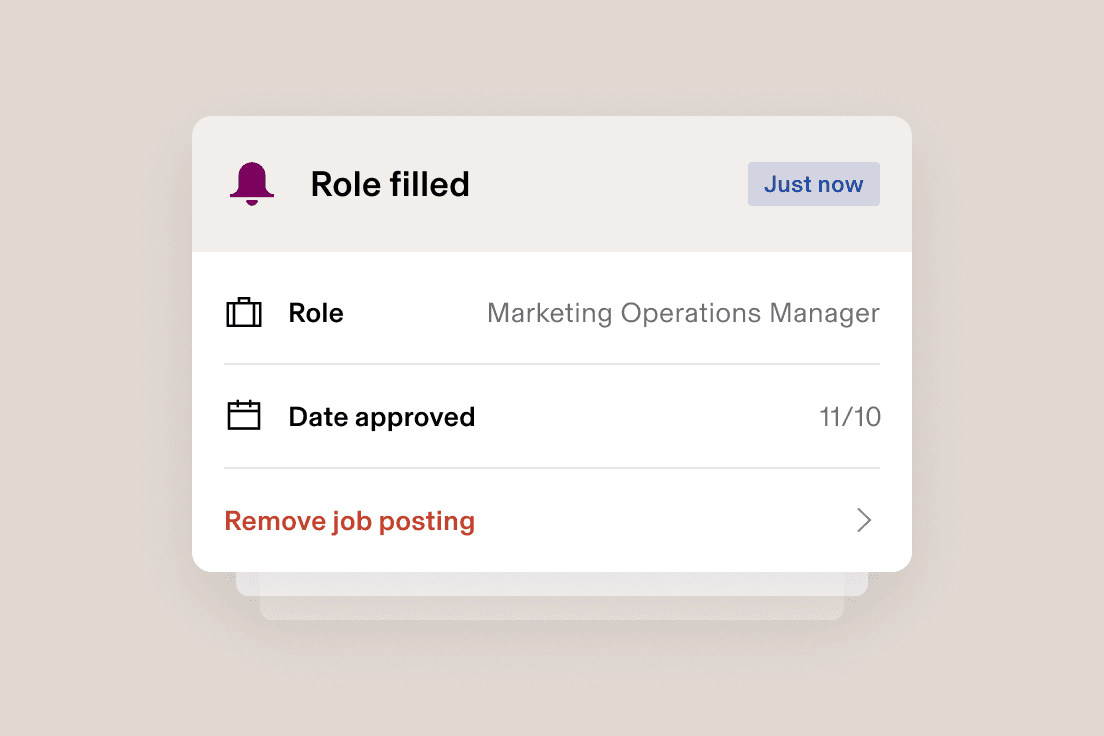
Auto-update your headcount plan after a position is filled
When a position is filled, Rippling automatically updates your headcount plan, notifies recruiters and sends a reminder to remove the job posting.
Remuneration bands
Control your headcount costs with compensation bands
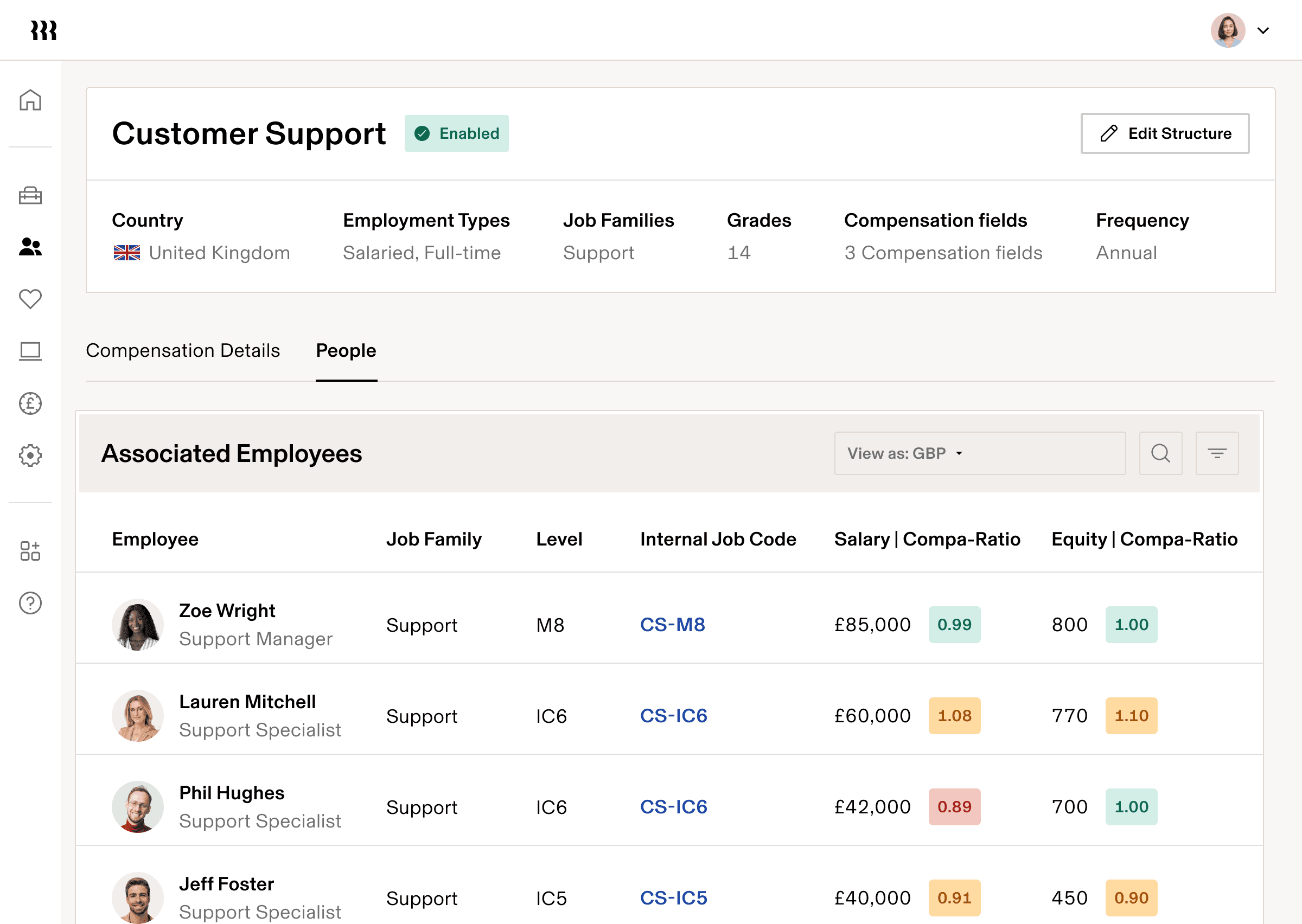
Give everyone a single source of truth
Create and manage remuneration bands for your current workforce while protecting sensitive data. Rippling automatically maps each employee to the right remuneration band based on their role.
Prevent out-of-band compensation
Rippling enforces remuneration bands during onboarding and flags out-of-band adjustments, so you can approve special cases, block others as needed and keep headcount costs on plan.
Spot potential issues early
Rippling notifies stakeholders of changes, like when an employee’s compa ratio drops because of a location change, or if an employee’s remuneration is too high or too low.
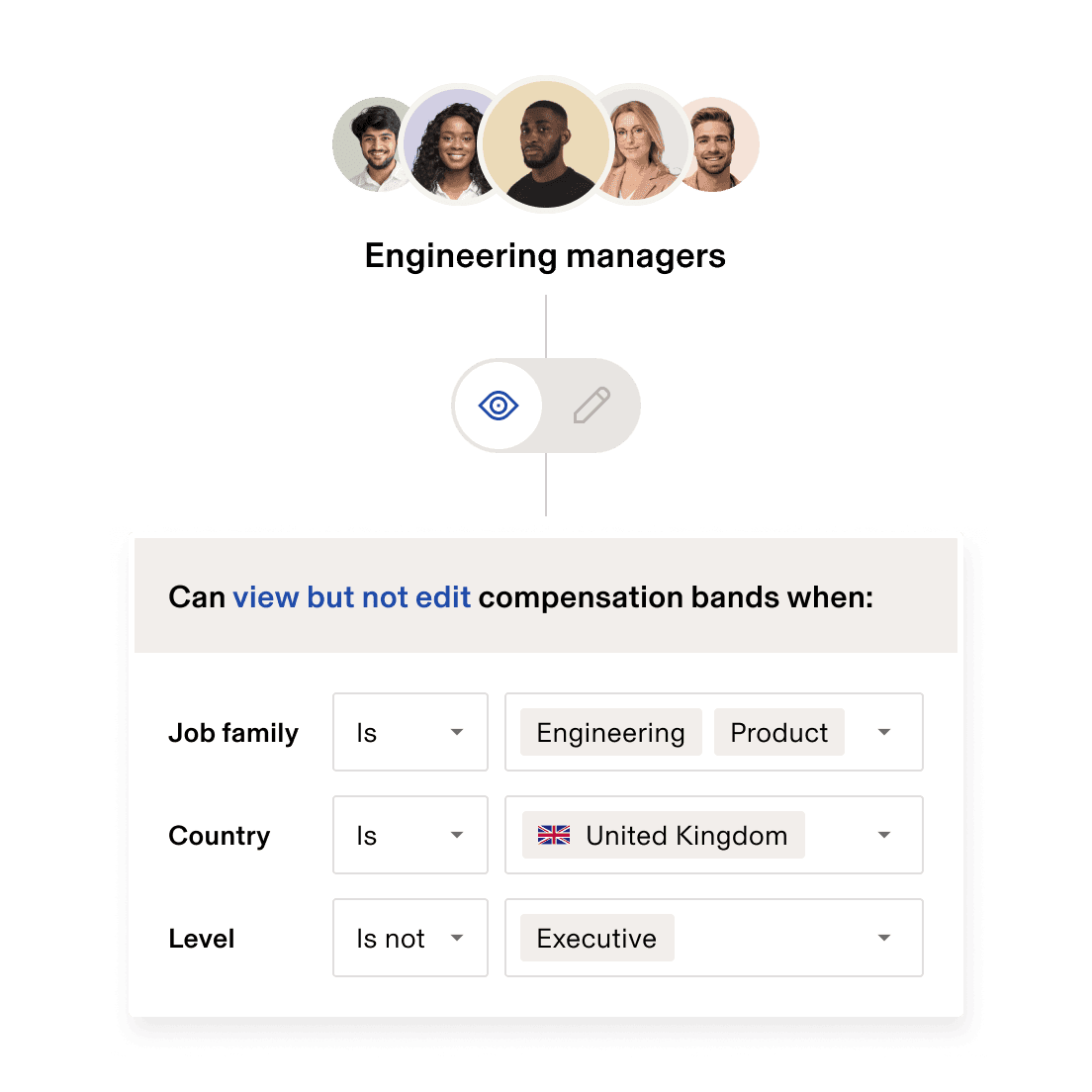
Role-based permissions
Automatically give everyone visibility into the right bands
Rippling automatically gives everyone in your organisation – whether they’re the head of HR, a recruiter or a hiring manager – visibility into the right remuneration bands, without ever oversharing.
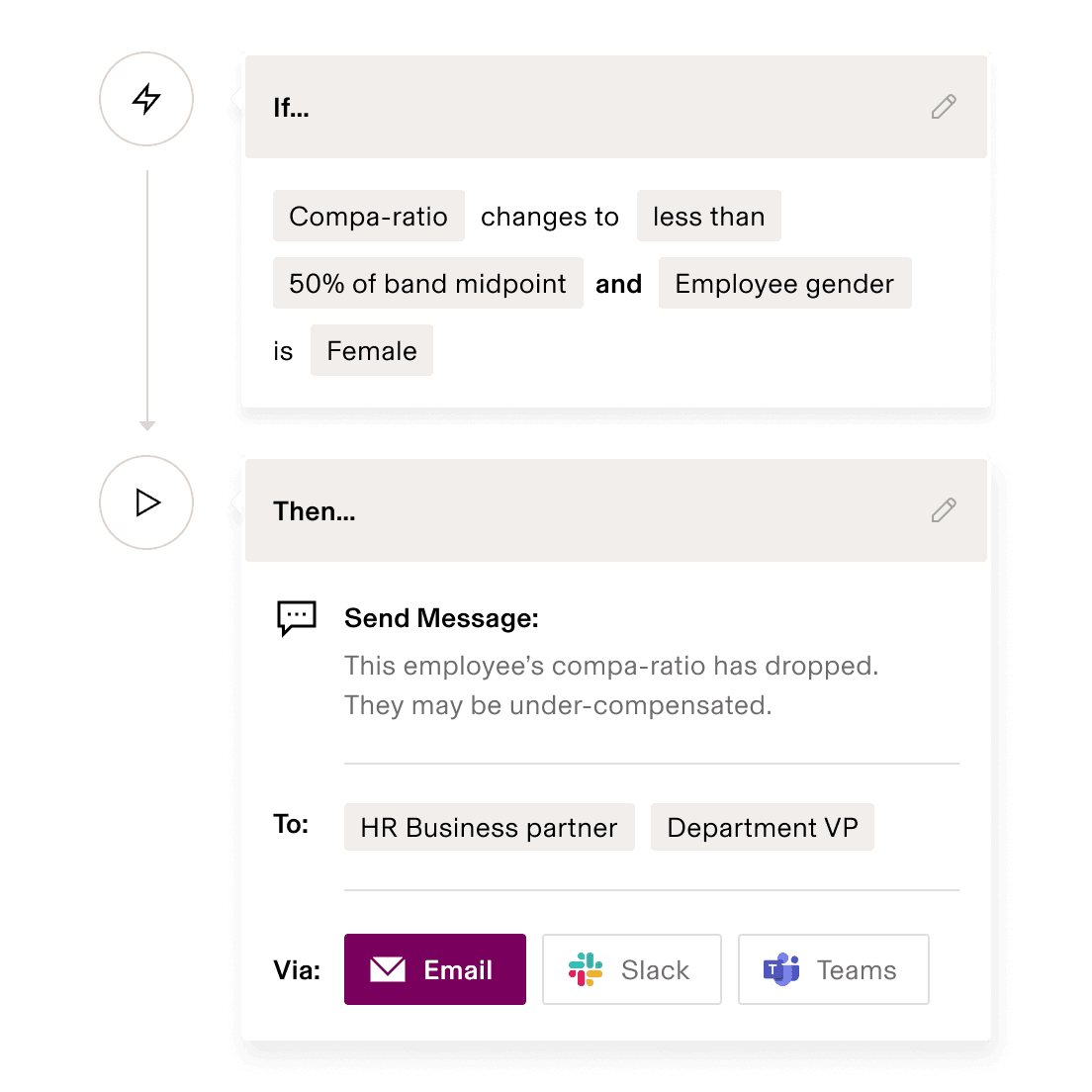
Workflow Studio
Customise workflows to manage pay equity and more
Automated workflows help you stay ahead of the curve. For example, Rippling can help maintain pay equity by sending an alert whenever specific employee compa ratios drop.











Met een andere opbouw
Meer informatie over het Rippling PlatformAlles kan worden geanalyseerd, geautomatiseerd en georganiseerd
De meeste 'alles-in-één'-software bestaat uit verworven systemen. Dergelijke modules, en dus ook uw bedrijfsgegevens, zijn niet met elkaar verbonden. Rippling hanteert een platformbenadering en bouwt producten waarvoor alle medewerkersgegevens afkomstig zijn van één enkele bron. Zo'n rijke, flexibele gegevensbron biedt krachtige mogelijkheden.


FAQs
What does it mean to have headcount?
Headcount refers to the total number of employees in an organisation. Open headcount refers to positions that have been approved as part of a hiring plan but not yet filled with actual employees.
What is headcount management and planning?
Headcount planning and management is the process of determining a company’s headcount needs for the following year, allocating specific headcount to different departments, and tracking how the company performs against its plan. It is a cross-functional process that involves HR, Finance, Recruiting and hiring managers.
Why is headcount planning important?
Headcount planning ensures that companies have the right talent with the right skills to meet their strategic initiatives and key metrics in the near and long term, while aligning business leaders around a plan to keep costs down. Without headcount planning, larger businesses run the risk of overhiring or hiring in a way that isn’t cost effective.
How do you create a headcount plan?
Traditionally, businesses have managed headcount plans using spreadsheets. Because many different people are involved in the headcount process and the data related to headcount can be sensitive, this approach traditionally involves multiple spreadsheets. This can lead to challenges such as version control issues, lack of real-time visibility and manual data entry errors. In Rippling, business leaders can start their headcount plan in a few simple clicks and adjust it collaboratively without ever seeing data they should not have access to.
What tools are available for effective headcount planning?
Effective headcount planning requires tools that move beyond traditional spreadsheets to offer real-time visibility, collaboration and insightful analytics. Rippling unifies data across your HRIS and other systems with tools like:
- Consolidated workforce view: See all your current employees and planned recruits in one centralised dashboard, eliminating the need for multiple spreadsheets and providing a clear overview of your current workforce and open roles.
- Automated updates: Rippling streamlines updates to your headcount plan as positions are filled or changes are approved, ensuring real-time accuracy and reducing manual data entry and the risk of outdated information.
- Headcount reports: Generate comprehensive headcount reports with key metrics like planned vs. actual headcount, labour costs and progress towards business goals, enabling data-driven decision-making and accurate forecasting.
- Integration with other HR systems: Seamless integration with your HRIS and talent management systems, providing a unified view of your strategic workforce planning processes and ensuring alignment between hiring and your business strategy.