





















HR onboarding software helps organisations manage the tasks involved in bringing new employees into the business. These systems usually automate document collection, onboarding checklists, training tasks, and employee record creation.
The 14 Best HR Onboarding Software Platforms in the UK

In this article
Starting a new job can be exciting. The last thing businesses want is to make it stressful by subjecting new employees to a complicated onboarding process. Yet many businesses are still onboarding new team members through email chains, spreadsheets, and manual paperwork, which can often create friction even before their first day.
Onboarding can also be a complex process for HR teams in the UK. Employers must also navigate HMRC reporting requirements, GDPR data protection obligations, and evolving employment regulations. When these responsibilities are handled manually or through disconnected tools, small gaps in the process can quickly escalate to create operational risk.
These friction points are often what lead organisations to adopt HR onboarding software platforms. But the right onboarding solution can make the process easier for everyone to navigate.
By creating structured workflows that guide new employees seamlessly through preboarding documentation, payroll setup, and policy acknowledgements, HR onboarding software creates a smooth first experience for new team members. It also automates much of the process, reducing administrative tasks for your HR team and keeping them audit-ready without manual oversight.
If your business is ready to improve its onboarding workflow, we’re here to help. We’ve reviewed and scored the best HR onboarding software solutions in the UK, evaluating them on five key criteria:
Preboarding and workflow automation
Employee data, documentation, and e-signatures
Payroll, benefits, and financial setup readiness
Compliance, regulatory, and risk management
Integrations, IT provisioning, and ecosystem connectivity
Usability, implementation, and scalability
For a more detailed look at how we scored each platform, you can review our full spreadsheet of ratings here.
The platforms below consistently perform well when organisations need to automate onboarding workflows, maintain compliance, and scale HR operations.
Top HR onboarding software platforms in the UK
Rank | Platform | Best for | Choose this if |
|---|---|---|---|
1 | Rippling | Unified HR, IT, and payroll automation | You want onboarding connected to payroll, device provisioning, and workforce automation |
2 | Workday | Enterprise workforce management | Your organisation already operates a large enterprise HR stack |
3 | Oracle | Global enterprise HR environments | You require deep enterprise integrations across finance and HR |
4 | SAP | Large multinational HR infrastructure | Your organisation runs SAP across finance and operations |
5 | HiBob | Modern HR teams and scaling companies | You want a flexible HR platform focused on employee experience |
6 | Dayforce | Workforce management and payroll integration | Payroll and workforce scheduling are central to your operations |
7 | Remote | Distributed and international teams | You need onboarding tied to global hiring and compliance |
8 | The Access Group | UK-focused HR software ecosystems | Your organisation prefers UK-based HR software providers |
9 | Personio | European mid-market businesses | You want a structured HR platform built for growing teams |
10 | Sage | Finance-integrated HR environments | Your organisation already relies on Sage accounting systems |
11 | Papaya Global | International payroll and workforce compliance | You manage employees across multiple jurisdictions |
12 | PeopleHR | UK SMEs | You want a lightweight HR platform with simple onboarding workflows |
13 | BrightHR | Small businesses and compliance support | You need HR documentation and onboarding guidance |
14 | Breathe HR | Small UK companies | You want a straightforward HR system focused on core HR tasks |
The 14 best HR onboarding software for the UK
Based on our comprehensive analysis of onboarding software, 14 stood out. In the following sections, we’ll introduce you to the core features of each solution and share some customer reviews that highlight their benefits and challenges.
Here are the solutions we’re going to take a closer look at:
Rippling
Workday
Oracle Fusion Cloud HCM
SAP SuccessFactors
HiBob
Dayforce
Remote
The Access Group
Personio
Sage
Papaya Global
PeopleHR
BrightHR
Breathe HR
1. Rippling
Rippling approaches HR onboarding differently than most traditional HR systems do. Rather than treating onboarding as a standalone HR process, the platform connects onboarding directly with payroll, benefits administration, IT provisioning, and workforce management.
Source: Rippling
When a new employee joins, HR teams can automatically trigger workflows that create payroll records, assign software accounts, provision devices, and configure access permissions. This unified approach decreases the manual coordination that often occurs between HR, IT, and finance teams during onboarding.
For UK organisations, Rippling also enables compliance workflows tied to employment documentation and data management. Because employee data sits within a single system, onboarding information flows directly into payroll, benefits management, and workforce reporting.
The platform is especially attractive to growing businesses that want to avoid stitching together separate HR, payroll, and IT tools. Instead, Rippling creates a single operational system for managing employees throughout the entire lifecycle.
Why companies choose Rippling
Unified HR, payroll, IT, and automation workflows in one system
Highly automated onboarding processes that reduce manual HR tasks
Strong integrations across employee lifecycle management
“We previously had a number of apps to manage to the same thing Rippling does now and different HR systems for the US and UK and Rippling makes this now very easy.” —Rippling Capterra review
User-flagged challenges
Pricing is customised and may require consultation
Smaller businesses may initially use only part of the platform’s capabilities
2. Workday
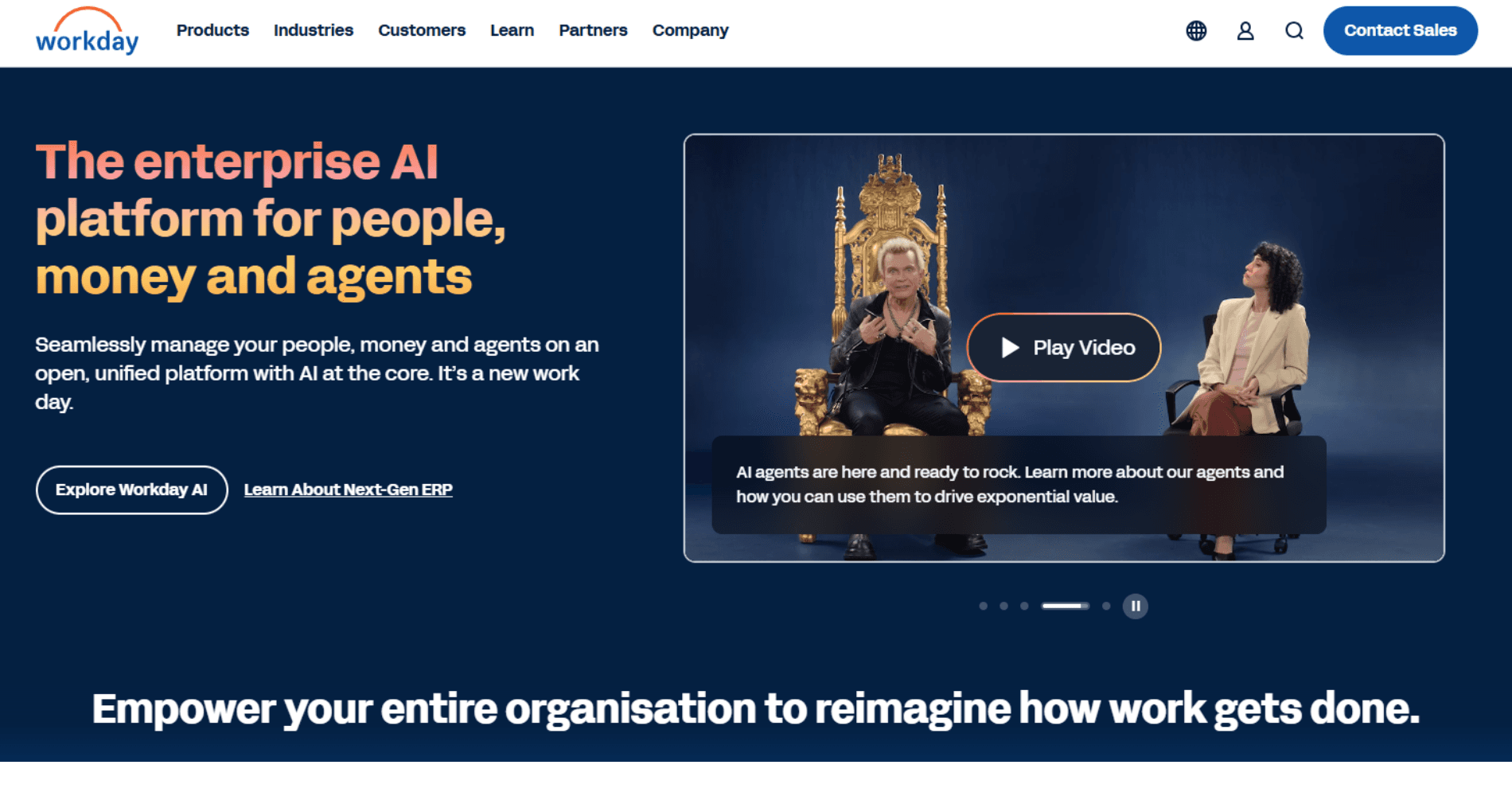
Workday is widely recognised as one of the most established enterprise HR platforms globally. The system provides a broad suite of capabilities across workforce management, payroll, financial planning, and workforce analytics.
Within this environment, onboarding is automatically part of a larger employee lifecycle system that includes recruitment, performance management, learning and development, and workforce planning.
Source: Workday
Workday’s onboarding workflows allow HR teams to manage documentation, pre-employment tasks, training assignments, and employee introductions. The platform also supports configurable workflows, enabling organisations to design onboarding experiences that are in sync with internal policies and operational structures.
However, Workday is usually best suited to large enterprises with dedicated HR technology teams. Implementing the platform can be complex, and the system’s depth may exceed the needs of smaller organisations.
Why companies choose Workday
Comprehensive enterprise human capital management platform
Advanced workforce analytics and reporting capabilities
Highly configurable onboarding workflows
"Positive overall, it’s a one stop shop and allows the user to have a lot of information at their fingertips without having to engage support teams." —Workday Capterra review
User-flagged challenges
Implementation can require significant time and resources
Often better suited to enterprise environments than smaller businesses
3. Oracle
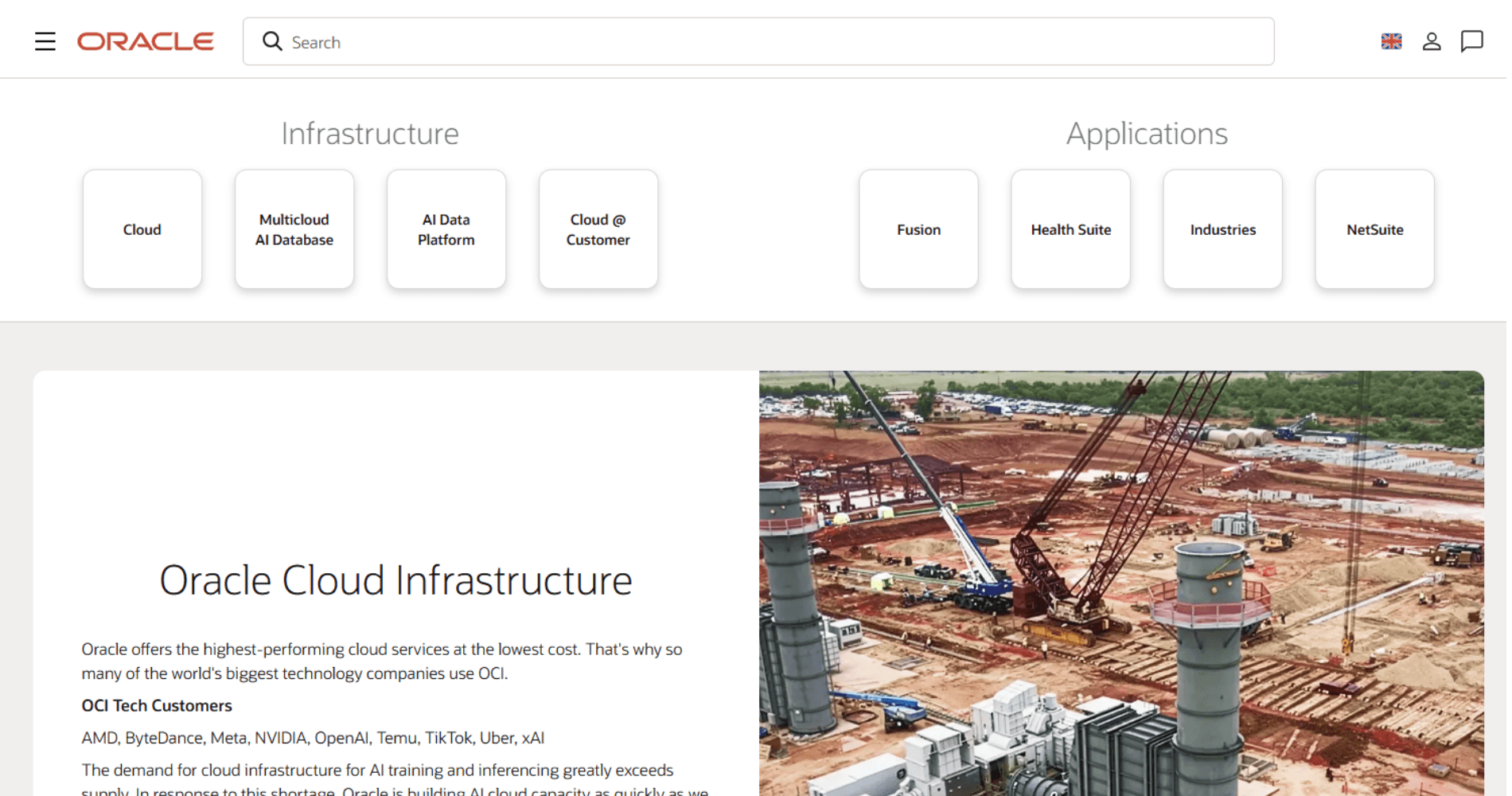
Oracle’s Human Capital Management Cloud provides an enterprise-grade HR platform designed to support large organisations managing global workforces. The platform combines HR administration, talent management, payroll integration, and workforce analytics within a single ecosystem.
Source: Oracle
Onboarding within Oracle HCM is structured around workflow automation and employee lifecycle management, which work closely together. HR teams can configure onboarding tasks, manage documentation, and assign role-based onboarding requirements.
The system also integrates with Oracle’s broader enterprise infrastructure, including finance, procurement, and business intelligence tools. For organisations already operating in the Oracle ecosystem, this can ease data management and reporting across departments.
However, like many enterprise HR platforms, Oracle’s onboarding capabilities are often implemented as part of a much larger HR transformation initiative. Smaller organisations may find the platform more complex than necessary for simple onboarding workflows.
Why companies choose Oracle
Enterprise-grade HR platform with deep integration capabilities
Strong global workforce management tools
Extensive reporting and analytics infrastructure
"It streamlines onboarding, performance reviews, benefits administration, and time management. It is a huge help in reducing business risks and costs". —Oracle Capterra review
User-flagged challenges
Implementation can consume considerable resources
It may be unduly complex for organisations seeking lightweight onboarding tools
4. SAP
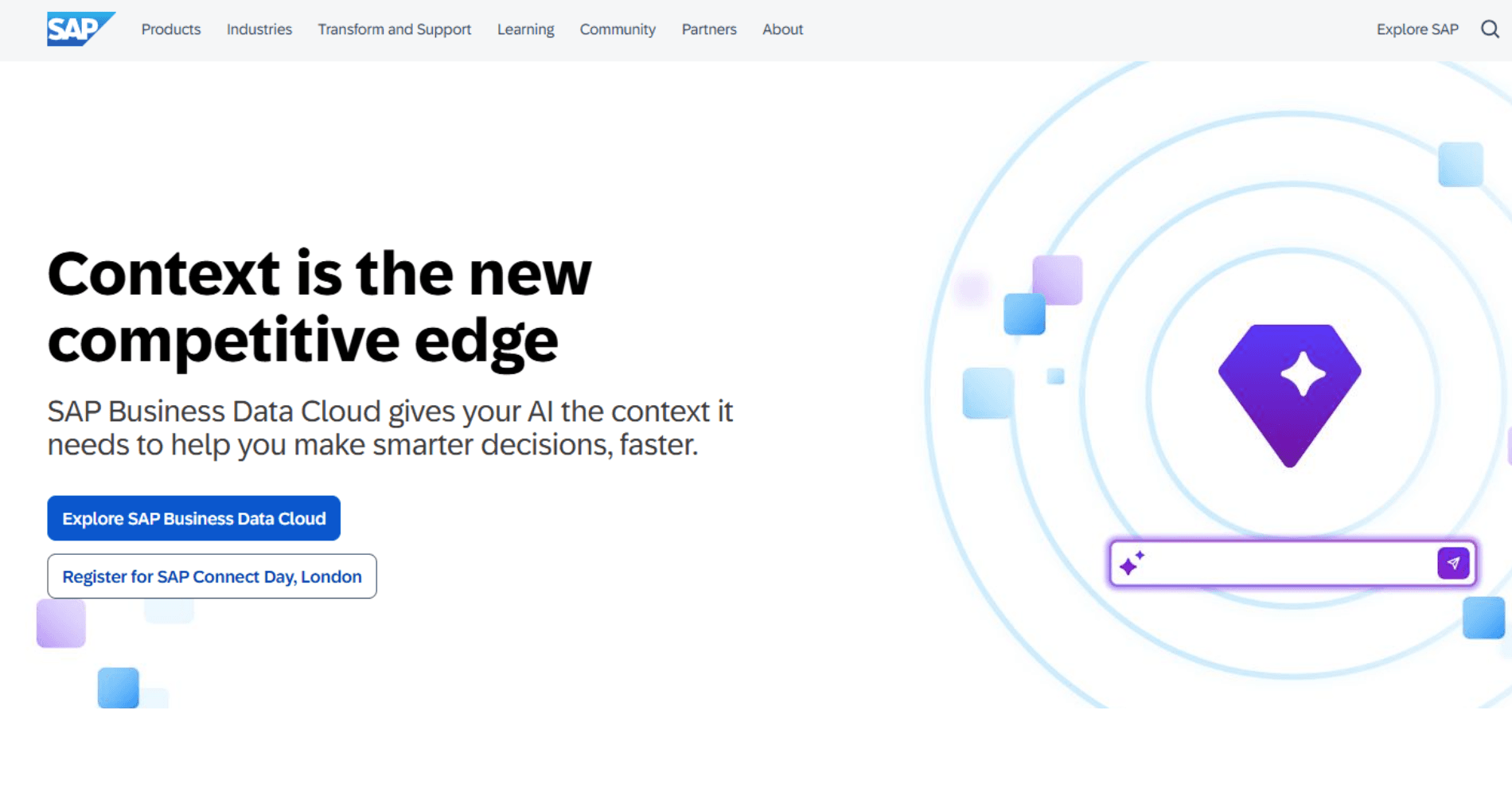
SAP’s HR ecosystem, primarily delivered through SAP SuccessFactors, is widely used by complex multinational enterprises that require consistent HR processes across multiple regions and business units, both domestic and overseas.
Source: SAP
Onboarding in SuccessFactors focuses on structured employee lifecycle management. HR teams can automate document collection, manage onboarding tasks, assign training modules, and integrate new hires into the broader HR ecosystem.
The system also allows organisations to standardise onboarding policies across different offices and jurisdictions, which can be valuable for companies operating in multiple countries. For UK businesses with large multinational structures, this consistency can simplify compliance and HR reporting.
SAP’s HR tools are often deployed alongside other SAP enterprise systems. While this integration provides powerful reporting and operational capabilities, it also means that the platform is generally implemented as part of a broader enterprise software strategy rather than as a standalone onboarding solution.
Why companies choose SAP
Strong enterprise HR infrastructure for global organisations
Consistent HR processes across multiple regions
Deep integration with SAP finance and operational systems
“What I like most about SAP SuccessFactors HXM Suite is its focus on employee experience, comprehensive HR capabilities covering the entire employee lifecycle, and strong analytics.” —SAP SuccessFactors Capterra review
User-flagged challenges
Enterprise deployments can be complex and lengthy
It often requires specialised SAP expertise to maintain and optimise
5. HiBob
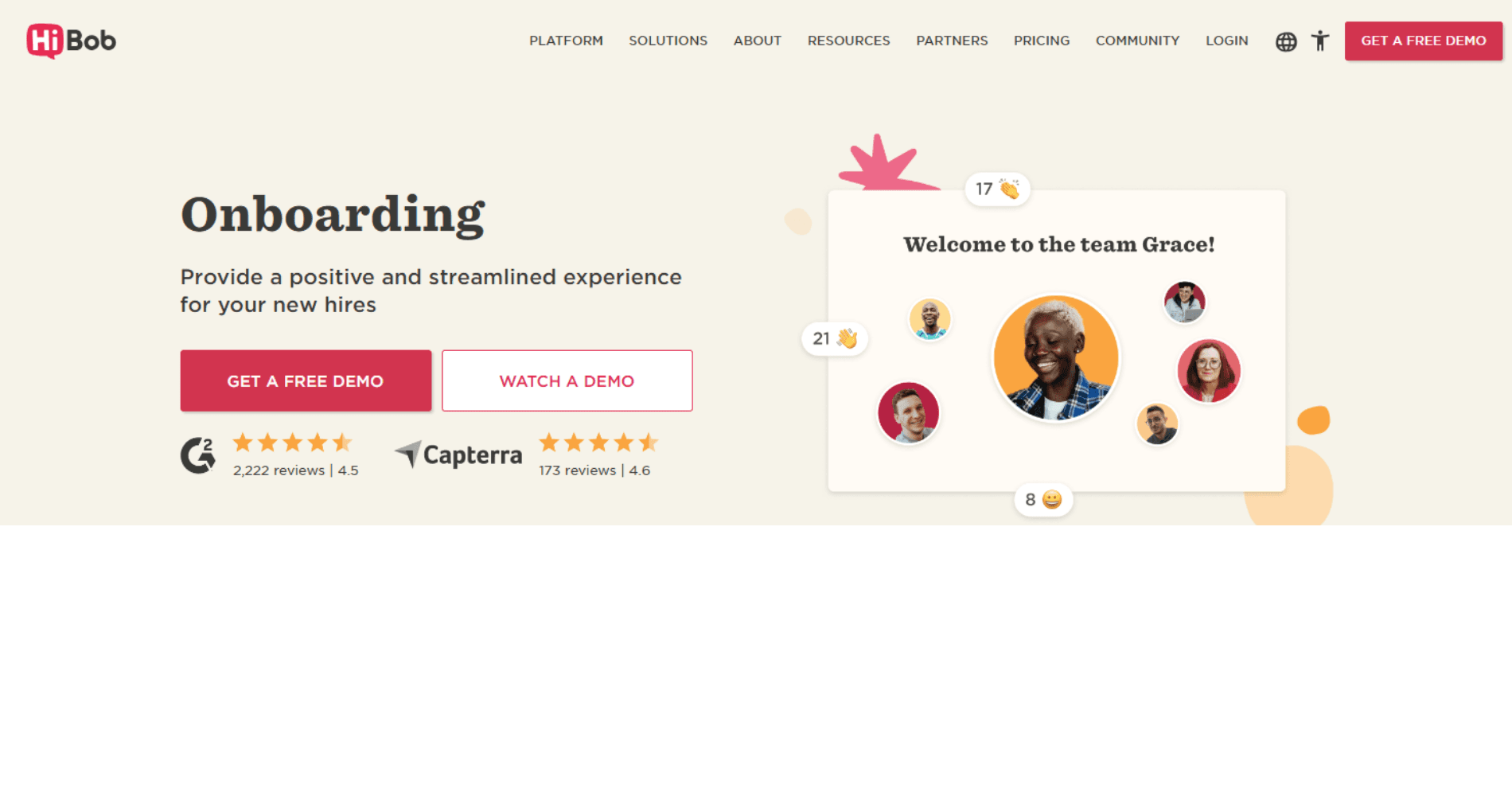
HiBob (often branded simply as Bob) is a good option for mid-market companies that are looking for a more flexible alternative to traditional enterprise HR systems. The platform focuses heavily on employee experience but also provides the operational tools HR teams need to manage onboarding, documentation, and workforce data.
Source: HiBob
Onboarding workflows within HiBob allow HR teams to automate task assignments, collect employee documentation, and coordinate activities between HR managers and team leaders. This helps ensure new hires receive the right information, training materials, and system access before their first day.
The platform also includes features specifically designed to strengthen internal culture and engagement during onboarding. Welcome messages, team introductions, and structured onboarding journeys can be customised to reflect the organisation’s internal processes.
For UK companies scaling quickly, HiBob can provide a balance of usability and capability. It offers greater flexibility than some enterprise platforms, and it supports structured HR workflows across multiple departments.
Why companies choose HiBob
Strong focus on employee engagement and onboarding experience
Flexible workflows suited to growing organisations
Intuitive interface that HR teams can configure without heavy IT involvement
"The platform provides strong insights, is user-friendly, and supports every stage of the process effectively." —HiBob Capterra review
User-flagged challenges
Advanced functionality may require additional modules
Some organisations require integrations with external payroll systems
6. Dayforce
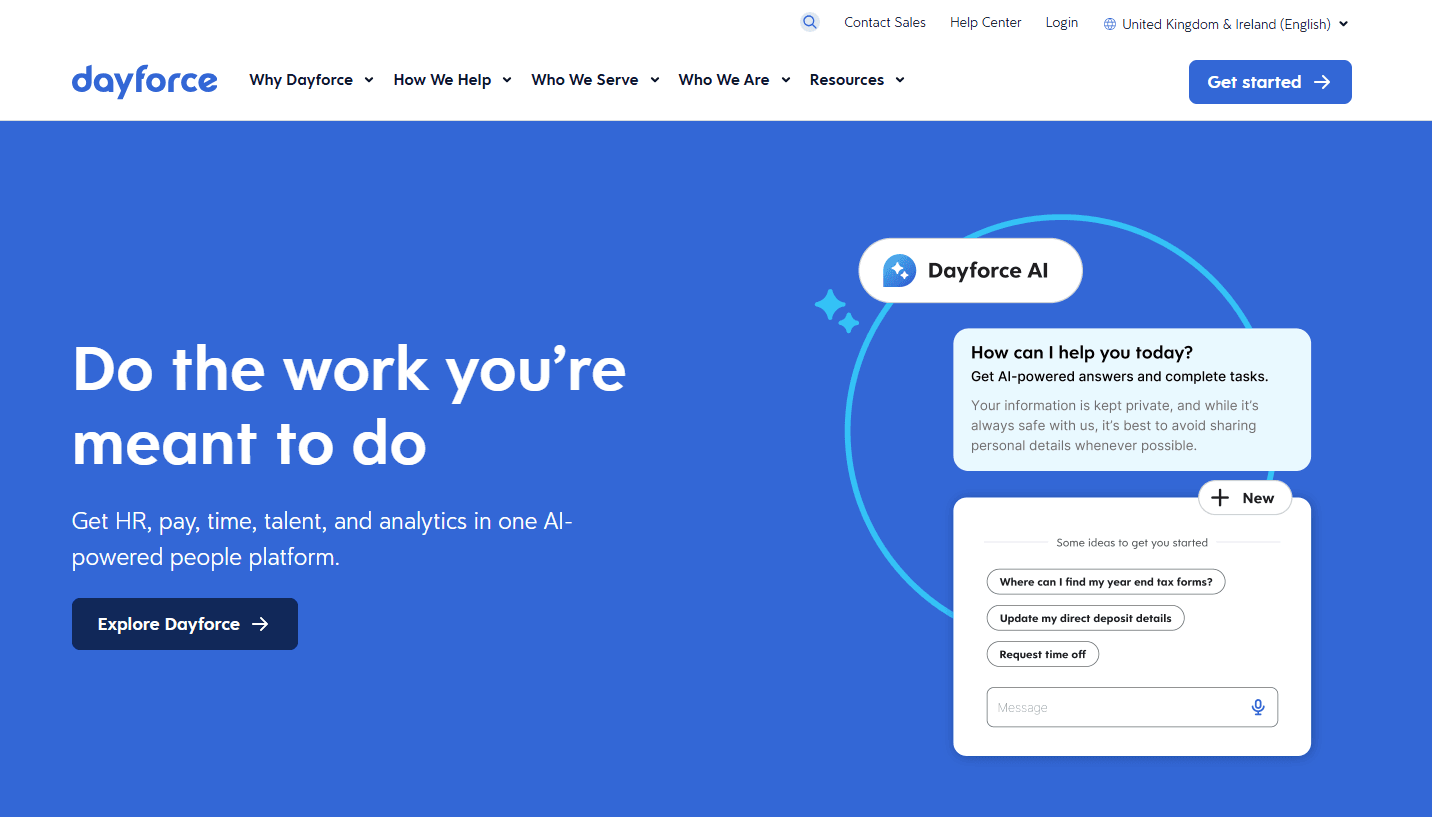
Dayforce, developed by Ceridian, combines payroll, HR management, workforce scheduling, and compliance tools into a unified platform. This approach can be particularly useful for organisations with complex operational environments, such as retail, hospitality, or large service organisations.
Source: Dayforce
In Dayforce, onboarding workflows connect directly to payroll setup and workforce scheduling systems. HR teams can collect employee documentation, assign training tasks, and configure job roles while preparing payroll records.
The platform also enables compliance monitoring and workforce reporting, helping organisations track workforce activity and ensure employees are correctly documented within the system before starting work.
Because Dayforce integrates several operational functions, it can reduce the number of separate systems required to manage employees. However, organisations primarily seeking a lightweight HR onboarding platform may find the broader workforce management capabilities more extensive than necessary.
Why companies choose Dayforce
Integrated payroll and workforce management capabilities
Strong compliance and workforce reporting tools
Suitable for organisations with complex operational staffing
"Dayforce works well for our business. It has been key in propelling us forward and empowering our managers to have accountability and oversight of key information." —Dayforce Capterra review
User-flagged challenges
Platform complexity may require training for HR teams
Implementation can take time, depending on an organisation’s size
7. Remote
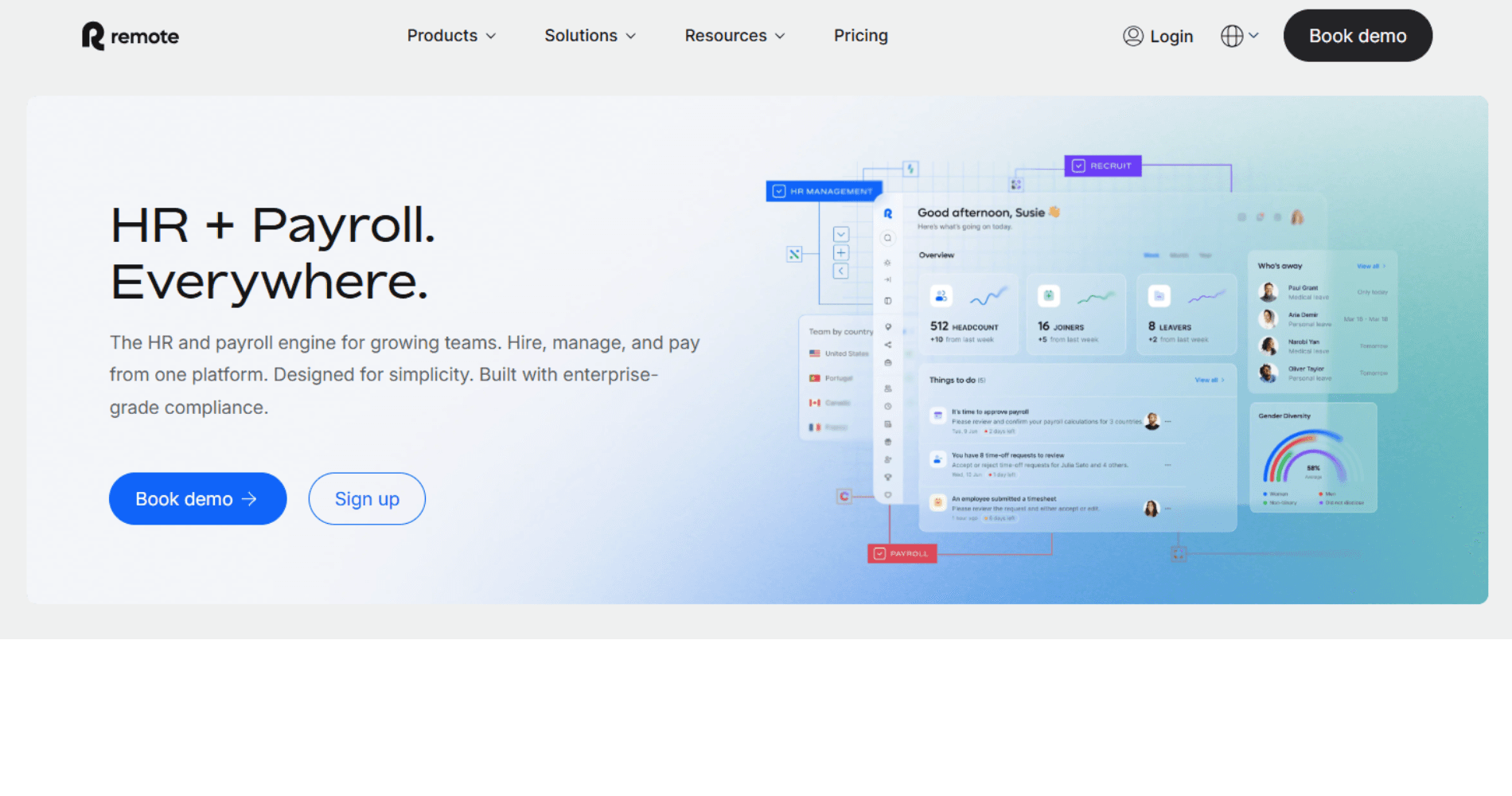
Remote has positioned itself as a global employment platform designed to help organisations hire and manage employees in different jurisdictions. Its onboarding capabilities are therefore closely linked to international compliance requirements.
Source: Remote
When an organisation hires new employees, Remote helps it manage employment contracts, tax documentation, benefits administration, and payroll setup in line with local labour regulations. This can help companies hire in multiple countries and maintain centralised HR functions.
For UK businesses expanding internationally, Remote can simplify the administrative complexities of cross-border employment. The platform supports digital contract management, onboarding documentation, and compliance checks that reflect the specific requirements of each jurisdiction.
However, Remote’s strength in international employment management means it may be less focused on broader HR workflow automation compared with some full HR platform providers.
Why companies choose Remote
Simplifies global hiring and international compliance
Integrated employment documentation and payroll support
Suitable for distributed and remote-first organisations
"Remote has a no nonsense approach. They operate balancing professional and practical, to best service both the employees and the employers." —Remote Capterra review
User-flagged challenges
Primarily focused on global employment rather than full HR systems
Some organisations require additional HR software for broader workforce management
8. The Access Group
The Access Group is a UK-based software provider offering a broad range of business software solutions, including HR management tools designed specifically for UK organisations.
Source: The Access Group
In its HR platform, onboarding workflows help businesses manage new employee documentation, collect compliance information, and develop onboarding checklists. Because the platform is designed with UK organisations in mind, it conforms closely with common HR processes used by UK-based employers.
The Access Group also provides integration across several business functions, including payroll, finance, and workforce management. For companies that prefer working with a UK-based technology provider, this ecosystem can provide peace of mind about compliance alignment and the availability of local support.
While the platform supports structured HR onboarding processes, larger multinational organisations may require more extensive global workforce management capabilities than the platform typically provides.
Why companies choose The Access Group
UK-focused HR software provider with local compliance expertise
Integration across HR, payroll, and business management tools
Local support aligned with UK business requirements
"From maintaining employee records to tracking absences and performance reviews, the system centralizes information in a way that saves time and reduces administrative errors." —The Access Group Capterra review
User-flagged challenges
International workforce management capabilities are more limited
Some advanced HR automation features depend on configuration
9. Personio
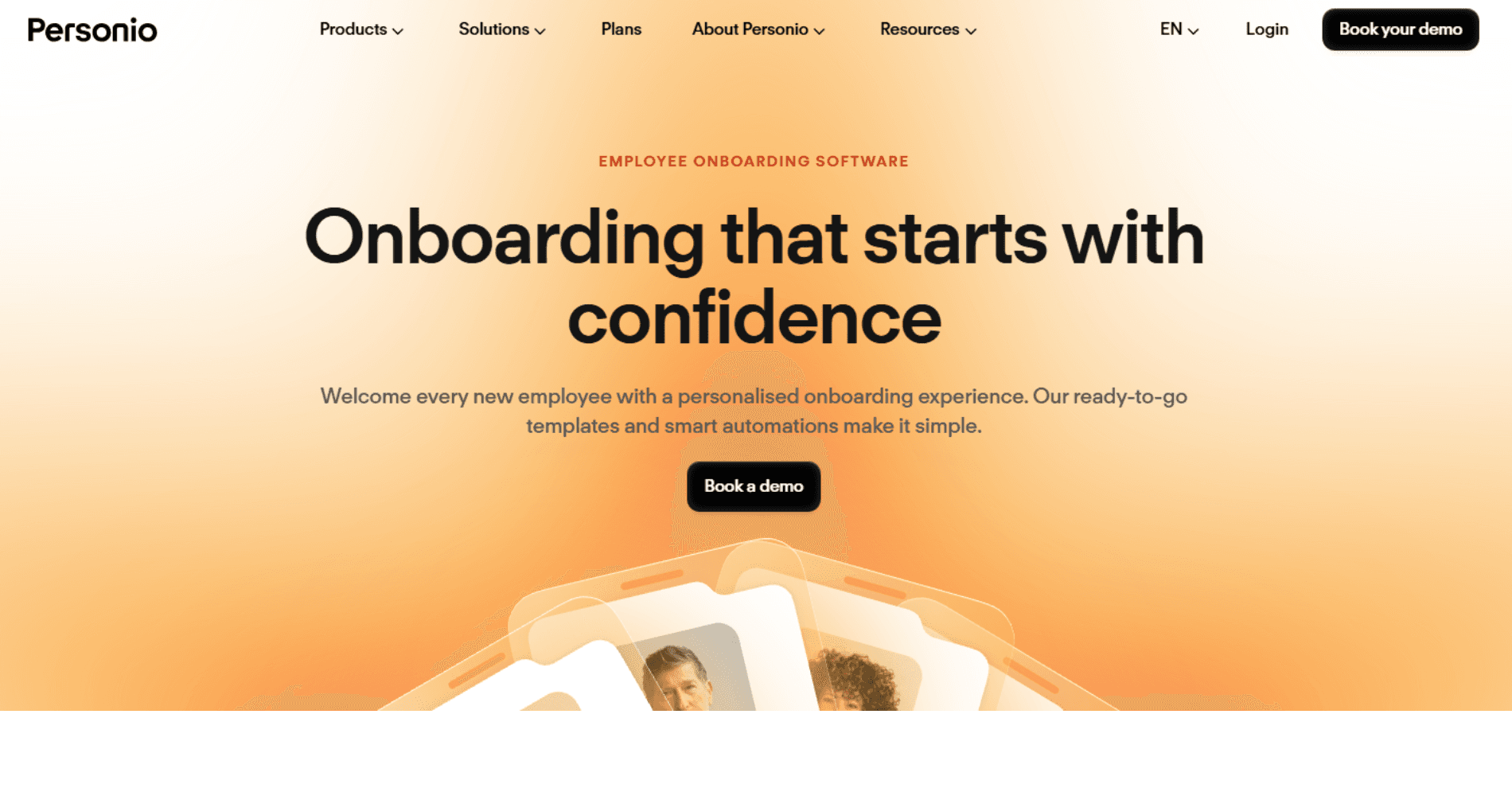
Personio is an HR platform widely used by European companies that want to combine HR administration, employee records, and onboarding workflows in a single system. The platform focuses on providing HR teams with tools to manage employee data, automate processes, and support workforce growth without the complexity frequently associated with enterprise HR systems.
Source: Personio
The onboarding functionality allows HR teams to automate document collection, assign tasks to managers or team members, and guide new employees through structured onboarding journeys. This can include preboarding documentation, training materials, and digital onboarding checklists that help standardise the employee onboarding process.
Personio also integrates onboarding with other HR capabilities, such as recruitment, time tracking, and performance management. For organisations that want a single HR platform that covers multiple HR processes, this integration can reduce administrative overhead.
However, companies with highly complex international workforce requirements may need additional third-party integrations to manage payroll or compliance in multiple jurisdictions.
Why companies choose Personio
Structured onboarding workflows that help standardise employee onboarding processes
HR platform designed specifically for growing European companies
Integration with recruitment and broader HR management tools
"It has a very simplistic interface which is a big positive for us, the reporting features work well, and the ATS module is very detailed and has a lot of advanced features." —Personio Capterra review
User-flagged challenges
International payroll capabilities may require external integrations
Advanced analytics functionality is more limited than enterprise HR systems offer
10. Sage
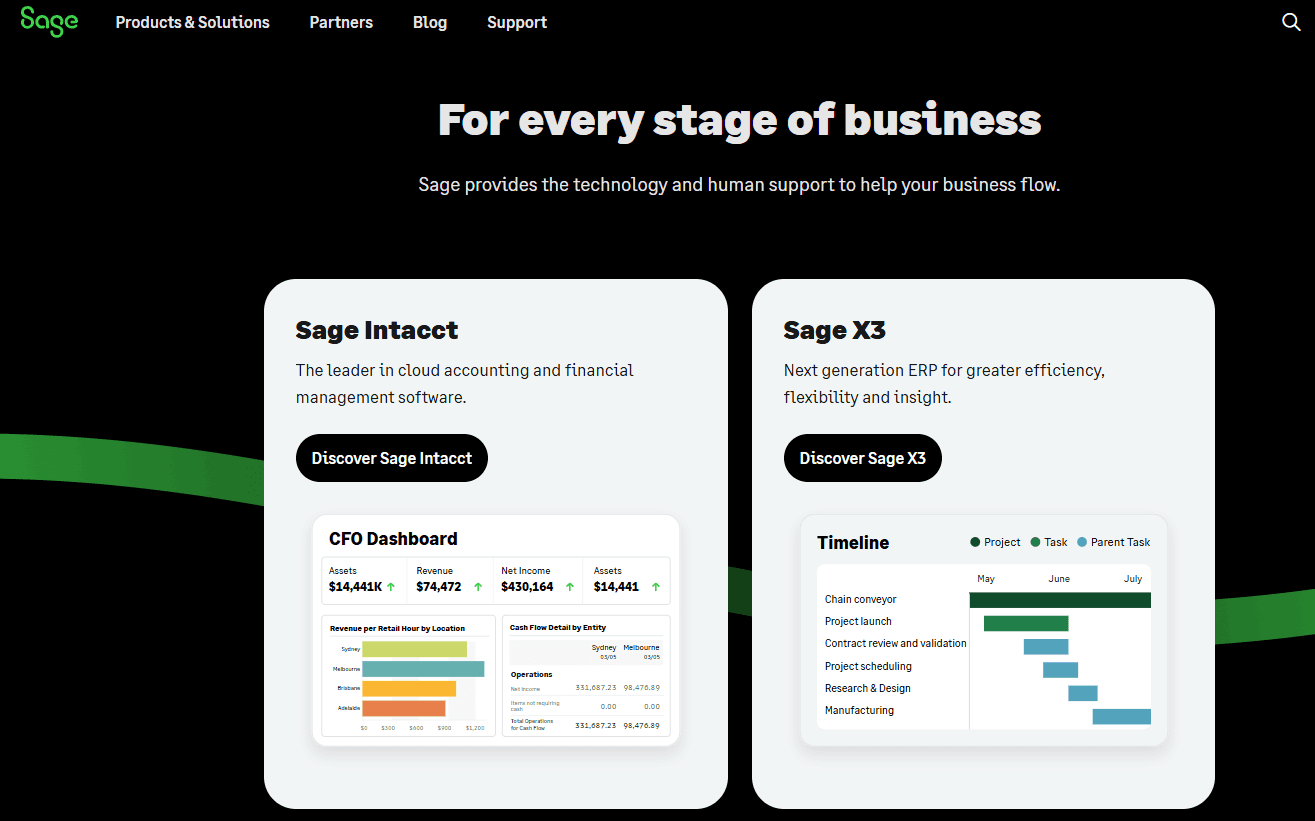
Sage is widely recognised for its accounting and financial management software, and organisations that already rely on Sage products for finance operations often use its HR solution. By integrating HR tools with financial systems, Sage aims to provide a consistent operational environment across payroll, accounting, and workforce management.
Source: Sage
Onboarding workflows in the Sage HR platform allow businesses to collect employee documentation, manage digital contracts, and maintain employee records in a centralised system. These onboarding tools frequently integrate directly with payroll processing and financial reporting.
For UK organisations that already use Sage accounting software, this integration simplifies data management and reduces the need to maintain separate HR and finance systems.
However, organisations seeking advanced HR automation or global staff-related capabilities may find Sage’s HR tools less extensive than those offered by dedicated HR platform providers.
Why companies choose Sage
Integration between HR processes and accounting systems
Familiar ecosystem for businesses already using Sage Finance software
Centralised employee records and onboarding documentation
"The simple but effective hr app makes it easy for employees and employers, with integrated training sections, payslips and p60s". —Sage Capterra review
User-flagged challenges
HR automation capabilities may be more limited than those offered by specialised HR platforms
Global workforce management features are less comprehensive
11. Papaya Global
Papaya Global focuses primarily on global payroll and workforce compliance. The platform is designed to help organisations manage payroll, employment documentation, and onboarding requirements in different countries.
Source: Papaya Global
In Papaya Global’s system, onboarding workflows are linked to employment contracts, tax documentation, and payroll setup. When a new employee joins the organisation, the platform can help manage the compliance documentation required for each jurisdiction.
For UK companies expanding internationally, this capability can reduce administrative complexity when hiring employees overseas. Papaya Global helps organisations manage employment structures, payroll calculations, and regulatory documentation for employees employed in multiple countries.
However, because the platform focuses heavily on payroll and international compliance, organisations may need additional HR software to manage broader HR workflows, such as performance management and internal HR reporting.
Why companies choose Papaya Global
Strong support for global payroll and international workforce compliance
Automated documentation and onboarding aligned with jurisdictional requirements
Designed for companies hiring employees in multiple countries
“Papaya provides peace of mind. They combine a strong platform with exceptional service, allowing management teams to stay focused on the business while knowing payroll, compliance, and global employment complexities are handled properly.” —Papaya Global Capterra review
User-flagged challenges
HR lifecycle functionality may require additional HR platforms
Pricing structure may vary depending on international workforce complexity
12. PeopleHR
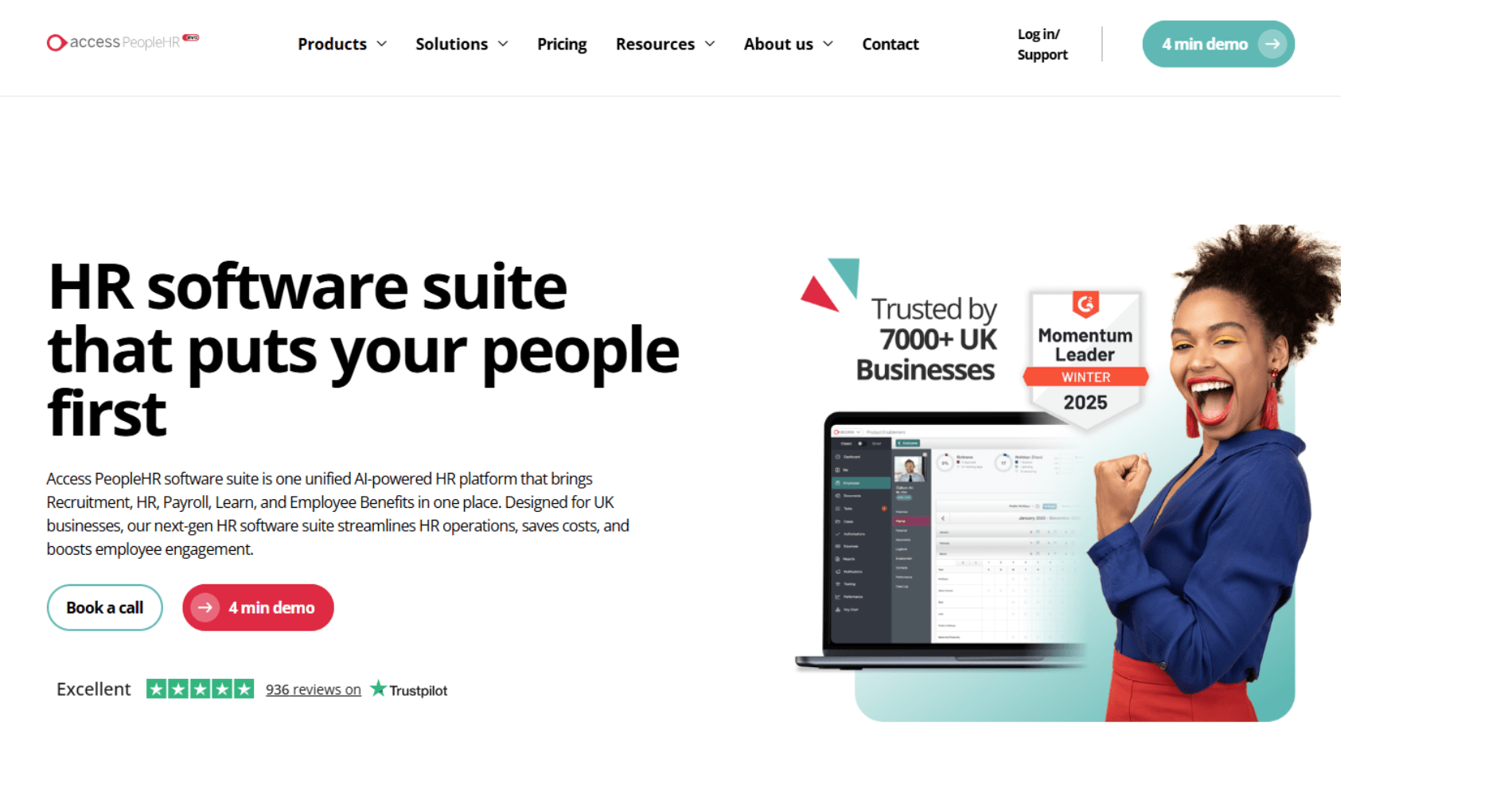
PeopleHR is an HR software platform primarily designed for small and medium-sized organisations that want to digitise HR processes without implementing large enterprise systems.
Source: People HR
The platform provides core HR capabilities, including employee record management, onboarding workflows, absence tracking, and performance management tools. HR teams can create onboarding checklists, collect employee documentation digitally, and manage employee information through a centralised HR system.
Because PeopleHR focuses on simplicity, the platform is often easier for smaller HR teams to implement and manage compared to larger enterprise platforms. This can be especially attractive for businesses transitioning from manual HR processes or spreadsheets to digital HR systems.
However, organisations experiencing rapid growth or requiring complex workforce management tools may eventually outgrow the platform’s capabilities.
Why companies choose PeopleHR
Simple HR platform designed for SMEs
Straightforward onboarding workflows and document management
Easier implementation compared to enterprise HR systems
"I like the ease of implementation and ongoing use for HR professionals along with the incredibly broad range of features included." —PeopleHR Capterra review
User-flagged challenges
Advanced HR automation features may be limited
Larger organisations may require more scalable HR infrastructure
13. BrightHR
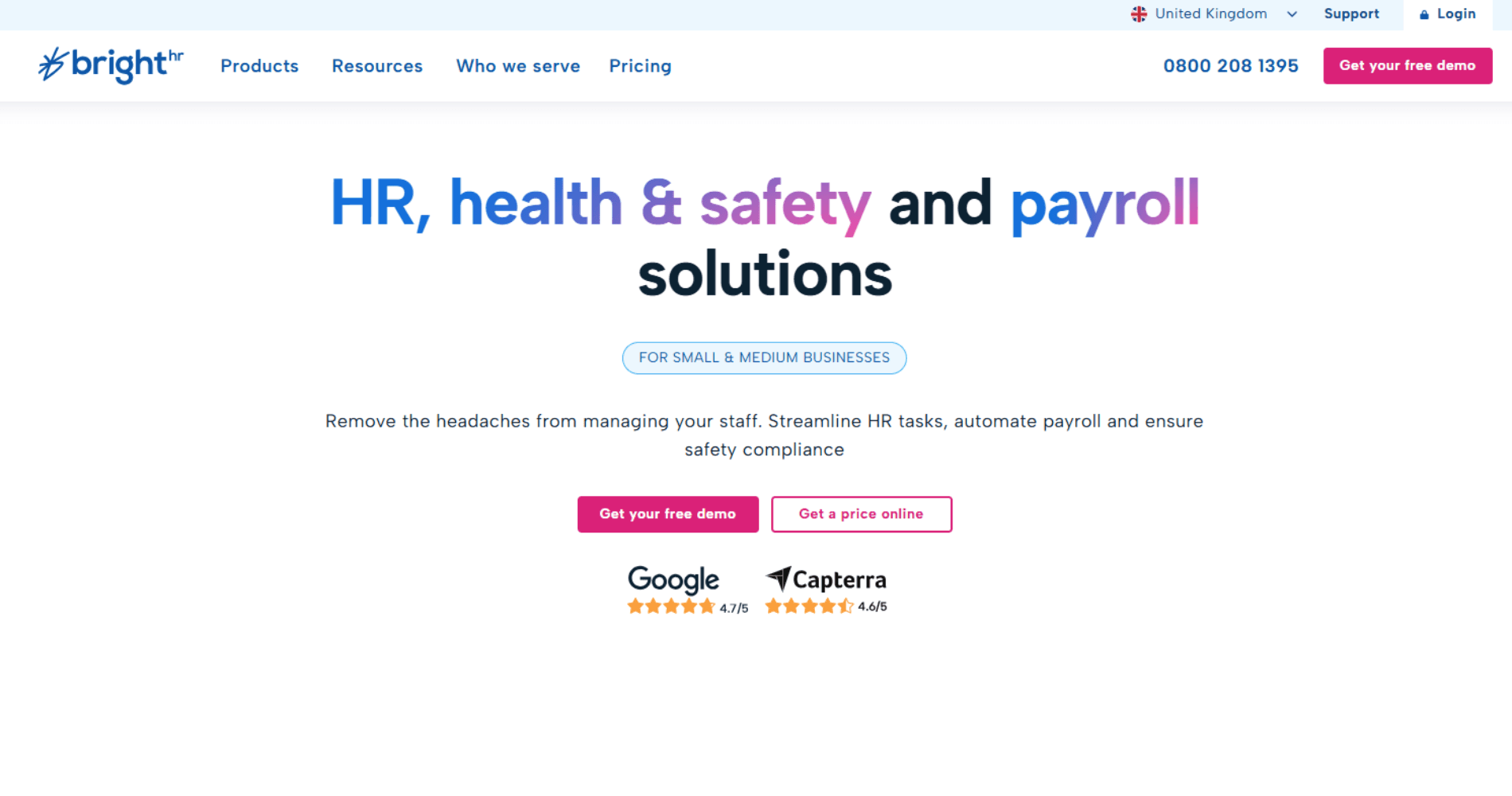
BrightHR is widely used by small businesses in the UK seeking an HR platform that is accessible and doesn’t have the complexity of enterprise HR systems. The platform helps employers manage HR documentation, onboarding processes, and compliance requirements in a structured way.
Source: Bright HR
HR teams can create digital onboarding checklists, collect employee documentation, and manage employment contracts through a centralised system. The platform also supports employee self-service features, allowing new hires to submit information and complete onboarding tasks before their start date.
BrightHR emphasises HR guidance and compliance support. For smaller businesses without dedicated HR specialists, this can be particularly useful when managing employment documentation and workplace policies.
While the platform works well for smaller organisations, businesses experiencing rapid growth may eventually require more advanced HR automation capabilities or deeper payroll system integrations.
Why companies choose BrightHR
Simple HR system designed for small UK businesses
Digital document management and onboarding checklists
Built-in HR guidance and compliance support
“It provides strong value for money, a secure and reliable system, and a reassuring framework for managing employees, payroll considerations, and HR documentation correctly.” —BrightHR Capterra review
User-flagged challenges
Limited advanced HR automation compared to larger platforms
Larger organisations may require broader HR system capabilities
14. Breathe HR
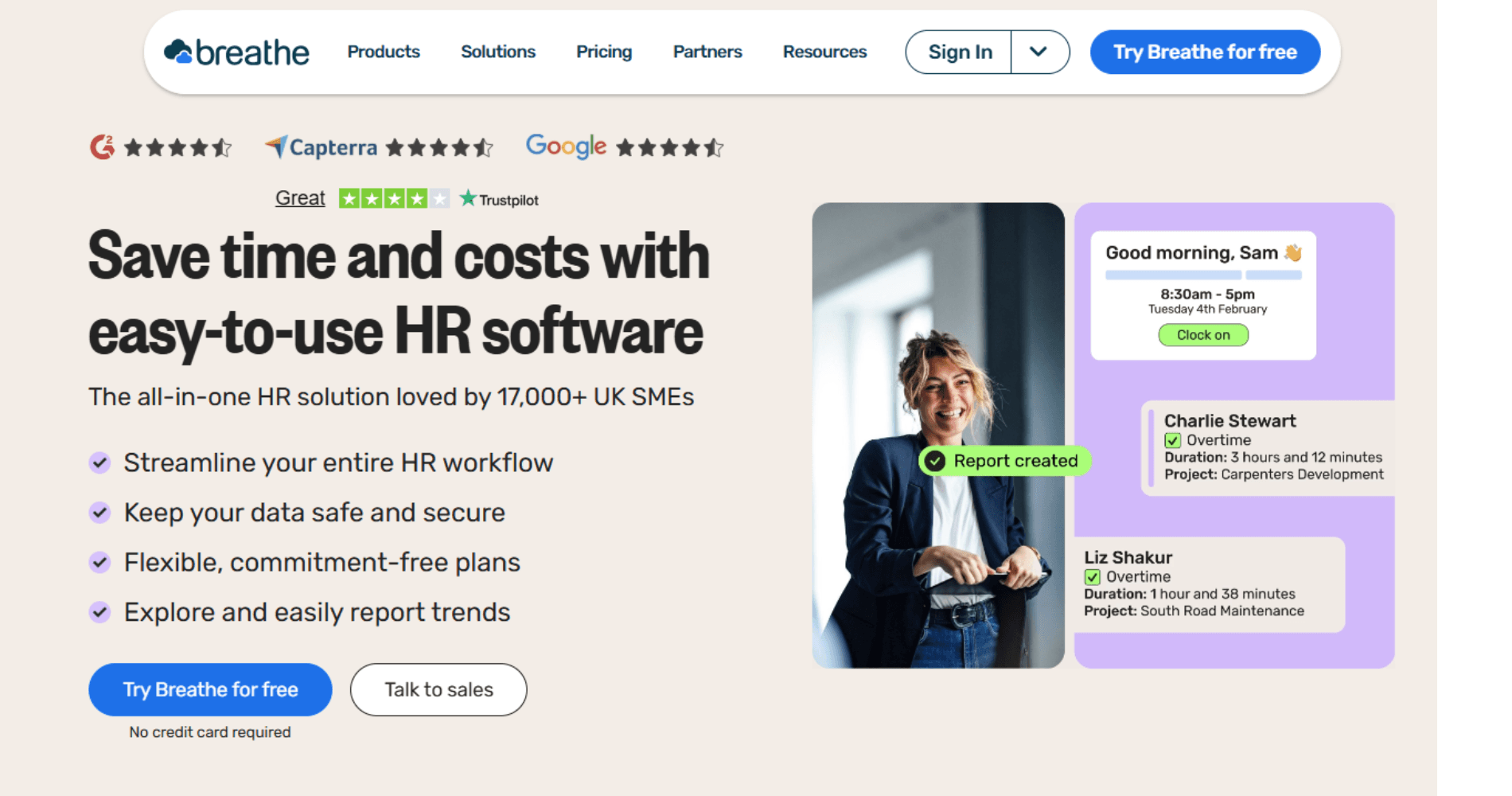
Breathe HR is a UK-based HR software platform designed to help small companies manage employee records, onboarding tasks, and HR documentation through a simple digital system.
Source: Breathe HR
The onboarding functionality helps HR teams organise new employee information and manage onboarding tasks efficiently. HR managers can collect documentation, assign onboarding checklists, and provide new hires with access to important company resources.
Because Breathe HR emphasises usability, the platform is often attractive to smaller organisations that are transitioning from spreadsheets or manual HR processes. The system centralises employee records and HR documentation, helping HR teams maintain consistency in their onboarding procedures.
However, organisations with more complex workforce structures or international operations may require additional HR tools beyond Breathe HR’s core functionality.
Why companies choose Breathe HR
Simple and easy-to-use HR system
Centralised employee records and onboarding documentation
Designed specifically for small businesses
“Overall, Breathe is a really user friendly system, with great reporting tools, document storage, and a really useful dashboard where you can see key metrics for your employees.” —Breathe HR Capterra review
User-flagged challenges
Limited advanced HR workflow automation
May not scale well for larger or multinational organisations
Factors to consider when choosing HR onboarding software in the UK
Selecting an employee onboarding platform involves more than comparing feature lists. For UK organisations, the right platform needs to balance operational capability with compliance, integration, and long-term scalability.
Here are several factors that typically shape the decision.
Automation of onboarding workflows
Strong onboarding platforms allow HR teams to automate repetitive tasks, such as document collection, training management, and approvals. Automated onboarding workflows reduce administrative overhead and ensure every new employee receives an accurate onboarding experience.
Integration with payroll and finance systems
Onboarding is the first major stage of operational engagement. It usually triggers payroll setup, benefits enrolment, and tax documentation. Platforms that integrate onboarding with payroll systems can reduce data entry duplication and minimise payroll errors during the early stages of employment.
Employee experience during onboarding
The onboarding experience informs an employee’s first impression of their new employer. Platforms that provide structured onboarding journeys, welcome messages, and clear task tracking can help new hires feel prepared before their first day.
Compliance and regulatory requirements
UK employers must manage several compliance obligations during onboarding, including right-to-work checks, employee documentation requirements, and data protection rules under UK GDPR. HR onboarding software platforms that support these processes can reduce legal risk.
Scalability for growing teams
Businesses often initially need simple onboarding tools but require more advanced HR infrastructure as they grow. Choosing a platform that can scale with organisational growth helps avoid the disruption of migrating HR systems later.
Integration alongside existing business tools
Many organisations rely on accounting software, collaboration platforms, and identity management tools. HR onboarding systems that integrate with existing business tools can streamline HR processes.
Key HR onboarding compliance changes UK employers should watch
Regulatory changes are increasingly guiding how UK employers design onboarding processes. HR onboarding software can play an important role in helping organisations track documentation, compliance checks, and employee rights during the hiring process.
Several developments are particularly relevant for employers.
Day-one employment rights
Proposed employment legislation is expected to strengthen workers' day-one employment rights. These changes are set to reduce reliance on probationary periods and expand access to protections such as parental leave and statutory sick pay.
HR onboarding platforms need to capture additional compliance requirements and provide clear visibility into employee entitlements from the start of employment.
Mandatory union information
From October 2026, employers will be required to provide new hires with written information about their right to join a trade union. This requirement means that onboarding documentation must include formal statements about these employee rights.
Digital onboarding systems can ensure consistent and systematic delivery of this information.
Enhanced anti-harassment responsibilities
Employers are increasingly expected to demonstrate that preventive measures are in place to address workplace harassment. As a result, onboarding processes may include mandatory training modules, policy acknowledgements, and documentation confirming that employees have received relevant guidance.
HR onboarding platforms that support training assignments and compliance tracking can help businesses efficiently manage these requirements.
Immigration and right-to-work checks
The UK government is transitioning towards digital immigration verification systems, including the adoption of eVisas. Employers must ensure that right-to-work checks are conducted correctly and documented appropriately during the onboarding process.
Digital HR systems can help store verification records and track compliance tasks.
Rippling: Modern HR onboarding software that supports more than paperwork
HR onboarding software is often introduced to simplify administrative tasks. In practice, the right system does much more than manage documents or checklists.
Effective onboarding platforms connect multiple operational processes, including payroll setup, compliance documentation, IT provisioning, and employee engagement. When these systems work together, HR teams can spend less time managing paperwork and more time supporting employee success.
For UK businesses with complex employee operations, Rippling provides a unified system that supports compliance, automation, and workforce visibility as organisations scale.
If you’d like to see how this works in practice, you can book a demo with Rippling to explore how its onboarding integration helps organisations manage HR, payroll, IT, and finance in one place.
FAQs
What is HR onboarding software?
What is the best HR onboarding software in the UK?
The best HR onboarding software depends on an organisation’s needs. Platforms such as Rippling, Workday, and HiBob offer strong onboarding capabilities, while smaller businesses may prefer systems like BrightHR or Breathe HR.
How much does HR onboarding software cost?
Pricing varies widely depending on the vendor and the organisation's size. Many platforms use subscription pricing based on the number of employees, while enterprise systems regularly provide customised pricing.
Why is onboarding software important for HR teams?
Onboarding software helps HR teams automate administrative tasks, maintain compliance documentation, and provide new employees with a structured onboarding experience. This reduces manual workload and helps organisations maintain a consistent onboarding process.
Disclaimer
Rippling and its affiliates do not provide tax, accounting or legal advice. This material has been prepared for informational purposes only, and is not intended to provide or be relied on for tax, accounting or legal advice. You should consult your own tax, accounting and legal advisors before engaging in any related activities or transactions.

Author
The Rippling Team
Global HR, IT and Finance know-how directly from the Rippling team.
See Rippling in action
Increase savings, automate busywork and make better decisions by managing HR, IT and Finance in one place.