





















HR software is a digital platform designed to manage employee data, automate HR processes, and support compliance. Modern HR platforms typically include core HR functions, such as employee records, leave management, performance tracking and reporting, often delivered as cloud-based HR software.
13 Best HR Software Platforms in the UK: A Guide for 2026

In this article
13 Best HR Software Platforms in the UK: A Guide for 2026
HR management in the UK is no longer simply about keeping HR records. Now it includes ensuring the organisation is keeping pace with regulations, payroll complexity, and your workforce's expectations.
Between evolving employment law, payroll compliance, hybrid working expectations, and increasing reporting demands, many businesses are evaluating whether their current HR systems are up to the task and fit for purpose. The right HR software can help reduce unnecessary administrative duplication, improve your data integrity, and give leadership teams clearer strategic visibility over workforce performance.
The good news is that many HR software solutions on the market can help you meet the evolving challenges. To make your search a little easier, we’ve evaluated 13 of them, looking beyond marketing hype and feature lists to focus on integration depth, pricing clarity, scalability, and real user feedback. We’ve looked at how well each platform supports the latest HR processes, including core employee management and payroll alignment, as well as automation and reporting.
We evaluated each software on these capabilities:
Core HR capability
Compliance support
Automation
Integration depth
Usability
That consistency enables you to evaluate which solutions genuinely stand out as the best HR software in the UK for your organisation, its needs, and its stage of growth. You can view the full scoring breakdown in our research document.
Here’s how the top 13 HR software platforms in the UK stack up at a glance.
HR software comparison table
HR software provider | Best for | Choose this if |
|---|---|---|
1. Rippling HCM | Integrated workforce management across HR, payroll, and IT | You want HR fully connected to payroll, IT provisioning, and reporting in one unified system |
Enterprise-scale human capital management | You operate at enterprise level and require advanced analytics, governance, and global capability | |
3. Sage People | Mid-market firms already using Sage | You want HR aligned closely with Sage finance systems and mid-market reporting needs |
Large organisations standardising on Oracle Cloud | You need deep configurability and enterprise infrastructure across HR and ERP | |
5. Zoho People | Cost-conscious SMEs that want modular HR | You want flexible, cloud-based HR software for UK businesses without the enterprise-level cost |
6. Dayforce HCM | Workforce operations and payroll-heavy environments | You manage shift-based or complex pay structures and need tight payroll alignment |
Multinational enterprises requiring deep talent tools | You need advanced performance, learning, and succession planning within SAP environments | |
8. iTrent / People First (MHR) | UK organisations prioritising payroll and compliance | You value domestic compliance expertise and integrated HR and payroll control |
9. HiBob | Modern mid-market teams that are focused on engagement | You’re scaling quickly and want structured HR processes with a strong user experience |
10. UKG | Complex workforce scheduling and labour management | You operate shift-based workforces and need advanced time and attendance capabilities |
Payroll-led HR management | You prioritise payroll reliability and want core HR integrated within a payroll-first system | |
UK-focused SMEs interested in integrated business tools | You want HR embedded within a broader domestic finance and payroll ecosystem | |
13. Personio | European SMEs formalising HR structure | You’re increasing your headcount and want structured, cloud-based HR software in the UK market |
A closer look at the 13 top HR software options
Now that we’ve had an overview of the top 13 options, we’ll take a deeper dive into each platform. Based on our research and public reviews, we’ll go over where each software excels and what kinds of issues users have experienced.
Rippling
Workday Human Capital Management
Sage People
Oracle Fusion Cloud HCM
Zoho People
Dayforce HCM
SAP SuccessFactors
MHR
HiBob
UKG
ADP Workforce Now
Access People
Personio
1. Rippling
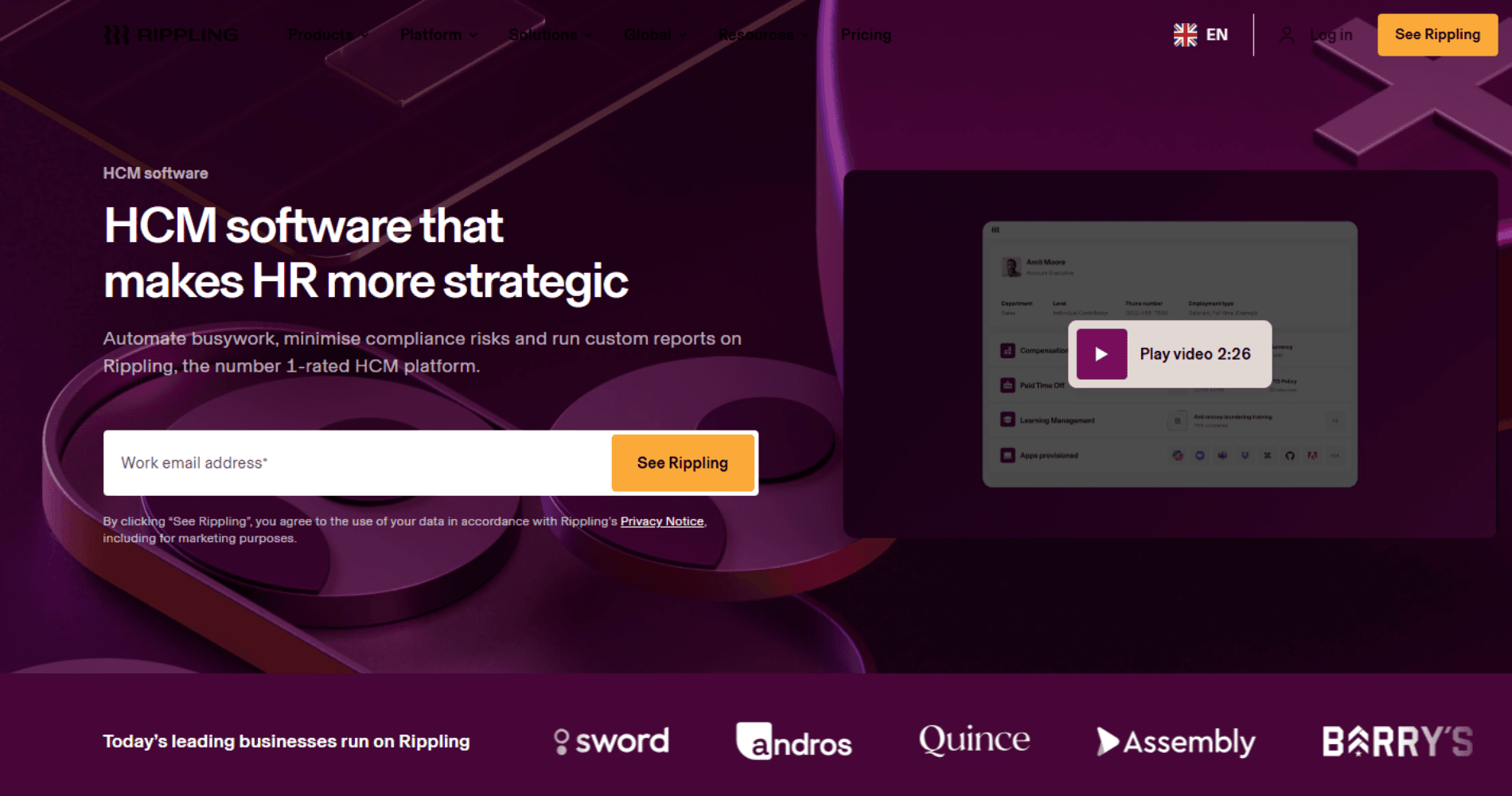
Rippling HCM is built for UK organisations that want more than just a standalone HR tool. It combines core HR, payroll, benefits administration, and IT management into a single system so that employee data flows automatically across departments. Instead of maintaining separate HR software systems and reconciling records manually, teams can work together more easily by using a single source of truth: employee data.
This also makes practical sense. When an employee changes role, salary, or location, it’s essential that updates automatically flow through to payroll, reporting, and system access without duplicating administrative work. For those organisations struggling to navigate the complex UK landscape for employment law, compliance reporting, and scaling headcount, this helps reduce friction between different departments—especially HR, finance, and IT.
Rippling also stands out for its automation. Workflows can automatically trigger cross-functional actions, from onboarding to device provisioning, helping HR teams reduce unnecessary and repetitive tasks. For mid-market and enterprise organisations that want structural alignment rather than isolated HR tools, Rippling’s integrated approach remains its core defining strength.
Source: Rippling HCM
Why companies choose Rippling
Unified HR, payroll, and IT management within one platform
Strong automation across the employee lifecycle
Reduction in reconciliation and manual errors through live data syncing
"Feature packed all in one platform for managing people" — Rippling Capterra review
User-flagged challenges
Its broad functionality may exceed the needs of very small businesses
Pricing is typically custom-quoted rather than publicly listed
There is no free trial for HR modules (but an IT trial is available)
2. Workday
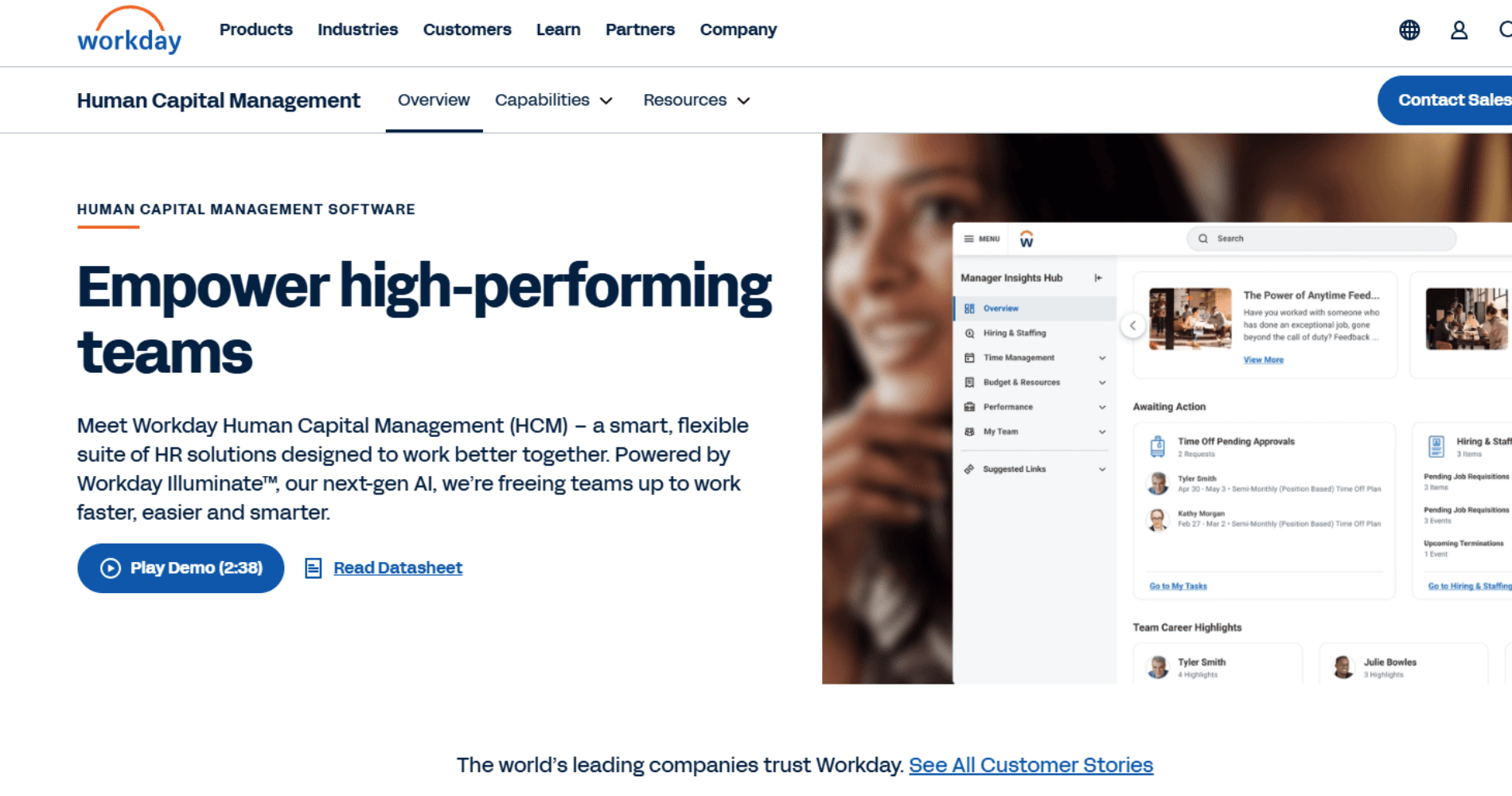
Workday Human Capital Management (HCM) is best suited to large enterprises managing complex and often global workforces. Its strength lies in its depth: advanced people analytics, workforce planning tools, and configurable HR processes all designed to support multiple entities and locations.
For UK enterprises operating across multiple regions, Workday’s analytics capabilities and tight governance controls are highly valued tools. The platform offers strong support for talent management, performance tracking, and organisational modelling, making it ideal for businesses that prioritise data-driven HR decision-making.
That said, Workday’s breadth and configurability can lead to longer implementation timelines and higher total cost of ownership than mid-market-focused HR software solutions. It’s typically best suited to organisations with dedicated Human Resources Information Systems (HRIS) teams and the resources to manage enterprise-level deployments.
Source: Workday Human Capital Management (HCM)
Why companies choose Workday
Advanced analytics and workforce planning tools
Strong support for complex, multi-entity organisations
Mature governance and reporting capabilities
"A great tool for employee record management. with a clean ui it offers seemless experience to the users" — Workday Capterra review
User-flagged challenges
Implementation can be lengthy and resource-intensive
Pricing is typically geared towards larger enterprises
It may offer more functionality than medium-sized businesses really need
3. Sage People
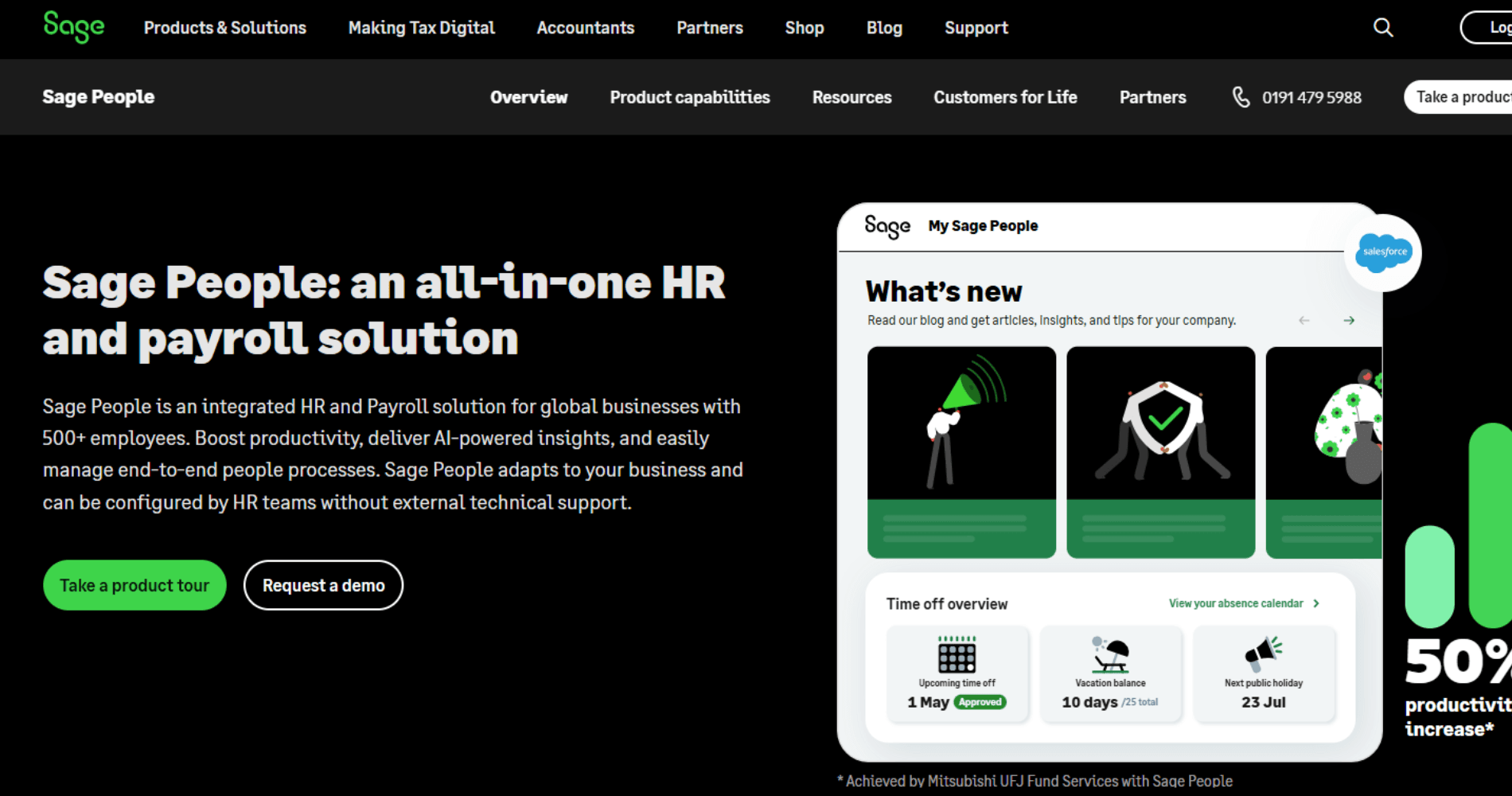
Sage People is a cloud-based HR software solution built on Salesforce and designed primarily for mid-sized organisations. It’s particularly suited for UK businesses already operating within the Sage ecosystem, as it allows finance and HR data to align easily across systems.
The platform offers core HR functionality, workforce analytics, and talent management tools, with a focus on visibility and reporting. For growing businesses that need stronger insight into headcount, performance, and workforce costs, Sage People offers structured reporting dashboards and configurable workflows without the complexity of an enterprise solution.
Its strongest fit is within the wider Sage ecosystem. Organisations outside the Sage ecosystem may find integration options more limited than all-in-one HR platforms offer. Implementation can also entail careful configuration, especially for businesses with layered approval structures.
Source:Sage People
Why companies choose Sage People
Strong alignment with Sage finance and accounting tools
Configurable workflows for growing mid-market teams
Solid workforce reporting and analytics capabilities
"very positive, do use regularly for payroll." — Sage Capterra review
User-flagged challenges
Best suited to organisations already using Sage products
May require external support during implementation
Less global scale than enterprise HCM platforms
4. Oracle Fusion Cloud HCM
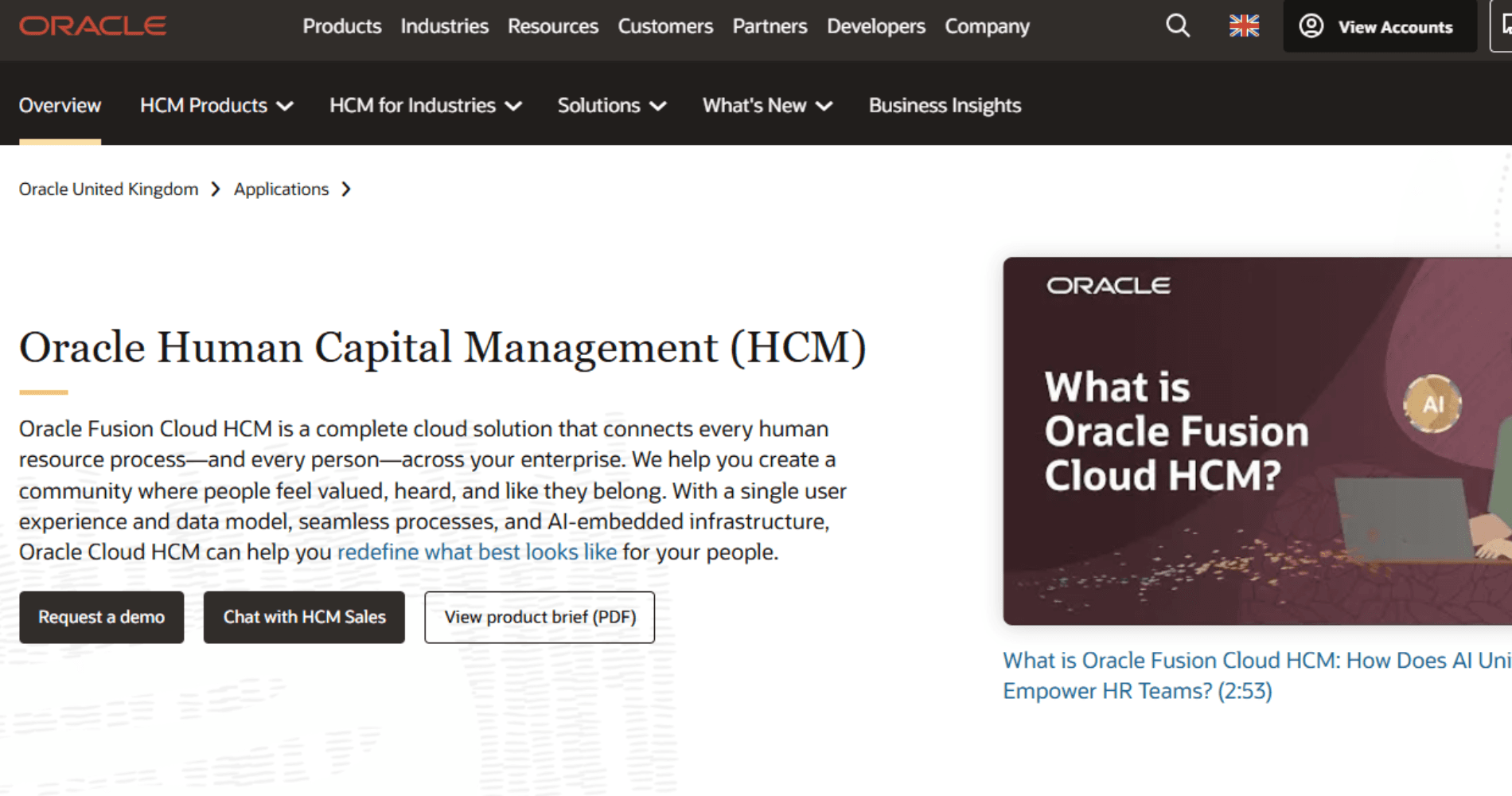
Oracle Fusion Cloud HCM is a comprehensive enterprise human capital management suite, designed for organisations operating at scale. It’s part of Oracle’s broader cloud ecosystem, which means HR, finance, and enterprise resource planning (ERP) functions can sit together within a single infrastructure.
For those UK enterprises with a global footprint, Oracle’s configurability and international compliance capabilities are valuable features. The platform delivers advanced workforce modelling, talent management, and succession planning, along with solid security and governance controls. Businesses already invested in Oracle’s wider technology stack may find integration smoother than adopting a standalone HR platform.
That level of depth, however, brings complexity. Oracle Fusion Cloud HCM is typically best suited to organisations with dedicated internal teams that can manage configuration, reporting, and optimisation. Smaller or less complex businesses may find the implementation footprint heavier than required for their needs.
Source: Oracle Fusion Cloud HCM
Why companies choose Oracle Fusion Cloud HCM
Strong alignment with Oracle’s finance and ERP systems
Advanced configurability for global enterprise structures
Solid compliance and governance features
"Easy to use with a clear outline of what needs to be done. Breaking out into Tasks/Activities is easy to manage." — Oracle Capterra review
User-flagged challenges
Implementation can consume extensive resources
Often priced for larger enterprise budgets
May exceed the requirements of most mid-market organisations
5. Zoho People
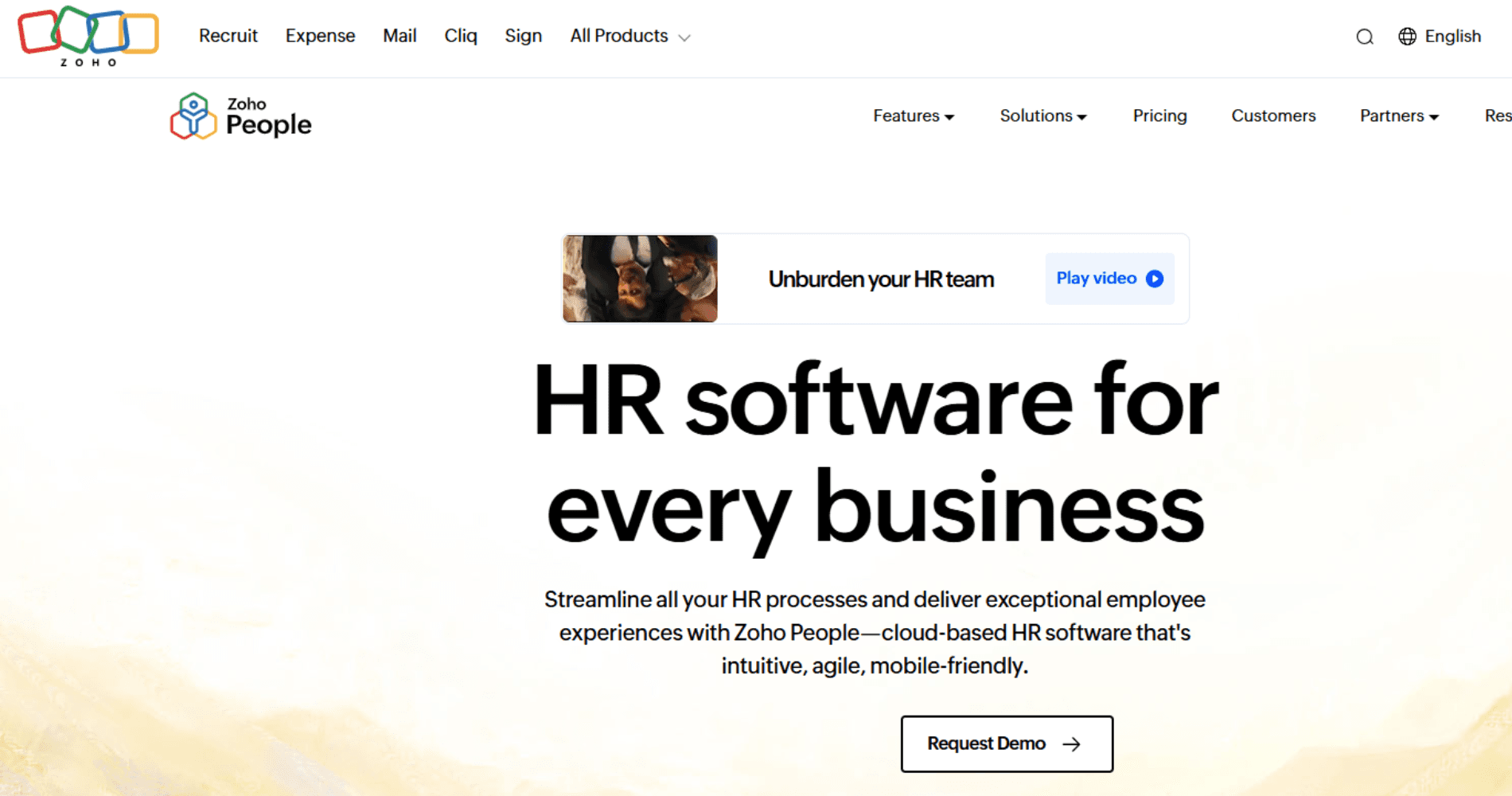
Zoho People is a cloud-based HR software solution for UK businesses, designed for small and mid-sized teams that are looking for affordable, modular HR software. It’s part of the wider Zoho ecosystem, which includes CRM, finance, and productivity tools, making it appealing to organisations already using the Zoho product suite.
The platform handles core HR functions, including employee records, leave management, attendance tracking, and performance reviews. For UK small businesses that want to digitise HR processes without committing to enterprise-level pricing, Zoho People offers a relatively affordable entry point. Its modular structure allows teams to scale functionality gradually as needs continue to evolve.
Zoho People prioritises accessibility over enterprise depth. Larger organisations or those with complicated compliance and reporting requirements may find its functionality somewhat limited.
Source: Zoho People
Why companies choose Zoho People
Competitive pricing for small and growing businesses
Flexible, modular feature structure
Integrates with the wider Zoho business suite
"Zoho provides excellent value for money." — Zoho Capterra review
User-flagged challenges
It’s less suited to complex, multi-entity organisations
Advanced analytics capabilities are more limited
Integration depth may depend on wider Zoho usage
6. Dayforce
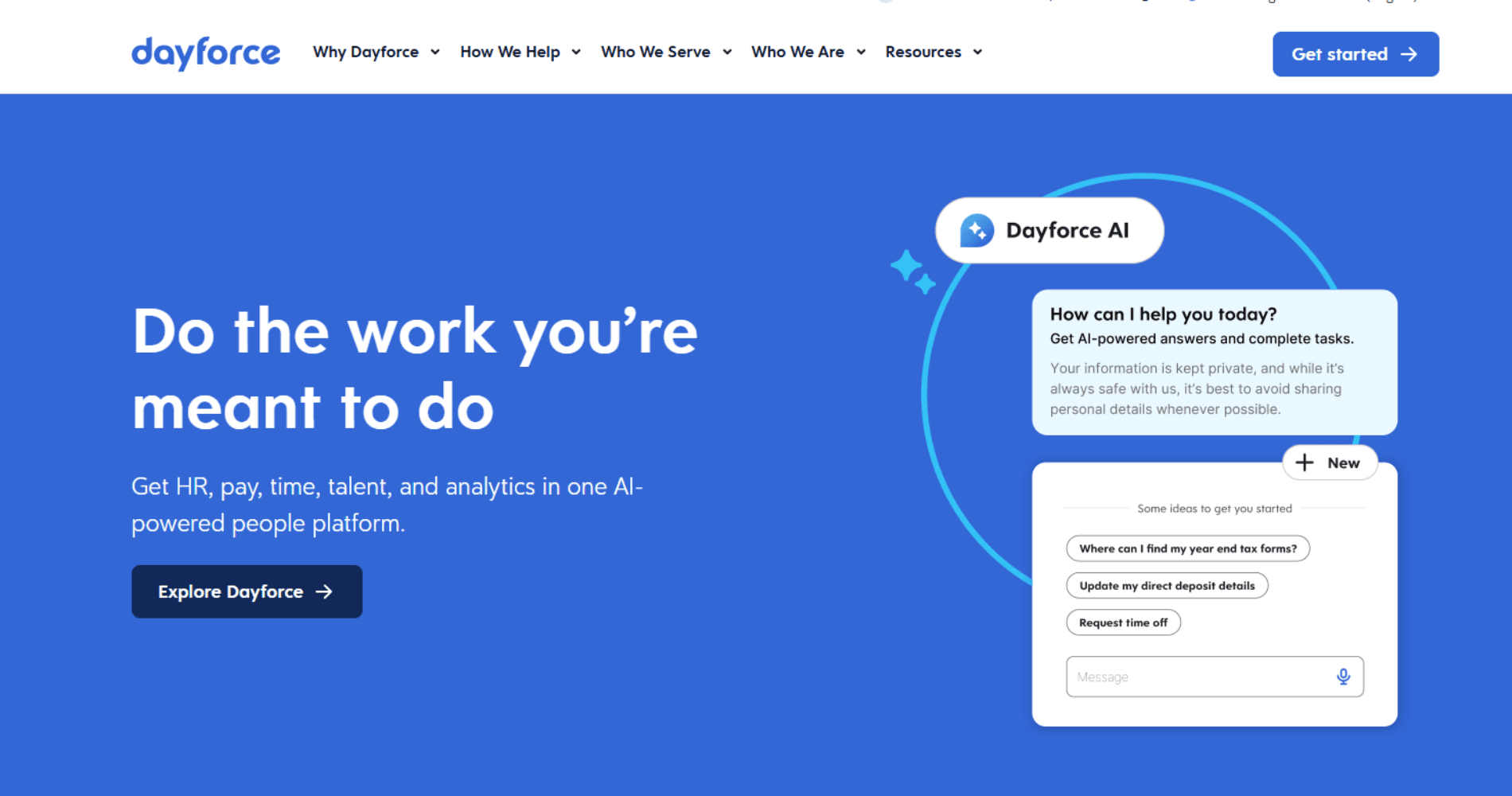
Dayforce HCM is ideal for organisations where payroll accuracy, compliance, and workforce scheduling are core business priorities. The platform places strong emphasis on time tracking, pay calculations, and labour management, which may be especially relevant for industries with shift-based workforces.
For UK businesses managing hourly employees, overtime, or complex pay rules, Dayforce’s real-time payroll engine and workforce management tools are where it excels. It helps bring payroll and time data together, reduces reconciliation issues, and improves visibility into labour costs.
While Dayforce delivers broader HR functionality, it’s generally considered a payroll-focused package. Organisations needing deep talent management or engagement-focused tools may find other HR platforms more appropriate.
Source: Dayforce HCM
Why companies choose Dayforce
Strong payroll and workforce management capabilities
Real-time calculation of pay and labour costs
Well-suited to shift-based or hourly workforces
"Overall, Dayforce was a highly efficient tool for tracking and analyzing workforce data." — Dayforce Capterra review
User-flagged challenges
Broader HR modules may require additional configuration
Implementation can be detailed for complex pay structures
Enterprise pricing may not suit smaller businesses
7. SAP SuccessFactors
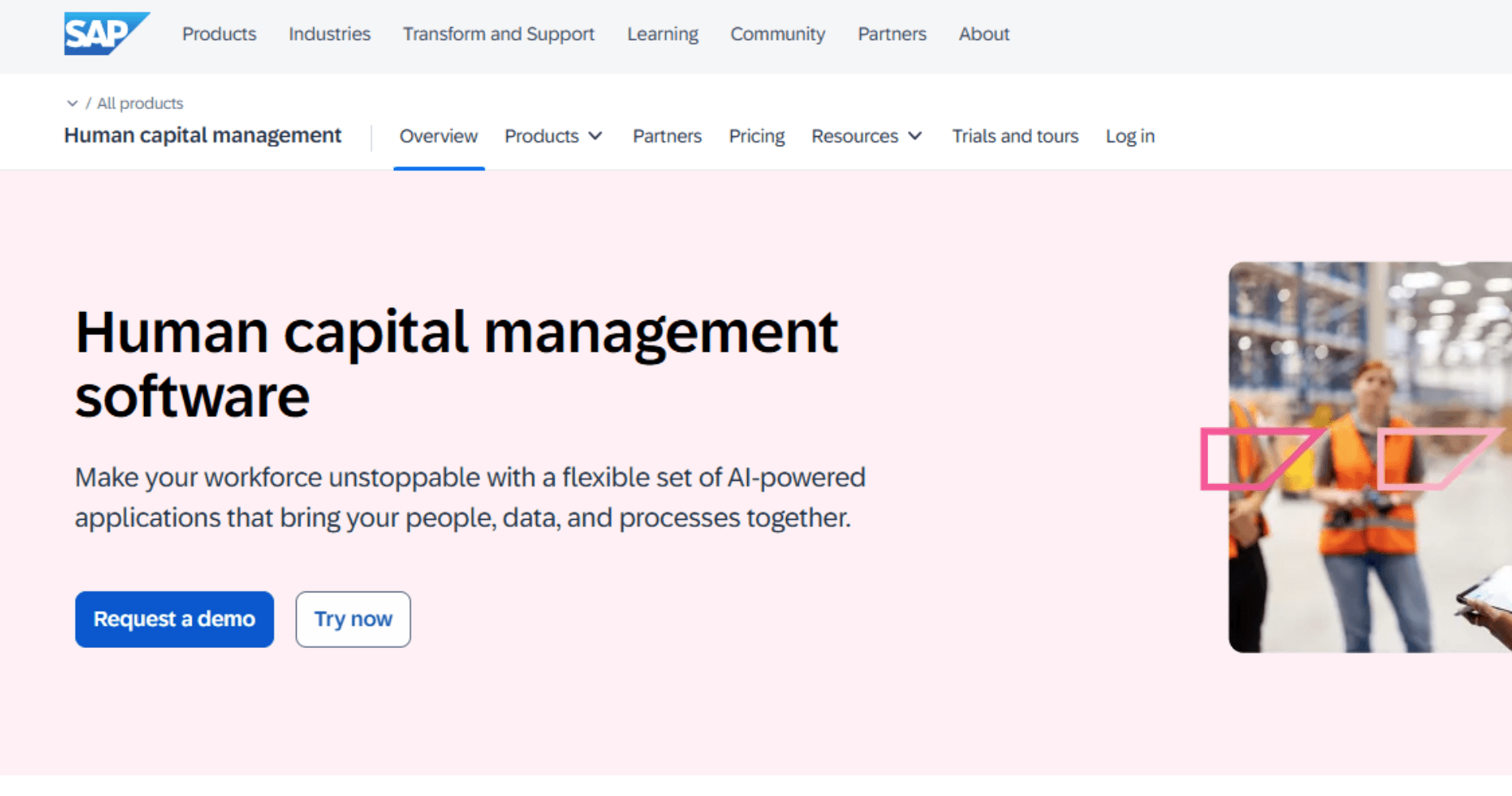
SAP SuccessFactors HCM is a long-established enterprise HR platform built to support large, multinational organisations. As part of the wider SAP ecosystem, it integrates with finance and enterprise systems, making it attractive to companies already using the SAP infrastructure.
The platform offers a broad range of tools related to talent management, performance, learning, and succession. For UK businesses with international operations, it offers global compliance capabilities and configurable workflows that can support complex workforce structures. Companies that need deep functionality and the ability to scale over the long term often select it.
However, with that breadth comes complexity. Implementation can require significant planning and internal resources, particularly for organisations customising multiple modules. Mid-sized businesses without dedicated HRIS support may find the system more extensive than required.
Source: SAP SuccessFactors HCM
Why companies choose SAP SuccessFactors
Deep talent, learning, and performance management tools
Strong connection with SAP enterprise systems
Global workforce and compliance support
"Great for managing the entire life-cycle of employees" — SAP Success Factors Capterra review
User-flagged challenges
Implementation can require considerable resources
Configuration may require specialist expertise
An enterprise pricing structure may not suit smaller firms
8. MHR
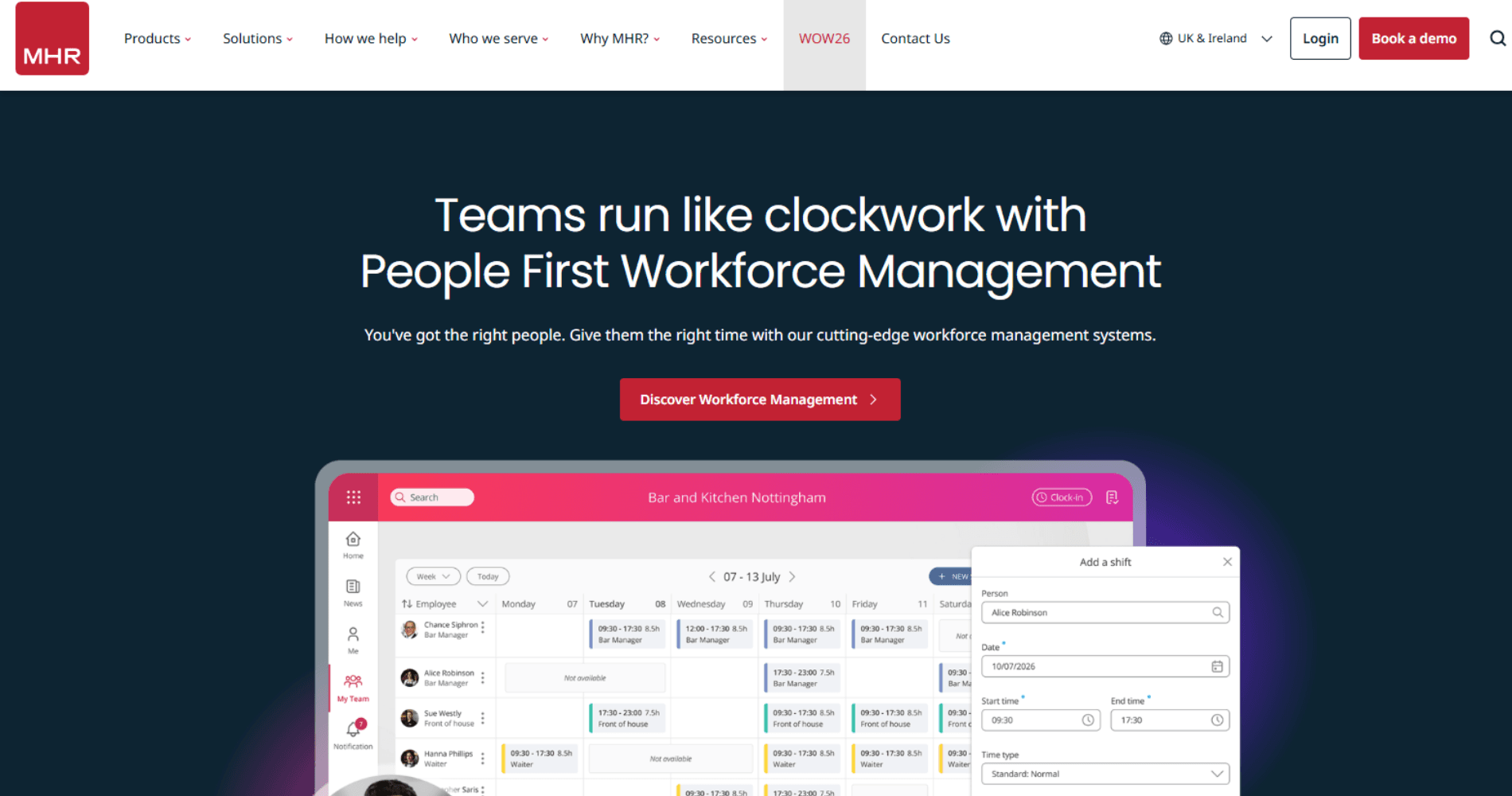
MHR is a UK-headquartered HR and payroll software provider with a strong focus on domestic compliance and workforce management. iTrent and People First are its two HR solutions. It’s particularly well known for its payroll expertise, which makes it attractive to organisations that make accurate pay processing and compliance high priorities.
For UK mid-market businesses that need help navigating the evolving UK employment law, MHR’s local compliance knowledge and payroll capabilities deliver. The platform offers core HR functionality alongside workforce management tools and is a serious practical option for organisations looking for a UK-focused solution rather than a globally focused enterprise suite.
MHR excels at payroll and domestic compliance, but its international coverage and ecosystem breadth are more limited than those of other global HR platforms. Those businesses with complex multinational requirements may need additional integrations to fully meet their specific needs.
Source: MHR
Why companies choose MHR
Strong UK payroll and compliance expertise
Domestic support and regulatory familiarity
Integrated HR and workforce management tools
"Full package for your HR function and Payroll" — MHR Capterra review
User-flagged challenges
It has less global functionality than enterprise HCM platforms
May require integration for advanced international operations
Interface depth may depend on selected modules
9. HiBob
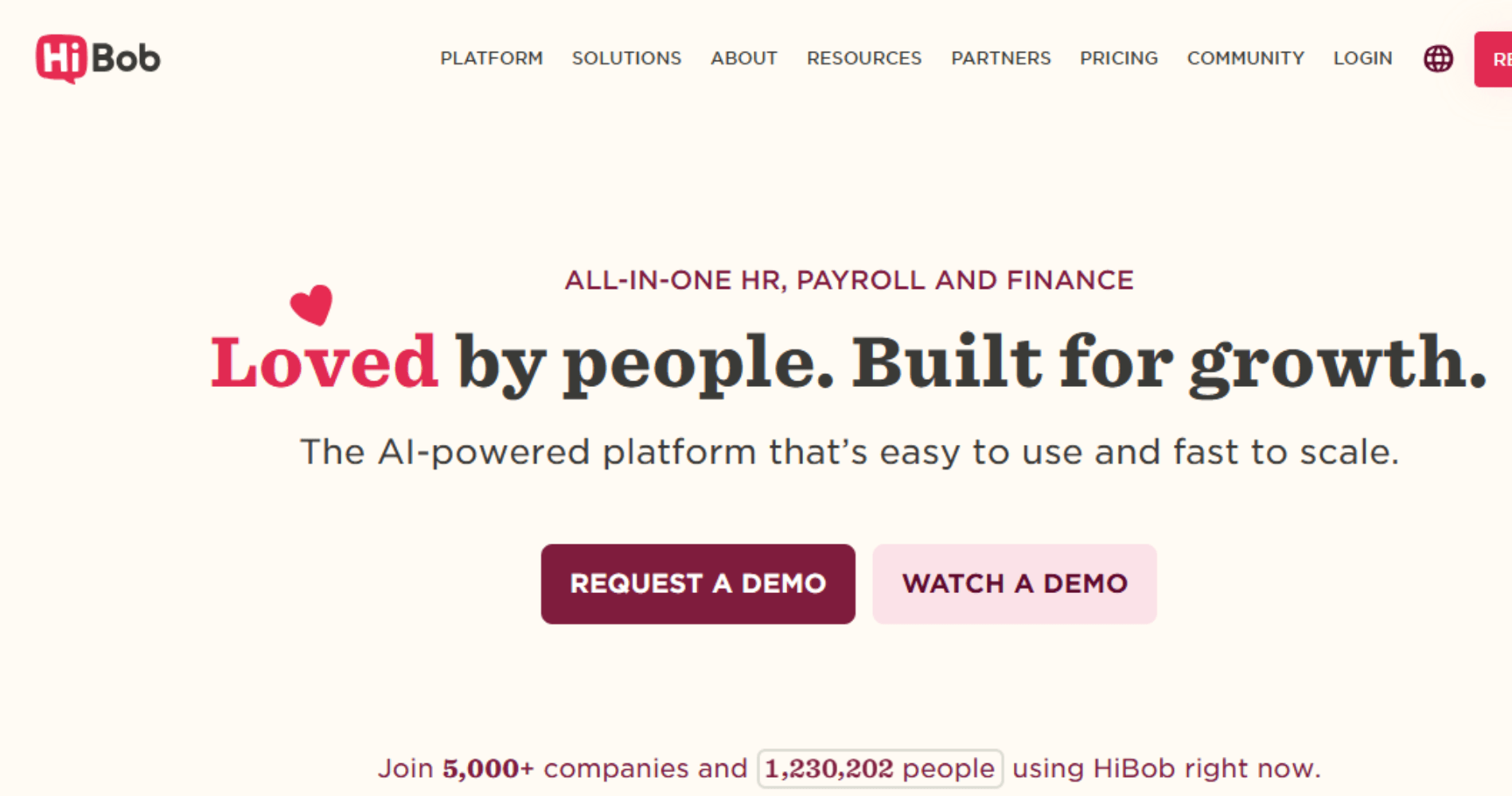
HiBob (often branded simply as Bob) is a modern HR platform designed for growing mid-market organisations that want stronger engagement and visibility with their workforce. This is all supported by people analytics, delivered without the enterprise-level complexity. Its interface is user-friendly and built with the employee experience front of mind.
The platform covers core HR, performance management, and engagement tools, with reporting dashboards that give leadership teams clearer visibility into workforce trends. It's ideally suited for UK businesses scaling quickly or prioritising culture and staff retention. HiBob offers structured workflows and analytics that support a highly data-informed approach to HR.
While HiBob delivers on engagement and usability, its payroll capabilities can often depend on external integrations rather than its own native modules. Organisations that need deeply embedded payroll functionality within the same system may need to review its integration options carefully.
Source: HiBob
Why companies choose HiBob
Modern interface designed for employee engagement
Structured performance and people analytics tools
Well-suited to scaling mid-market teams
"Simple, easy to use HR platform" — HiBob Capterra review
User-flagged challenges
Payroll may require third-party integration, depending on your setup
It’s not positioned as a full enterprise HCM suite
Advanced customisation may be limited compared to larger platforms
10. UKG
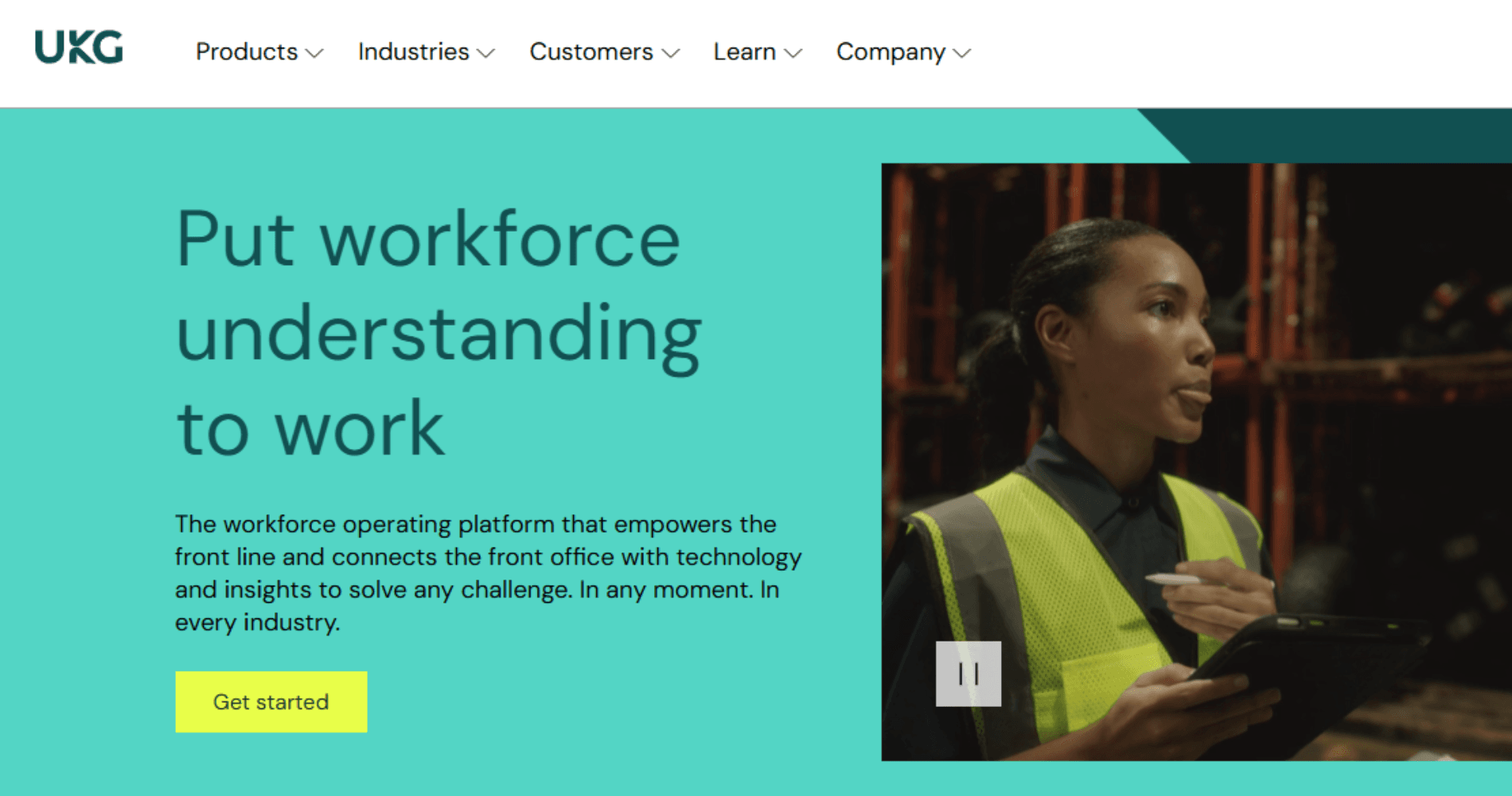
UKG is known for its workforce management expertise, particularly in time tracking, scheduling, and labour optimisation. It’s often selected by organisations operating shift-based or hourly workforces where an efficient operation depends on payroll accuracy and scheduling visibility.
For UK industries such as retail, hospitality and healthcare, UKG’s labour management tools can support more precise forecasting and overtime control. Its workforce scheduling functions are often more advanced than those found in general-purpose HR software platforms.
UKG delivers broader HR functionality, but it’s most often selected for the workforce management capabilities of UKG Pro. Organisations prioritising deep talent development or all-in-one integration across HR, payroll, and IT may want to review and compare a modular structure against more unified systems, such as Rippling.
Source: UKG
Why companies choose UKG
Advanced time, attendance, and scheduling tools
Strong labour cost visibility and optimisation features
Well-suited to shift-based and hourly environments
"Overall, UKG Pro stands out as an exceptional tool in my professional toolkit." — UKG G2 review
User-flagged challenges
Broader HR capabilities may require the addition of optional modules
Implementation can be detailed for complex workforce rules requirements
Enterprise pricing structure may not suit smaller teams
11. ADP Workforce Now
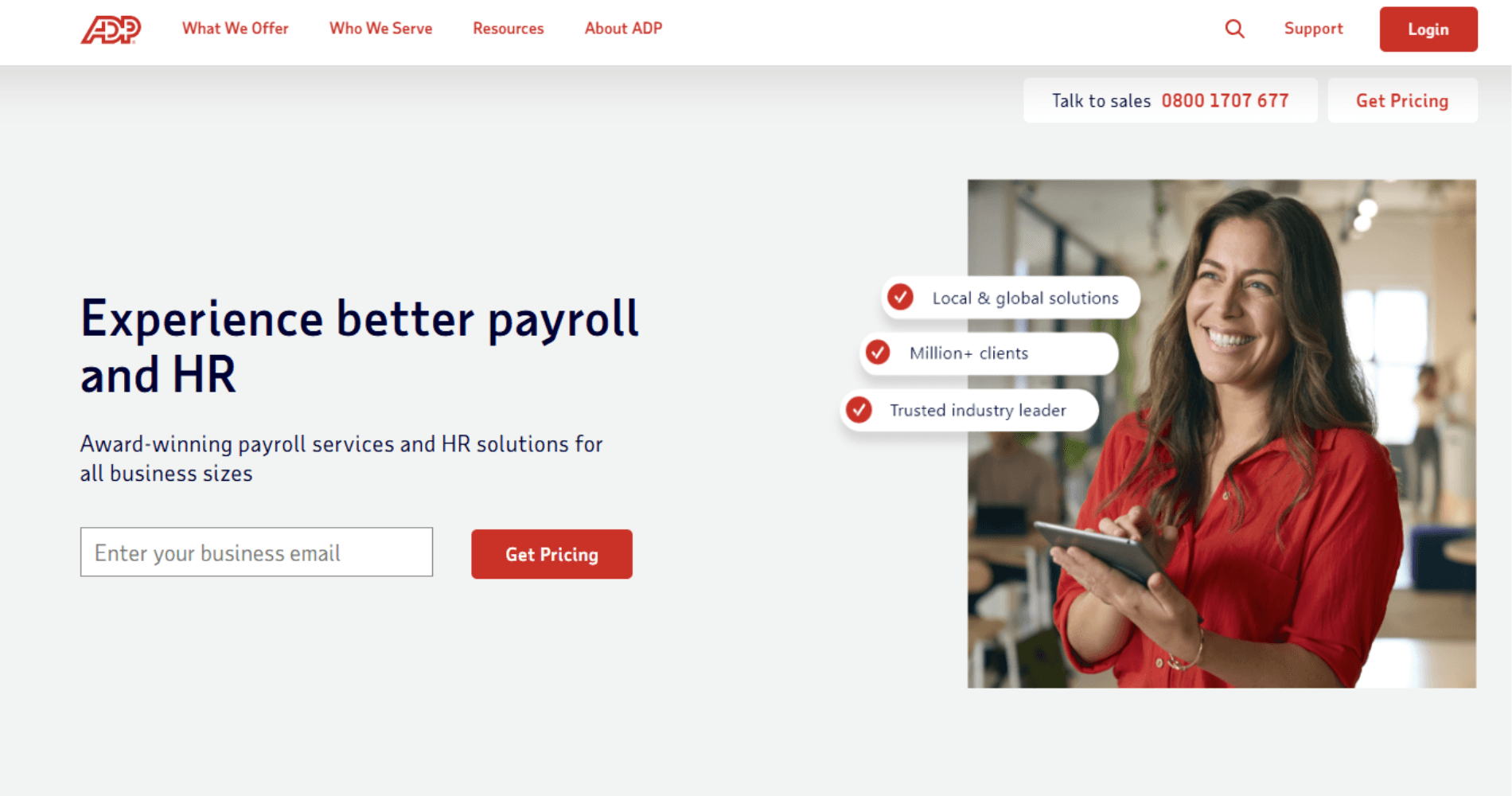
ADP Workforce Now particularly suits organisations where payroll reliability and compliance with laws and regulations are critical. As part of ADP’s long-established payroll infrastructure, the platform combines payroll processing directly within its core HR functionality.
For UK businesses that are looking for a tool that offers dependable payroll execution with added HR modules, ADP’s scale and compliance track record are its key strengths. The platform enables workforce administration, time tracking, and benefits management, making it a good option for organisations that need HR and payroll within a familiar payroll-first framework.
While payroll functions are where ADP Workforce Now shines, its user interface is sometimes seen to be less modern than those of newer cloud-based HR platforms. Organisations focused heavily on engagement or integrated IT management may compare its structure against more unified systems.
Source: ADP Workforce Now
Why companies choose ADP Workforce Now
Established payroll expertise and regulatory alignment
Scalable payroll processing for growing organisations
Integrated core HR and workforce administration tools
"It is an amazing HR solution that meets many needs." — ADP Workforce Capterra review
User-flagged challenges
The interface may feel dated compared to newer cloud-based HR platforms
Advanced HR functionality depends on the selected optional modules
Pricing structures may vary based on payroll complexity
12. The Access Group
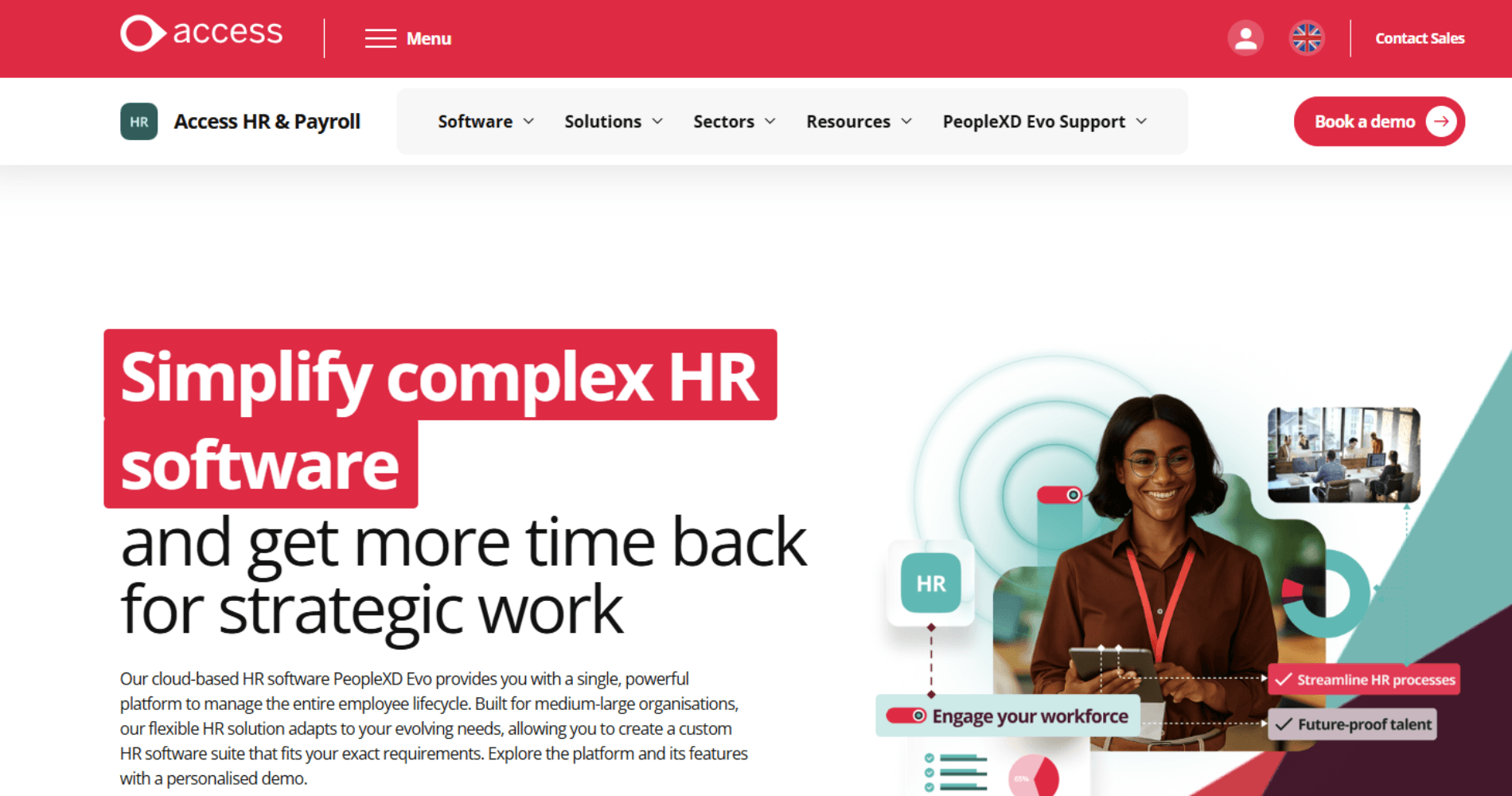
Access People (Access Workspace) provides a broad suite of business software tools, including HR and payroll solutions tailored to UK organisations. Its positioning centres on delivering integrated systems for finance, HR, and operations within a domestically focused ecosystem.
For UK small and mid-sized businesses interested in a solution that provides local support and is familiar with domestic compliance requirements, the Access Group is a good alternative to larger global platforms. Its HR software covers the core requirements you’d expect, including employee management, payroll, and workforce administration, with additional modules available to meet your specific operational needs.
However, compared to global HCM suites, The Access Group’s international functionality and advanced enterprise analytics may seem somewhat limited. Businesses operating across multiple jurisdictions may require additional integrations.
Source: Access People (Access Workspace)
Why companies choose The Access Group
Strong UK market focus and local support
Integrated finance and HR tools within one ecosystem
Suitable for SMEs looking for domestic alignment
"I like the ease of implementation and ongoing use for HR professionals along with the incredibly broad range of features included." — Access Group Capterra review
User-flagged challenges
Less global capability compared to enterprise HCM platforms
Advanced analytics may be more limited
Broader functionality depends on selected modules
13. Personio
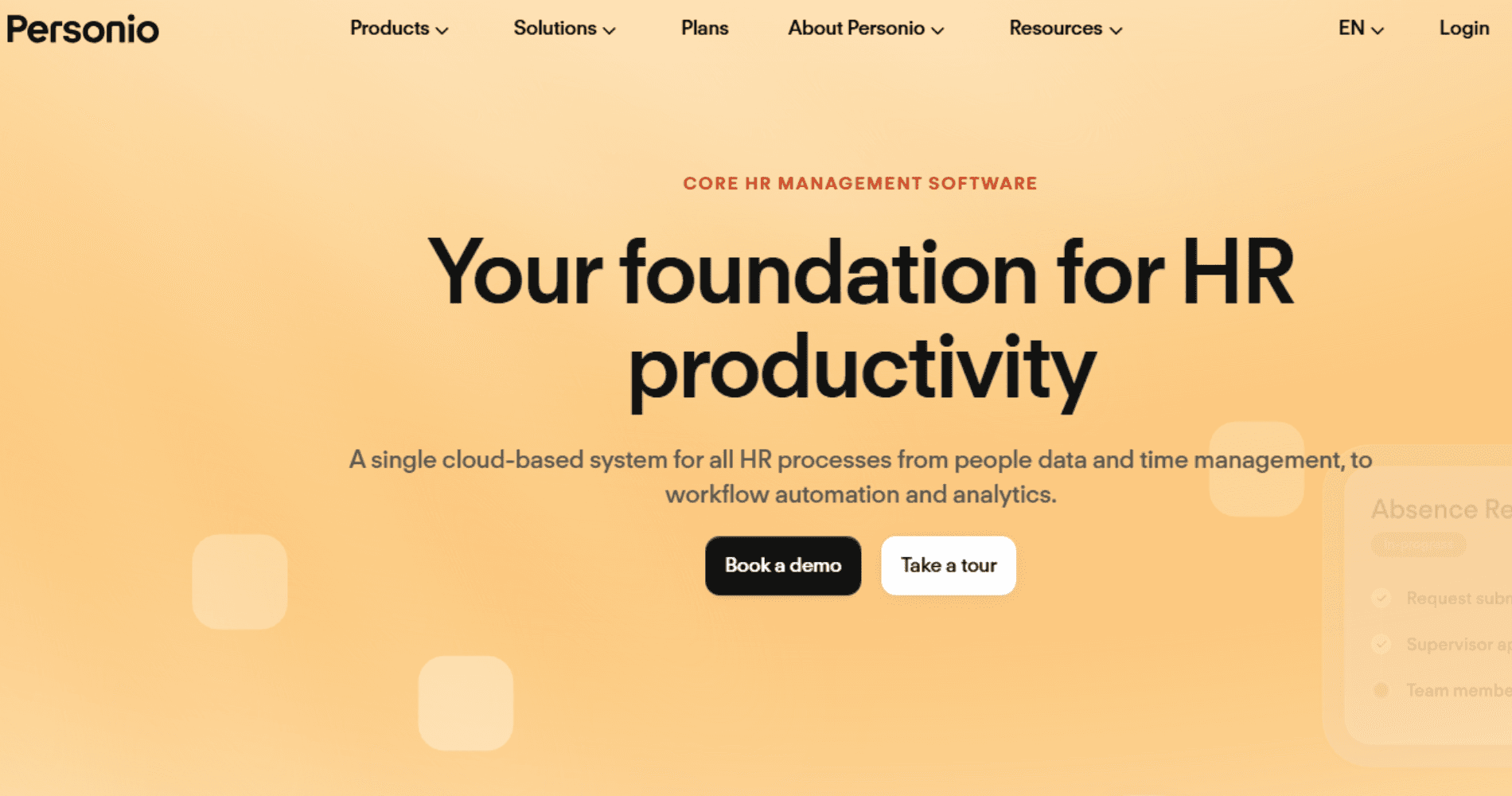
Personio is a cloud-based HR software provider serving UK and European small and mid-sized businesses. Its focus is on helping growing organisations formalise HR processes, centralise employee data, and introduce structured workflows without the overhead of enterprise software.
SMEs in the UK that are increasing their headcount and introducing more consistent HR processes can use Personio for core HR functionality, absence management, and performance tools, all within a clean, cloud-based interface. The platform is often chosen by teams transitioning from manual spreadsheets or fragmented HR tools into a unified HR system.
While Personio supports scalability for SMEs, it’s not typically seen as a full enterprise HCM suite. Larger organisations with complex multi-entity or global compliance requirements may need additional integrations or more advanced systems.
Source: Personio
Why companies choose Personio
Designed for SMEs to formalise their HR processes
Clear, structured core HR functionality
European market focus with scalable workflows
"A clear, chic intuitive interface with all the relevant info one would look for." — Peronio Capterra review
User-flagged challenges
It’s not positioned for large enterprise complexity
Advanced global compliance features may be limited
Broader functionality may require additional integrations
Choosing HR software that scales with your business
Selecting the best HR software in the UK is less about ticking the boxes for great features and more about ensuring the system can support your organisation as it continues to grow. The following factors can distinguish short-term fixes from long-term platforms that may better suit your overall needs.
1. Compliance readiness
UK employment law continues to evolve and is becoming increasingly complex. With changes to statutory sick pay, “day-one rights”, and dismissal protections, employer obligations are being reshaped. Your HR software needs to be flexible enough to support accurate record-keeping, reporting, and payroll alignment. With these features in place, regulatory updates don’t become manual workarounds that can lead to compliance issues further down the line.
2. Integration depth
Many HR teams still operate multiple disconnected tools. A modern HR platform should integrate with your payroll, finance, time tracking, and, where relevant, IT access systems. The fewer manual processes required, the lower the risk of data duplication and the need to report inconsistencies continually.
3. Payroll alignment
Payroll is often where errors become visible. Even if payroll is handled separately, your HR system should sync cleanly with pay data, benefits, and leave records. Strong payroll alignment reduces reconciliation work and supports more reliable compliance.
4. Reporting and analytics
As your headcount increases, your leadership teams expect clearer workforce insights. Look for structured dashboards, configurable reporting, and real-time data access. Strong analytics capabilities can support better hiring decisions, workforce planning, and cost control, giving you a better strategic view of your teams.
5. Automation and admin reduction
One of the core benefits of using dedicated HR software is the ability to reduce repetitive manual tasks. Automated onboarding workflows, approval routing, and document management can significantly cut your administrative overhead and free up your HR teams to focus on higher-value work.
6. Scalability and total cost of ownership
Don’t just consider today’s needs, but think about where your organisation will be in three to five years. A cloud-based HR software solution should scale more easily with your headcount, the number of locations, and your compliance complexity. Transparent pricing structures and modular expansion can also help avoid unexpected cost increases.
UK employment law changes to watch in 2026
Employment law reforms scheduled for 2026 and beyond are likely to further increase the ongoing compliance workload for UK employers. While final implementation timelines may vary, several proposed changes highlight why modern HR software systems need to support accurate record-keeping and payroll.
Statutory Sick Pay (SSP) from day one
Under proposed reforms, Statutory Sick Pay will become payable from the first day of absence, removing the previous waiting period. The Lower Earnings Limit requirement is also expected to change. HR and payroll systems will need to calculate eligibility and payments accurately without manual adjustments.
Expanded “day one” employment rights
Rights such as paternity leave, unpaid parental leave, and bereavement leave are set to become day-one entitlements. HR platforms must be able to track eligibility from the start of employment and ensure policies and workflows reflect the latest legal requirements.
Zero-hours contracts and shift protections
Workers on zero-hours or low-hours contracts are expected to gain the right to request guaranteed hours based on regular working patterns. Employers may also face new requirements around reasonable notice for shifts and compensation for cancellations. Workforce management tools will need to provide clear scheduling records and audit trails.
Unfair dismissal and probation changes
The qualifying period for unfair dismissal protection is expected to be reduced from two years to around six months. This shift places even more importance on accurate performance documentation, structured probation processes, and consistent record-keeping.
For UK employers, these upcoming reforms reinforce the importance of record-keeping and payroll accuracy as non-negotiables. As UK regulations continue to evolve further, systems that automate record-keeping and align HR with payroll can help reduce the risk of administrative errors and missed compliance obligations.
The best HR software: Managing more than admin
The best HR software does more than just store records or process leave entitlements. It shapes how information flows through your organisation. When HR, payroll, and reporting are all aligned, decisions become clearer and administrative friction is reduced.
For UK businesses facing regulatory change and workforce growth, the right platform should support compliance today while scaling to meet tomorrow’s demands. As you narrow your shortlist, prioritise platforms that reduce duplication and improve data visibility. Digitising forms just isn’t enough.
Explore how Rippling’s integrated HR platform can support your organisation’s next stage of growth.
FAQs
What is HR software?
How does HR software work?
HR software centralises employee information in a single system. Data is entered once so that role changes or salary updates, for example, can flow seamlessly through payroll, reporting, and compliance modules, reducing manual admin. Many platforms also automate approvals, onboarding workflows, and document management.
What are the key features to look for in the best HR software?
When comparing the best HR software in the UK, look for core HR functionality, payroll integration, compliance support, automation, reporting capabilities, and scalability. For UK small businesses, ease of use and pricing transparency may also be important factors.
How do HR platforms differ from HRIS or HCM systems?
An HRIS typically focuses on core employee data management. HCM systems often include broader talent and performance tools. Modern all-in-one HR platforms combine core HR, payroll, and sometimes IT or finance functionality into a unified system.
Can HR software integrate with payroll and other systems?
Yes. Most leading HR software providers offer integrations with payroll, accounting, and workforce management tools. The depth of integration varies by platform, so businesses should assess whether data syncs in real time or requires manual reconciliation.
Disclaimer
Rippling and its affiliates do not provide tax, accounting or legal advice. This material has been prepared for informational purposes only, and is not intended to provide, and should not be relied on for tax, legal or accounting advice. You should consult your own tax, legal and accounting advisors before engaging in any related activities or transactions.
Rippling editorial policy: Rippling puts our customers (and prospective customers!) first. The Rippling team is committed to providing information supported by product data, expert insights and real customer feedback to inform all our content. All our content is reviewed by product experts for accuracy and freshness.

Author

Vanessa Kahkesh
Content Marketing Manager, HR
Vanessa Kahkesh is a content marketer for HR who is passionate about shaping conversations at the intersection of people, strategy and workplace culture. At Rippling, she leads the creation of HR-focused content. Vanessa honed her marketing, storytelling and growth skills via roles in product marketing, community building and startup ventures. She worked on the product marketing team at Replit and was the founder of STUDENTpreneurs, a global community platform for student founders. Her multidisciplinary experience – combining narrative, brand and operations – gives her a unique lens into HR content: she effectively bridges the technical side of HR with the human stories behind them.
See Rippling in action
Increase savings, automate busywork and make better decisions by managing HR, IT and Finance in one place.