



















Fragmented means broken up, so a fragmented HR system is when different HR functions, like payroll, recruitment, and performance, are managed across separate tools that aren't connected. This leads to duplicated data, manual work, and gaps in reporting.
Why Fragmented HR Systems Are Failing Modern Companies
In this article
HR systems should help you see the full picture of each employee, but this can be challenging when their information is spread across different payroll, leave, and onboarding systems.
This system sprawl makes it hard to get answers to basic questions, like "How much leave does this person have?" or "When did they join the company?" Despite the inefficiencies, 62% of businesses say that they use between two and four HR platforms, and 81% say poor integration limits their ability to meet HR goals.
In this article, we'll discuss the practical ways that fragmented systems are holding back HR teams in the UK and provide some solutions.
Key takeaways
Disconnected HR systems lead to errors and introduce compliance risk
HR teams are on tight budgets and facing higher expectations than ever before
HR systems often fail quietly due to bad data and missed opportunities
The 2026 state of HR in the UK
In our economically tight market, decisions on hiring, retention, and workforce planning are directly tied to a business's costs and performance. Here are three pressures that have changed the HR landscape in the past couple of years.
Fewer hires, but higher pressure
As of 2026, hiring in the UK is slower and more uncertain, with vacancies down and fewer roles being created. This means that teams are now expected to do more with the people they already have. As an HR professional, you'll need to look at how you can upskill and retain the people you already have.
A higher standard for HR teams
The same pressure is hitting HR teams, which are now expected to provide more insight as costs come under closer scrutiny. They're being asked to deliver real-time, decision-ready data while maintaining accuracy across compliance and reporting. Doing all this without the right software can feel like an uphill battle.
The trust crisis in the UK
Perhaps due to tighter budgets, there's a growing gap between what employees expect and what companies are offering. Currently, we're seeing trust in leadership decrease, with HP's Work Relationship Index finding that only 14% of UK workers are confident in senior decision-making.
The murky impact of AI
Possibly the biggest unknown rattling the minds of HR professionals is how AI will impact their workforce. Around 32% of UK workers use AI on the job, and 83% are using generative AI tools in some capacity. It's yet to be seen how this will impact workplaces long-term, with predictions ranging from widespread job losses to minor productivity gains.
The tools you use can hold you back or be your biggest advantage
As you work to meet higher expectations with fewer resources, the software you use can make or break your operations. Here are the key issues at a glance:
Data is trapped in different systems
Processes are unnecessarily complex
Reporting gaps lead to risky decisions
The employee experience is suffering
Work becomes disorganised and chaotic
Onboarding lacks structure and consistency
Payroll and compliance risks are left unchecked
Weak governance opens the door to security risks
1. Data is trapped in different systems
Many teams struggle when employee data is stored across multiple platforms that don't communicate properly. This is a problem for both the employee experience and HR's ability to monitor and report on workplace trends. It also wastes hours each week as HR professionals search for basic information across systems.
For example, if an employee's salary is updated in the payroll system but not in the HR one, your budgeting forecasts will be incorrect. This can have knock-on effects and impact whether you have the budget to hire or upskill people.
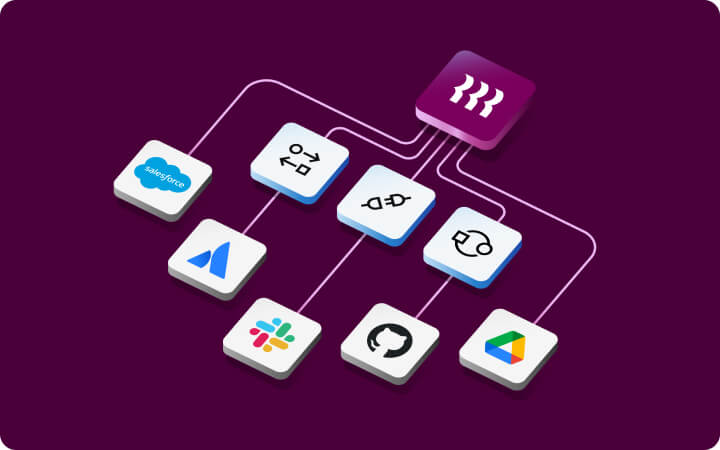
To avoid this, you can bring all your HR needs together in an all-in-one platform like Rippling. Instead of having to update the same information across multiple systems, changes are made once and flow through automatically, reducing manual work and improving accuracy.
2. Processes are unnecessarily complex
As businesses mature, processes can snowball. Even when technology could solve the problem, the outdated processes linger, and even the most basic tasks require too many steps, approvals, and workarounds. Unnecessary checks and manual handling ultimately bog down processes that should be straightforward.
In the UK, this significantly increases the admin burden, with people spending around 15 hours a week on repetitive tasks rather than higher-value work.
For example, approving annual leave might involve multiple approval layers, manual tracking, and back-and-forth emails, while modern HR tools could do all this in the background. To overcome these kinds of challenges, teams need to review their processes and integrate all their software so everything runs smoothly and stays compliant without constant hands-on work.
3. Reporting gaps lead to risky decisions
When key data is missing, any reports you generate are unreliable. Even if you have top-of-the-line systems in place, if data is duplicated and spread across different places, you'll be operating under false assumptions.
This matters because HR is expected to guide real business decisions. If you don't have a clear view of what's happening today, it's hard to plan hiring, manage costs, or spot issues early. In fact, only 32% of UK HR professionals say their organisation fully utilises its people data, illustrating that these gaps are still common.
To fix this, teams need to standardise how data is captured and make sure systems are connected so reporting is consistent and easy to interpret when it's needed.
4. The employee experience is suffering
HR professionals have a unique perspective; they're employees themselves and the ones shaping the employee experience. The effects of bad systems are all the more obvious and persistent.
For example, if you have a reporting meeting to prepare for and your software is lagging and data is inconsistent, it will lead to frustration and stress. The same applies when HR team members and other employees want to do simple things, such as see their leave balance or get set up on a new device, and can't get to what they need.
The simplest way to fix this is to choose a powerful all-in-one system. This means all your data connects and updates in one place, while also speeding up everyday tasks so no employee is stuck waiting on slow or manual processes. On top of this, Rippling brings IT management into the same software so you can manage access, devices, and permissions alongside other HR tasks.
5. Work becomes disorganised and chaotic
When systems and processes aren't connected, work quickly starts to feel scattered. Tasks sit in different places, information is hard to find, and people rely on messages or workarounds to get things done.
For example, a manager might approve leave in one system but have no visibility over shift scheduling, so days end up understaffed, or workloads become uneven. When they go back to fix it, it creates a chaotic scramble for cover with last-minute changes that waste time and disrupt the team.
To solve this, teams need to centralise their data and workflows into a single system. When HR, payroll, and IT are all in one place, managers can make updates once and have changes sync across the system. Additional features in Rippling, like automated HR workflows and live reporting, also give your managers a clear view of team capacity without needing to cross-check multiple tools.
6. Onboarding lacks structure and consistency
When teams spend so much of their budget and time finding top talent, it seems wasteful to provide them with a bad onboarding experience when they arrive.
In the UK, you may be shocked to hear that around a third of employees leave a position within the first 90 days, often due to poor onboarding or mismatched expectations.
Commonly, this happens after a new hire arrives on their first day to find their technology isn't set up, no one has time to welcome them, and they have to sit at their desk waiting for someone to tell them what to do next.
Onboarding is the time for your business to make a great impression. You need to set up a structured process that combines both in-person support and digital support, like setting up all their logins, showing people in the org chart that they might want to set up meet-and-greets with, and having resources for them to read and watch to get up to speed.
To learn more, download our free employee onboarding checklist.
7. Payroll and compliance risks are left unchecked
Payroll and compliance issues often go unnoticed until they become costly. This tends to happen when teams have inconsistent data or processes that aren't tightly controlled, which leads to errors in pay, tax, and reporting to HMRC. This is a major issue in the UK, with over 91% of businesses admitting to making payroll errors.
Let's consider an example of how this happens. If teams are working across different systems, and an employee gets a pay rise, it might only be updated in the HR management system. If that change isn't reflected in payroll, it leads to incorrect pay, tax, National Insurance, and pension calculations.
To reduce this risk, teams need systems that are connected and kept up to date with UK requirements. This keeps your payroll compliant, even as rules change, and reduces the chance of errors.
8. Weak governance opens the door to security risks
Most HR professionals don't have a PhD in data security, and they shouldn't have to. No business thinks they're at risk of a breach until it happens. Also, we often imagine these breaches as malicious hacking attacks, when in reality, human error is a significant cause of data breaches.
In 2025, the UK Post Office provided one example of how easily this can happen when it accidentally published an unredacted document online. This exposed the names and addresses of over 500 individuals involved in the Horizon scandal. This error wasn't a cyberattack — it was a simple mistake made when uploading a file.
To avoid these kinds of errors, teams need stronger governance across their systems, with clear access controls, audit trails, and structured processes. Platforms like Rippling bring these into one place, so you can reduce the risk of human error and keep all your sensitive information secure.
How to choose the right all-in-one HR platform
Now that we've covered all the things you'll want to avoid and how to fix them, it's worth looking at exactly what modern HR teams need from a platform. Here are the HR software features to assess when you're trialling options or watching live demos:
Access controls
Audit trails
Single employee records
Real-time data syncing
A UK payroll engine
HMRC reporting
Pension auto-enrolment management
Automated workflows
Employee self-service for leave, payslips, and personal details
Analytics and reports
GDPR-compliant data storage and security
If a platform is missing these, you'll likely end up finding workarounds that lead to the same gaps you're trying to fix now.
Final thoughts
Fragmented systems can easily build up over the years and create more problems than they solve. With inconsistent data, manual work, compliance risks, and poor employee experiences, it's clear that teams deserve better.
At the same time, HR is more connected to business performance than ever, and teams are expected to do more with less. That's where the right software can make a real difference, improving both day-to-day work and the employee experience.
If you're looking to simplify your HR operations, Rippling brings HR, payroll, and IT into a single system, helping you stay compliant, reduce admin, and keep everything in sync as your business grows.
Book a time for your live Rippling demo here.
FAQs
What is a fragmented HR system?
What are the compliance risks for HR teams in the UK?
Common risks include having incorrect PAYE reporting, making errors in National Insurance and pension contributions, failing to meet minimum wage requirements, and missing HMRC deadlines. These can lead to fines and back payments. Using a system like Rippling, which tracks changes and automatically applies compliance rules, helps keep your business safe.
What software do HR teams use in the UK?
UK HR teams typically use a mix of HRIS platforms, payroll software, applicant tracking systems (ATS), and performance tools. Increasingly, businesses are moving towards all-in-one platforms, like Rippling, that combine HR, payroll, and compliance in one system.
How do I create a great onboarding process?
A stellar onboarding process is structured and combines both in-person support and digital setup. For a step-by-step guide, download our free onboarding checklist.
Disclaimer
Rippling and its affiliates do not provide tax, accounting or legal advice. This material has been prepared for informational purposes only, and is not intended to provide or be relied on for tax, accounting or legal advice. You should consult your own tax, accounting and legal advisors before engaging in any related activities or transactions.

Author
The Rippling Team
Global HR, IT and Finance know-how directly from the Rippling team.
Hubs
See Rippling in action
Increase savings, automate busywork and make better decisions by managing HR, IT and Finance in one place.